
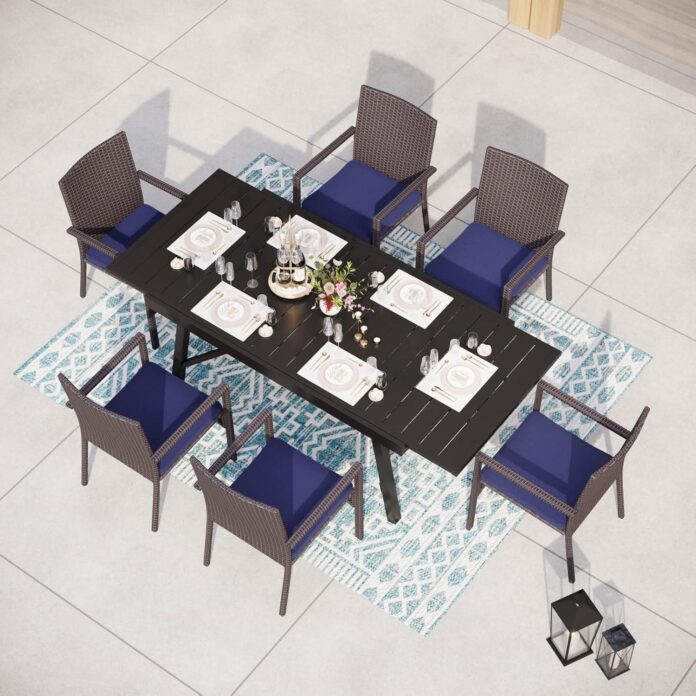
The first thing you notice is the table’s quiet visual weight — a black metal frame that feels deliberate under late-afternoon light, holding six woven chairs in a tidy ring. You’d see the label MFSTUDIO Outdoor Dining Sets for 6, though around the patio it quickly becomes just “the 7‑piece wicker set.” Run your hand over the rattan and the weave is slightly coarse but neat; the cushions give a dense, immediate resistance and the table edge stays cool beneath your palm. With the leaves tucked in it sits compact and composed; pull them out and it simply becomes a more assertive presence in the space.
When you unbox the MFSTUDIO seven piece patio set what arrives and how it’s packaged
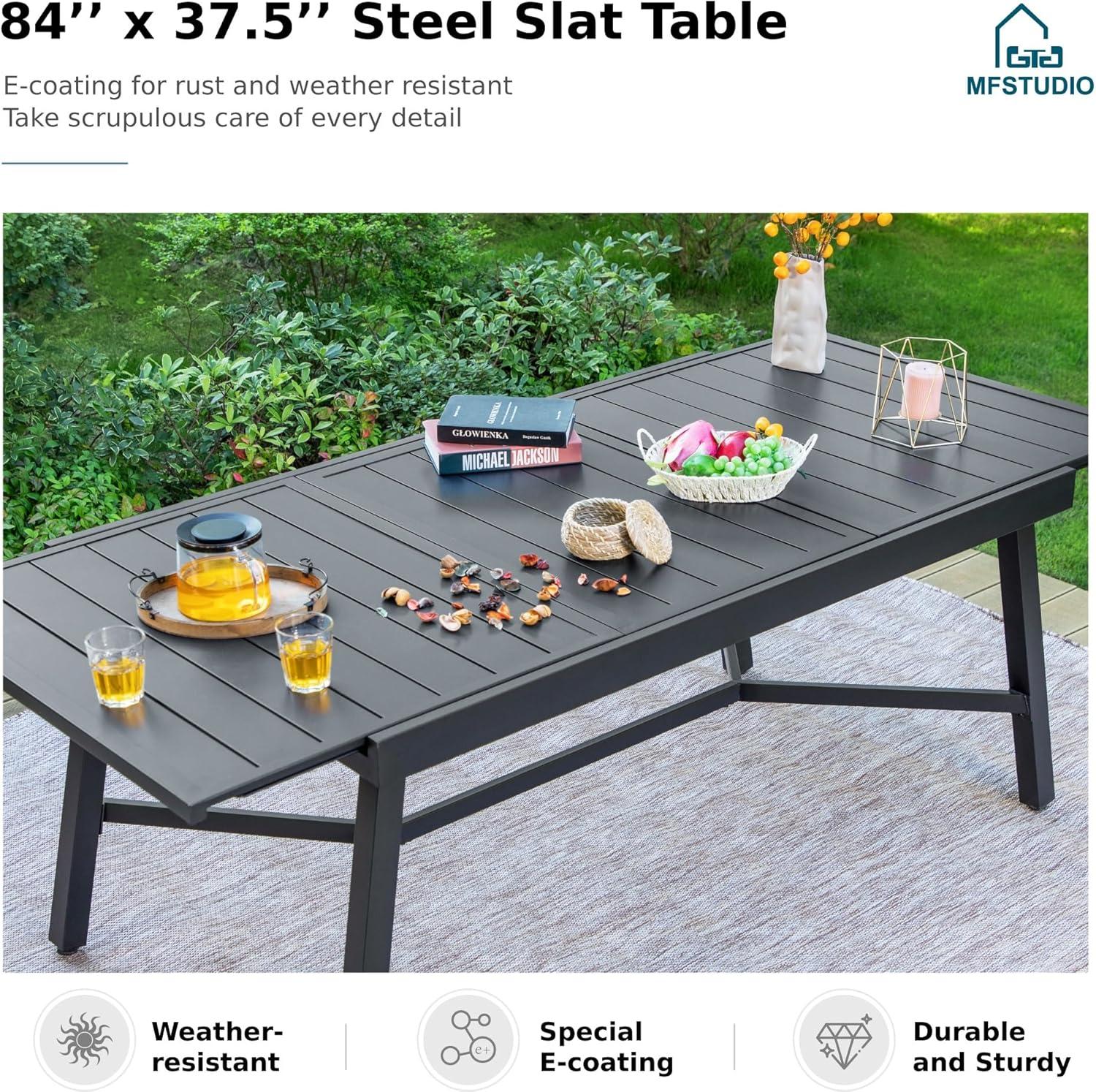
You’ll usually get the set in one or two heavy corrugated cartons, sometimes three depending on how the shipper packed it. The outer boxes arrive with printed product labels and wide packing tape; when you slit the tape the first thing that meets you is layers of plastic wrap and foam corner guards around the largest pieces. The largest carton tends to be dense and awkward to lift on your own, while the carton with the chairs feels lighter but thicker because the seats are nested.
Inside, major components are wrapped separately. Table parts (top panels, legs and any sliding or hidden leaf) sit on foam beds with cardboard sheets between faces; the metal pieces frequently enough have a thin protective film you’ll peel away. Chairs come stacked or nested, with arms and backs cushioned by foam blocks; cushions are usually in poly bags or vacuum-sealed plastic and lie flat until you unzip them and give them a few minutes to regain loft. Small hardware and the instruction sheet are tucked in clear, numbered plastic bags — you’ll find them taped to a flat surface or placed in a corner of a box rather than loose.
You’ll likely spend a few minutes spreading everything out on the floor and matching parts to the diagram. As you move pieces you tend to smooth any cushion seams, rub off residual plastic tabs, and set the smaller bags to one side so nothing goes missing. A rapid look-through of the manual shows exploded views and a parts list; the included hex key or Allen wrench is usually with the screws so you don’t have to hunt for tools.
| Box | Typical contents |
|---|---|
| Largest carton | Table top panels, table legs/frame, protective film and foam |
| Chair carton | Six chair frames/backs, nested seats, foam corner protectors |
| Small/flat box or interior pocket | Cushions (plastic or vacuum-sealed), hardware bags, instruction manual, small tools |
You may notice a faint factory smell from the packaging and a few plastic ties still clinging to woven areas; those come off easily as you unpack. Once everything is out you’ll typically set aside the hardware and lay out the pieces in assembly groups so you can work steadily without hunting through boxes.
How the set looks on your patio with scale color and the woven profile
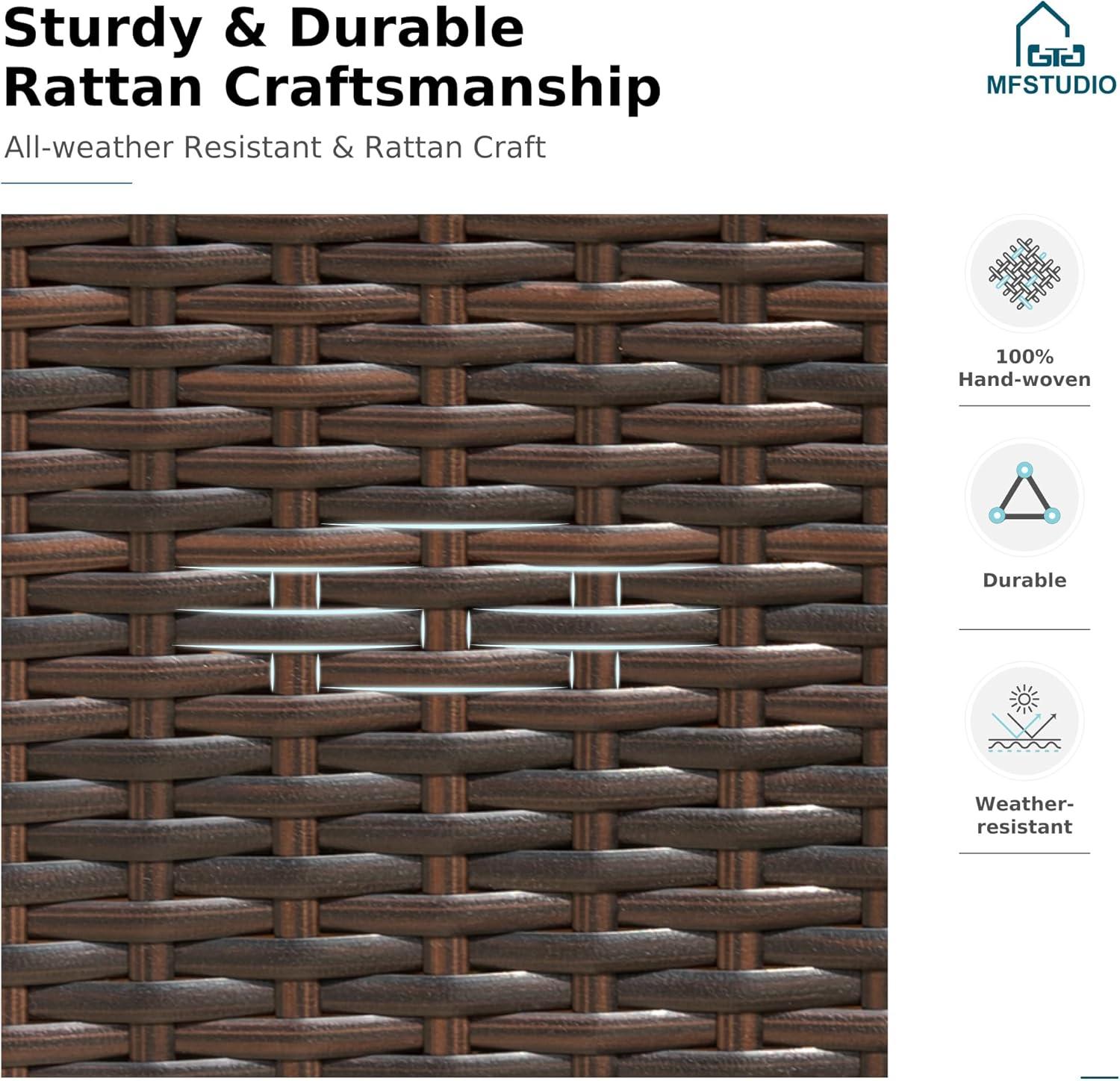
From where you stand at the doorway or the garden gate, the woven profile reads as a steady, repeating texture that breaks up the silhouette of table and chairs. The color shifts as you move: in radiant midday sun it takes on a warmer, slightly golden tone; in late-afternoon shade it slides toward a muted, cooler brown. if you slide the hidden leaf out and extend the table, the whole grouping stretches across the patio and the weave pattern becomes a longer horizontal band; closed, the same pattern feels more compact. Small shadows form in the weave’s gaps, so the tabletop edge and chair arms show a subtle dappled pattern whenever light hits at an angle.
| Light condition | Color appearance | Woven detail you notice |
|---|---|---|
| Midday sun | warmer, slightly golden | Individual strands and texture are clear |
| Overcast / shade | Cooler, more neutral brown | Pattern reads more uniform from a distance |
| After rain | Darker, more saturated | Weave looks compact and the surface has low sheen |
Up close, you notice how the weave flexes a little when you rest an elbow or smooth a cushion—seams shift and the cushion fabric compresses where you’ve been sitting. The chairs’ armrests and the table rim are where the woven edges are most apparent; they soften the furniture’s lines and create a softer transition to the floor. From a few paces away the group reads as a cohesive block of neutral tone; when you step nearer the rhythm of the weave and the small variations in strand color become the main visual detail. Over time and use, the weave’s shadows and the way cushions settle into it are the small, everyday changes that shape how the set looks on your patio.
What you can see in the construction from powder coated metal to resin wicker and cushion covers
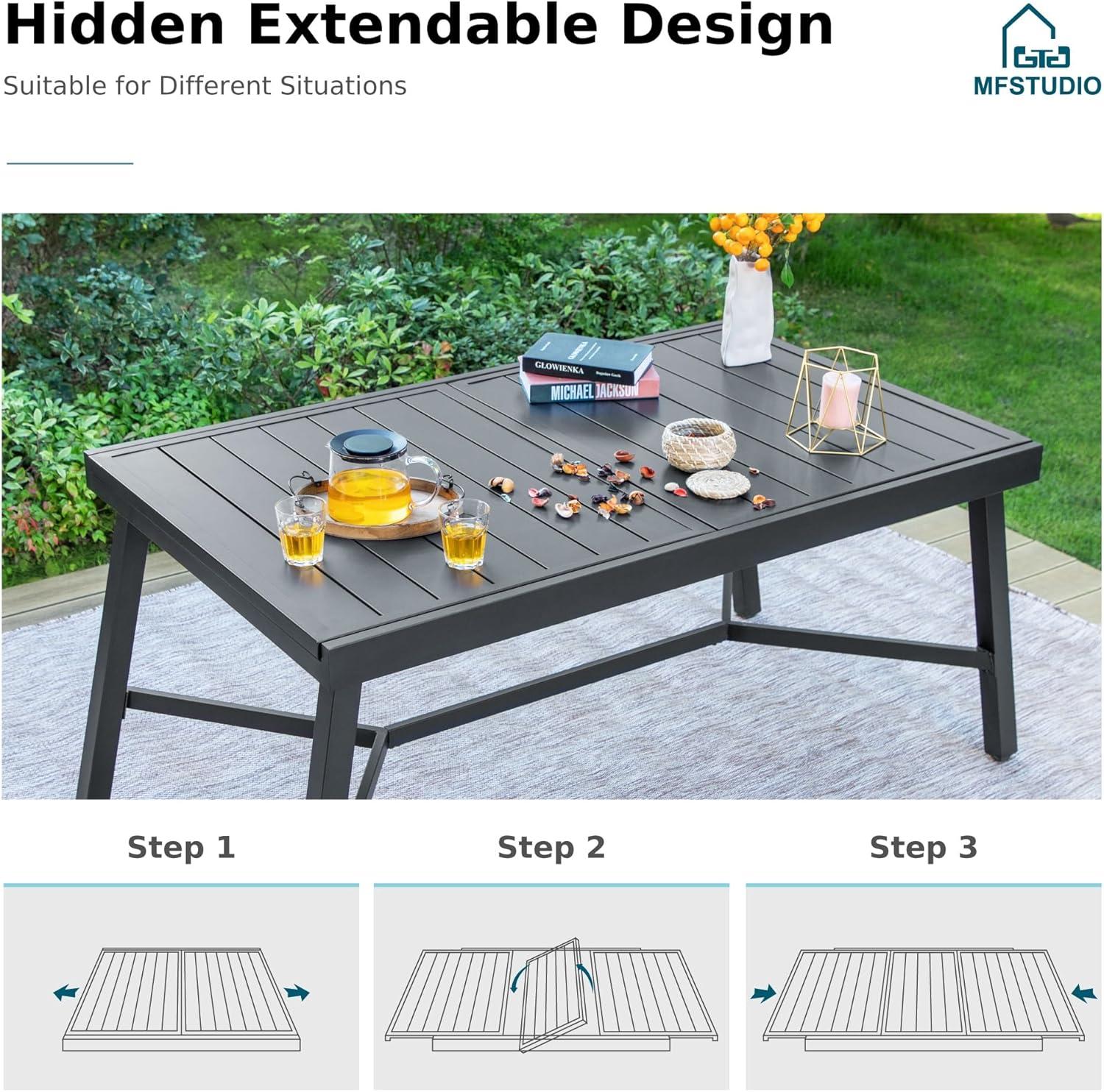
When you first run a hand along the frame, the metal reads as finished rather than raw — a mostly even, slightly textured skin that catches light without glaring. Close up you can see welds at the joints and the heads of bolts and screws where parts meet; they sit flush in most places but sometimes carry a faint shadow or raised lip that your fingers notice when you move a chair. The table’s extension mechanism shows seams and hinges that fold and slide; as you open and close it the moving parts reveal where the metal meets metal and where protective caps or plastic sleeves reduce metal-on-metal contact. In everyday use you find yourself brushing away tiny specks of grit from those crevices and occasionally nudging a panel back into alignment after shifting the span of the table.
The resin wicker looks woven rather than solid: individual strands cross and tuck around the frame, creating small pockets and slight texture under your palm. Where the wicker bends around corners the strands compress and overlap, and at the seat edges you can spot the points where the weave is anchored to the underlying metal. Cushions sit on top of that weave with covers closed by zippers—zipper pulls hide beneath flaps or tuck into seams—and the stitching lines track the cushion shape, sometimes forming small puckers where seams meet. As you settle into the chairs you’ll notice the cushion fabric shift a little and the foam compress; later you might smooth seams or straighten a cover after guests move around. The overall picture is one of layered construction: metal skeleton, woven skin, and soft covers, each junction revealing how the pieces are assembled and how they behave when used.
| Component | What you’ll notice |
|---|---|
| Powder/e-coated metal frame | Even, slightly textured finish; visible welds and fasteners; moving joints where parts expand |
| resin wicker | Individual strands in a cross pattern; points where weave is anchored to frame; slight give at high-contact bends |
| Cushion covers | Zippers and seam lines; subtle fabric shifting when sat on; occasional puckering at stitch junctions |
How the seats fit you with seat width back angle cushion thickness and table clearance by the numbers
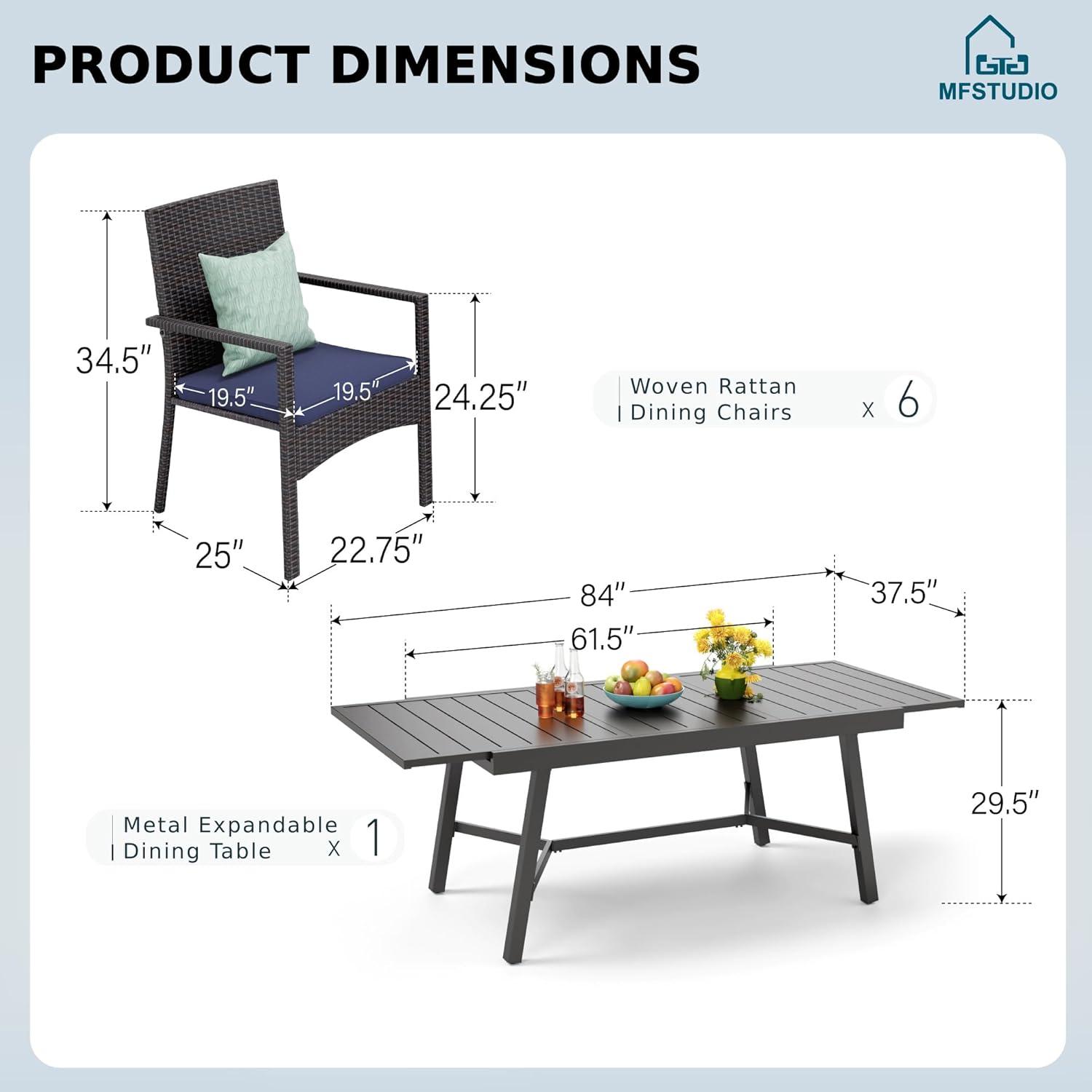
When you slide into the chair the most immediatly measurable thing is the seat width: about 20.1 inches across at the front edge. That gives you a clear shoulder/hip boundary as you shift — you’ll notice the woven sides line up with your thighs and you sometimes smooth the cushion where it bunches at the seam.
The seat cushion itself sits as a distinct layer on the frame. Measured by feel and a quick ruler check, the foam and cover stack is roughly 2–3 inches thick; when you lower yourself it compresses a little, so the effective thickness while sitting tends to be toward the lower end of that range. The backrest leans back slightly rather than standing vertical — visually and by angle it’s about 100° from the seat base (a gentle recline).you rest against the curved rattan and sometimes shift to find where the curve meets your lumbar line.
Table clearance is a practical number you notice as you sit and slide your knees under. The table top is about 29.5 inches off the ground; with the cushion in place the distance from the top of the cushion to the underside of the table typically measures around 9–12 inches, depending on how much the cushion is compressed as you settle. That gap changes if you push the cushion back or sit further forward.
| Measurement | Observed value | How it presents while you use it |
|---|---|---|
| Seat width | ~20.1 in | Defines thigh placement; you may tuck elbows to the armrests when you shift |
| Cushion thickness (nominal) | ~2–3 in | Compresses slightly when you sit; you often pat or smooth it into place |
| Back angle | ~100° from seat base | Slight recline; you rest against a curved woven surface and adjust position to hit the lumbar curve |
| Table clearance (knee room) | ~9–12 in (top of cushion to underside of table) | Varies with cushion compression; you’ll notice the gap shrink when you sink into the cushion |
Putting it together and living with it day to day including assembly steps table expansion and handling

Putting the pieces together is front‑loaded work you do once, but the way they behave in everyday use becomes an almost unconscious routine. As you unpack, the chairs come as obvious subassemblies and the table arrives in a few larger panels; you find yourself tightening the same set of bolts a handful of times to get joints snug and checking that the feet sit flat on the patio. During those first few meals you’ll notice small adjustments — smoothing a cushion seam, nudging a leg so the table no longer rocks, lining up the tabletop rails before you pull the leaf out — habits that settle into a simple rhythm.
| Step | What you’ll do | Typical time | Notes from handling |
|---|---|---|---|
| Unpack and sort | Remove parts, match fasteners to bolts and panels | 10–20 minutes | Small plastic bags are labeled; you’ll set screws to one side as you work |
| Assemble chairs | Attach legs/arms, tighten crossbars, place cushions | 15–25 minutes per chair | Frames line up if bolts are started loosely, then tightened in sequence |
| table base and top | Fasten base, secure tabletop panels, test sliding mechanism | 30–45 minutes | Rails may need gentle alignment; the table sits heavier once fully bolted |
| Install leaf | Pull center rail, flip or slide in hidden leaf, lock into place | 5–10 minutes each use | The leaf fits into a recessed area; steadying the top with one hand helps |
| Final checks | Retighten fasteners, level feet, adjust cushions | 10 minutes | You’ll revisit these after the first few uses |
Expanding and contracting the table becomes a short ritual. You slide the tabletop rails until the hidden panel is exposed,then flip or set the leaf and ease the surfaces back together; in everyday moments you tend to steady one side while you manipulate the other,and a little jostling occasionally means a quick realignment. After several cycles the movement feels smoother, and the mechanism tends to sit flush without fuss; in some uses the leaf requires a small lift to seat perfectly, which is why a steadying hand is handy while positioning plates.
Living with the set means small, repetitive interactions: shifting cushions back into place after someone rises, running a hand along the rattan to brush off crumbs, pushing chairs back under the table so walkways stay clear. Fasteners that seemed tight on day one can feel noticeably looser after a few gatherings, so reaching for the included wrench occasionally becomes part of the pattern. In breezy weather the cushions often migrate a little; you find yourself tucking straps or zippers closed more than once. Minor squeaks or the need to level a leg appear in the first weeks and tend to ease once everything settles into position.
How the set matches your needs and where it diverges from expectations in real life
In everyday use the set largely behaves as was to be expected: the tabletop extends and settles into place without elaborate maneuvers, and the chairs feel immediately familiar when someone eases into them. The cushions tend to compress a bit with repeated sitting, prompting a quick smoothing or a subtle shift of the cushion back into alignment. When plates, glasses and conversation are spread across the table, the assembled whole reads as a single unit rather than separate pieces—people slide seats back, tuck feet under the chair, and use the low crossbars in ways that subtly change posture over the course of a meal.
| Expectation | Observed in everyday use |
|---|---|
| Expandable table opens and locks smoothly | Generally smooth; the hidden leaf flips into place cleanly but sometimes requires two hands or a second person to steady the table while unfolding |
| Cushions stay plump and in position | Cushions compress with repeated use and are often nudged back into place; occasional smoothing becomes part of normal seating habits |
| wicker and frame resist the elements without fuss | Wicker repels light moisture well, though cushions left out can absorb dew overnight; metal components warm in direct sun and may show smudges from hands |
| Stable on a typical patio surface | Stable on flat surfaces; on slightly uneven stone or deck boards a perceptible rock can develop, leading to small foot adjustments during long meals |
Small, repeated interactions—the quick habit of tucking the cushion, angling a chair slightly to speak to someone across the table, or nudging the leaf closed after a meal—shape how the set fits into daily rhythms.These are not dramatic departures from expectation, but they are the details that become noticeable after the first few uses.
View full specifications, size and color options
How you’ll keep it season after season with drainage covers and straightforward maintenance routines
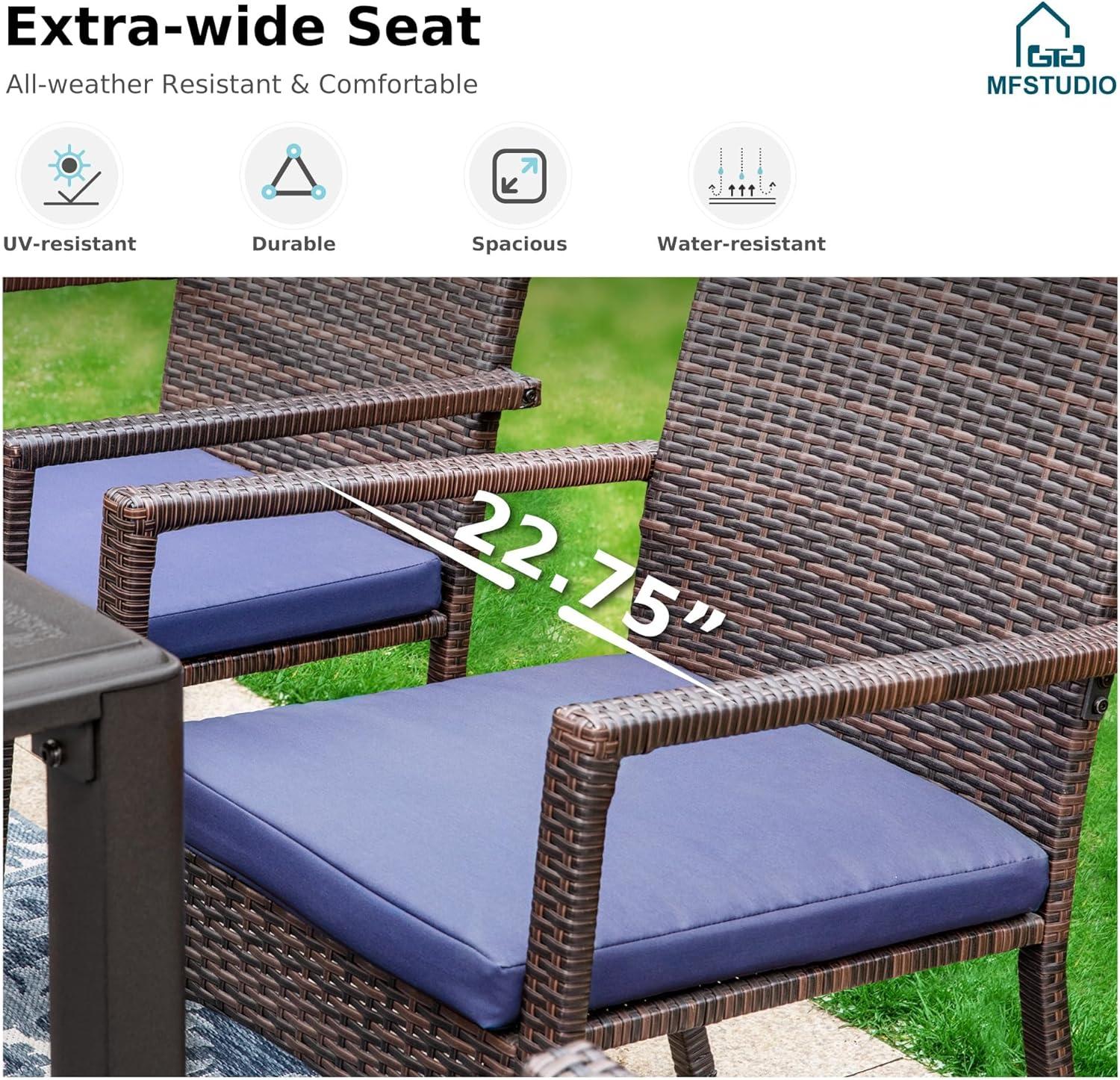
You’ll notice the set settles into the weather the way any outdoor furniture does: cushions get a little flattened where you sit, and mornings after rain you might find faint beads along seams. The drainage covers that come with the cushions sit low against the base and tend to funnel that surface water toward the underside rather than letting it pool on top. In practice that means when you lift a cushion after a shower you’ll often see dampness around the edges rather than a soaked middle, and a quick shake or a few taps usually sends the remaining drops out along the cover’s channels.
Keeping things in steady shape is mostly small,repeatable habits rather than big interventions. Smooth cushion covers back into place after use so seams line up and water escapes as intended; unzip or loosen covers on dry days so trapped moisture can evaporate; brush off leaves and grit before they sit into crevices. Periodically wiping the metal frame where rain runs off prevents the little streaks that gather dirt, and giving the woven surfaces a gentle brush or rinse after a windy week keeps grit from collecting in the weave. These routines tend to be quick—most households find a short wipe-down once a week and an airing session after wet weather keeps things behaving season after season.
| task | When you’ll do it | What it looks like in use |
|---|---|---|
| Shake/air cushions | After heavy rain or every few days in wet weeks | Cushion edges release droplets, fabric fluffs back up |
| Wipe frame and tabletop edges | Weekly or after storms | Light streaks are removed, seams stay clear for drainage |
| Brush/rinse wicker weave | Monthly or after windy periods | Loose grit comes out, woven gaps stay free-flowing |
How the Set Settles Into the Room
Over time, as the room is used and household rhythms settle, you notice how the MFSTUDIO Outdoor Dining Sets for 6, Patio table and Chairs, Outdoor Metal Expandable Table & Cushioned Chairs, 7 Pieces Patio Wicker Dining Furniture Set for All Weather Use slips into familiar sightlines rather than standing out.Its chairs soften into the pattern of evening conversations and quick breakfasts, and the table’s surface gathers the small, honest marks of daily life where plates and glasses habitually sit. In daily routines you leave a mug at one corner, a paperback on another, and the set becomes a place that quietly holds those small motions. After months, it stays, quietly part of the room.
As an Amazon Associate I earn from qualifying purchases.
