
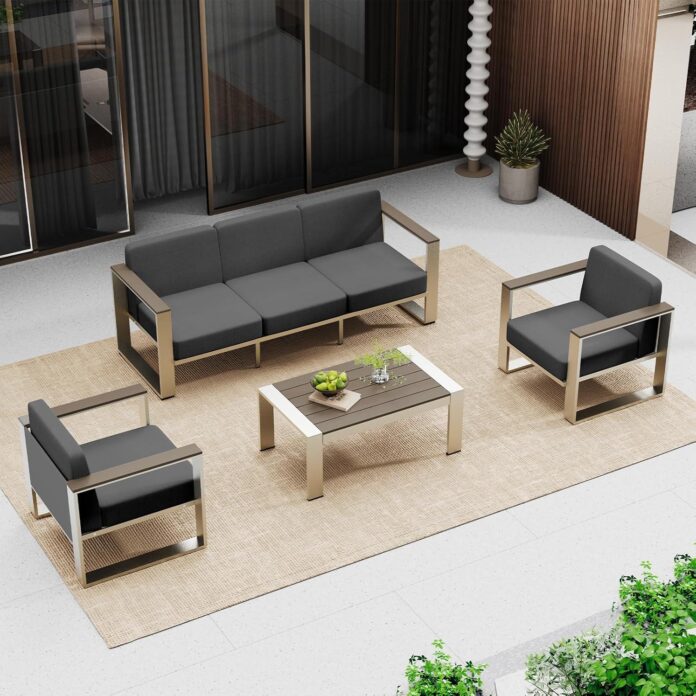
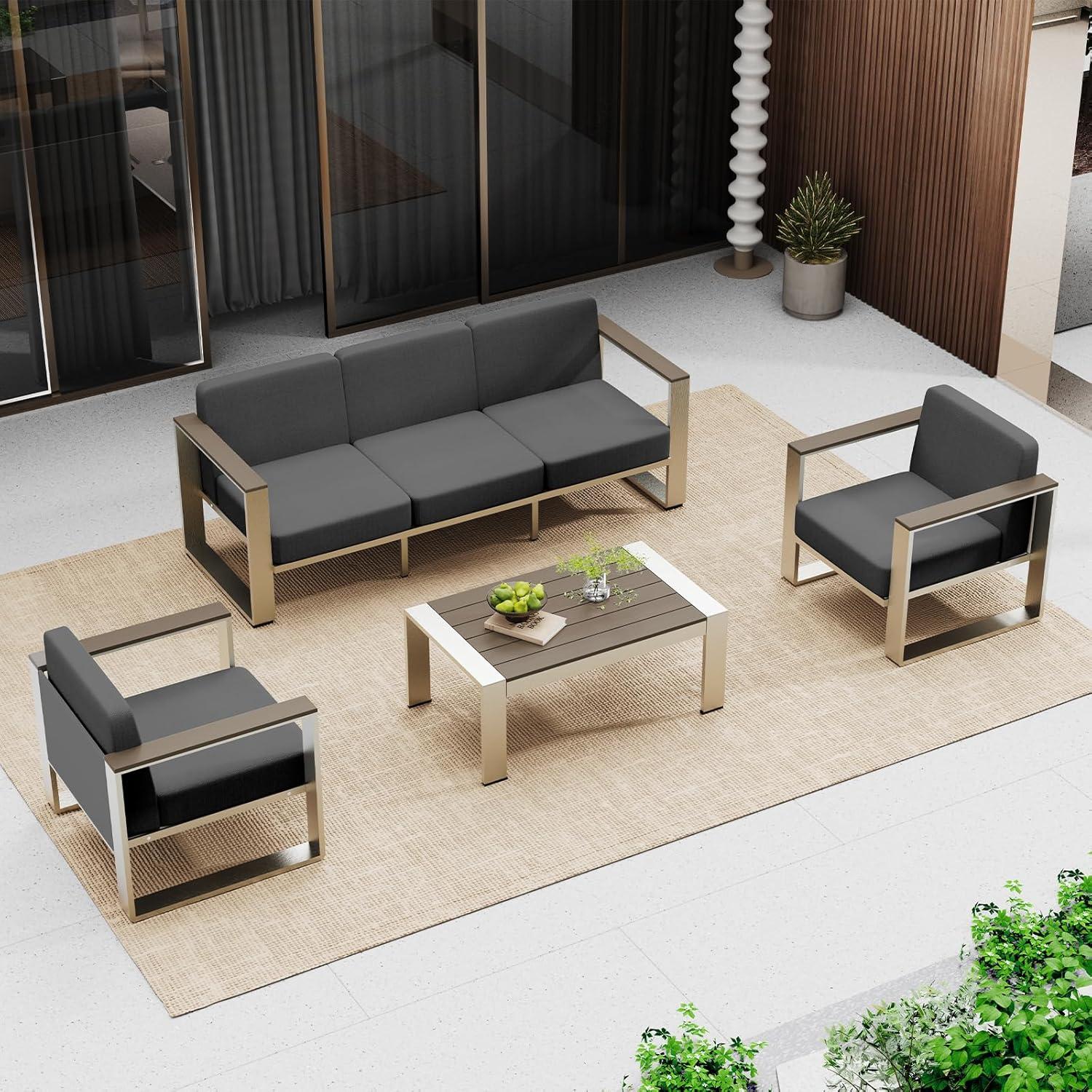
On a late afternoon you notice the Oasbira 4‑piece aluminum patio set in dark gray sitting like a small living room outdoors. Up close the matte metal feels cool and solid under your hand, and the cushions give a firm, enveloping push rather than a plush sink. The coffee table’s wood‑grain top catches the light with a faint, manufactured warmth, and the wide seats change the way the grouping fills the porch — more relaxed than cramped. overall it reads as a quietly anchored arrangement: weighty enough too feel permanent, but simple enough that you almost forget it’s new.
A quick look at the four piece aluminum patio conversation set in darkgray
when you step up to the set, the first thing that catches your eye is the even, muted darkgray that covers both frame and cushions.From a few feet away the pieces read as a coherent group: low-profile frames outline the seating, while the cushions sit slightly proud of the armrests and back rails. Up close you notice seams and piping that follow the cushion contours, small wrinkles where the cover meets the corner seams, and the way the seat cushions settle a fraction when you press them with your palm.
Set in place, the coffee table looks like a natural pause between the seats — its surface shows a subtle grain that breaks the monochrome and a slight sheen when light skims across it. As you lower yourself into a seat, the bottom gives with a short, springy rebound and the back cushion yields to your shoulders; you find yourself smoothing the cushion top and nudging it back into alignment out of habit. Small gaps appear at the joints where frames meet,and the metal shows faint tooling lines at the connections that only reveal themselves under close inspection.
| Piece | Immediate visual/feel note |
|---|---|
| Armrests | Wood-grain surface contrasts with the gray, cool to the touch in shade |
| Seats | Cushions sit visibly above the frame and compress with a brief rebound |
| Coffee table | Flat surface shows faint texture; items sit level without rocking |
How it reads from your porch: color, silhouette, and curb appeal
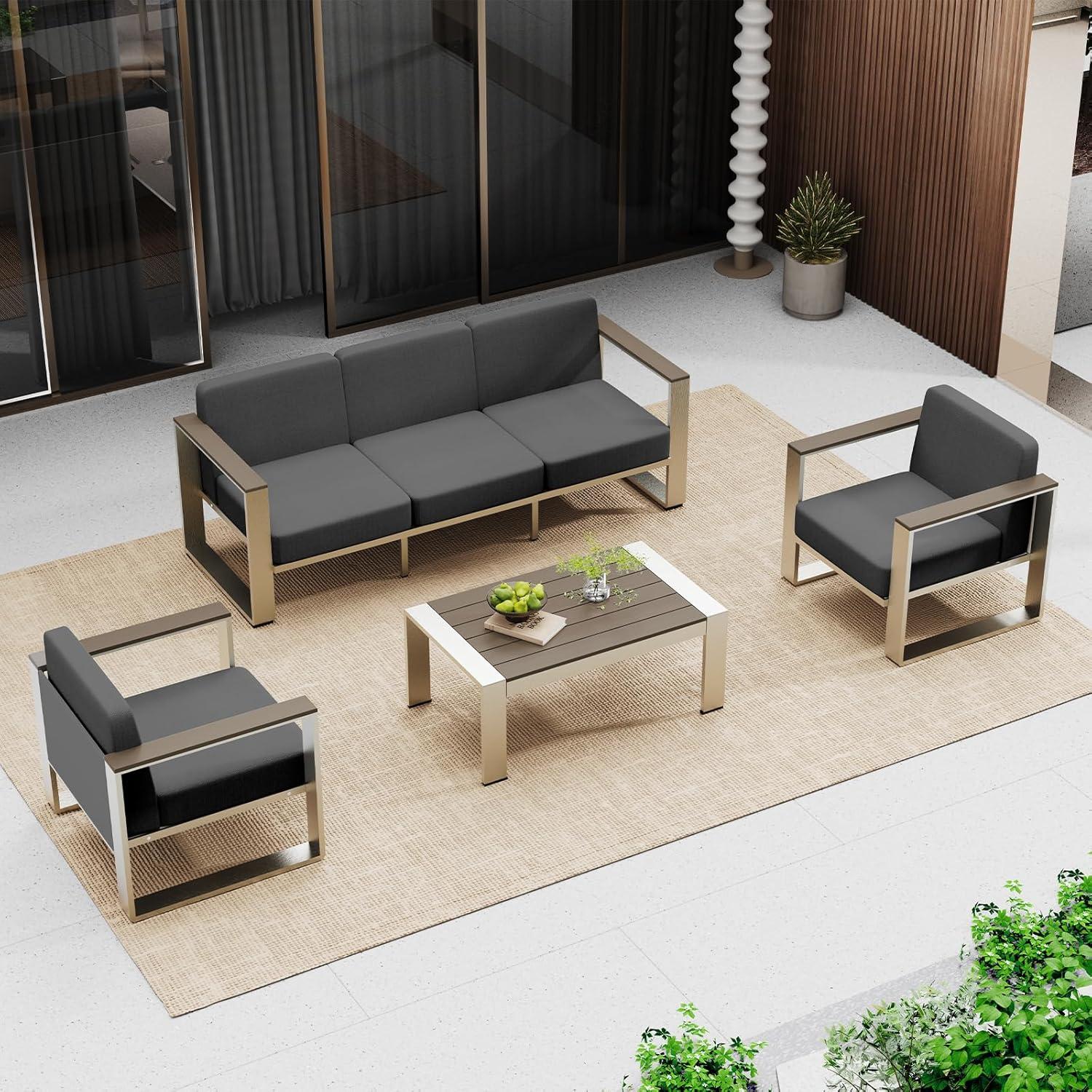
From the threshold, the set settles into the view as a low, horizontal presence. The dark gray color often reads as a soft, anchoring tone rather than a stark block — in bright sun it reveals subtle variations where seams and fabric weave catch the light, and in overcast or evening light the cushions and frame can blur into a single dusky plane. The armrests and table interrupt that plane with a slightly warmer vein when sunlight hits the wood-grain surfaces, so the overall silhouette breaks into layered bands rather than one uninterrupted mass.
Up close you notice the joins and the way cushions respond when you sit or smooth them—little folds and compressed seams show the set as lived-in. A few paces back the seats read wider than tall; the footprint emphasizes horizontal breadth more than height, wich changes the porch’s visual balance by pushing attention outward across the deck rather than upward toward railings or trim. At greater distance the group condenses into a neat, dark shape that tends to quiet competing colors on the facade and draws the eye toward the porch area as a single composition.
| Viewing distance | Typical visual impression |
|---|---|
| Close (within arm’s reach) | Texture, seams, and slight sheen visible; cushions show small creases where people settle in |
| Mid (a few paces from porch) | Horizontal bands dominate; armrests and table break the silhouette into layered elements |
| Far (from street or yard) | appears as a tidy, dark mass that unifies the porch area, with wood-toned highlights when lit |
Getting close to the frame and fabrics: materials, joints, and table top details
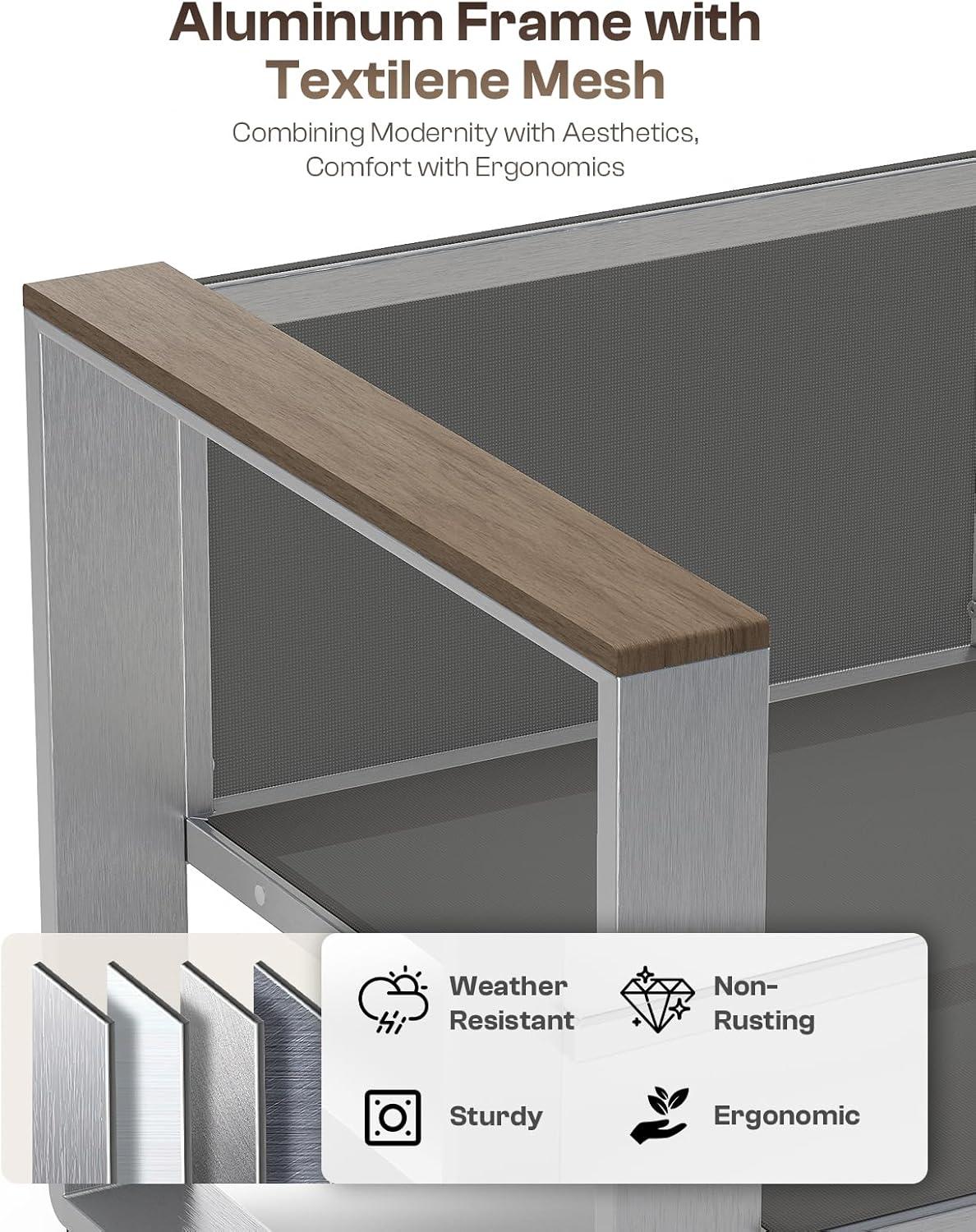
Get close enough and the frame reads like a piece of outdoor gear rather than invisible structure. When you tuck a knee toward the armrest you can feel the cool, metallic edge where the metal meets the cushions; the surface is matte, with the kind of finish that rubs off a little warmth from your palm on a sunny afternoon. Weld seams are visible at the joins — short beads here and there — and you’ll occasionally find a tiny unevenness where two pieces were fused. Under the seats, fasteners sit recessed or capped so they don’t snag when you slide cushions into place; you’ll notice the occasional Allen-head bolt if you lift a cushion to check.
Joints behave like working connections rather than decorative details. As you adjust cushions or shift your weight, the corners where arms meet backs move together with a small, predictable give; the frame doesn’t creak, but there’s a subtle transfer of tension along the welds and bolted brackets. Plastic end caps cushion the feet against the deck and hide the metal cut, and the connection points on the coffee table reveal small pockets where water can bead briefly before running off. When you smooth a cushion down,seams catch against the frame edge and you find yourself tucking fabric into those gaps to keep things sitting tidy.
| Visible element | What you notice up close |
|---|---|
| Frame finish | Matte metallic surface with faint weld beads and capped fasteners |
| Joints | Welded corners with bolted brackets beneath cushions; small flex when shifted |
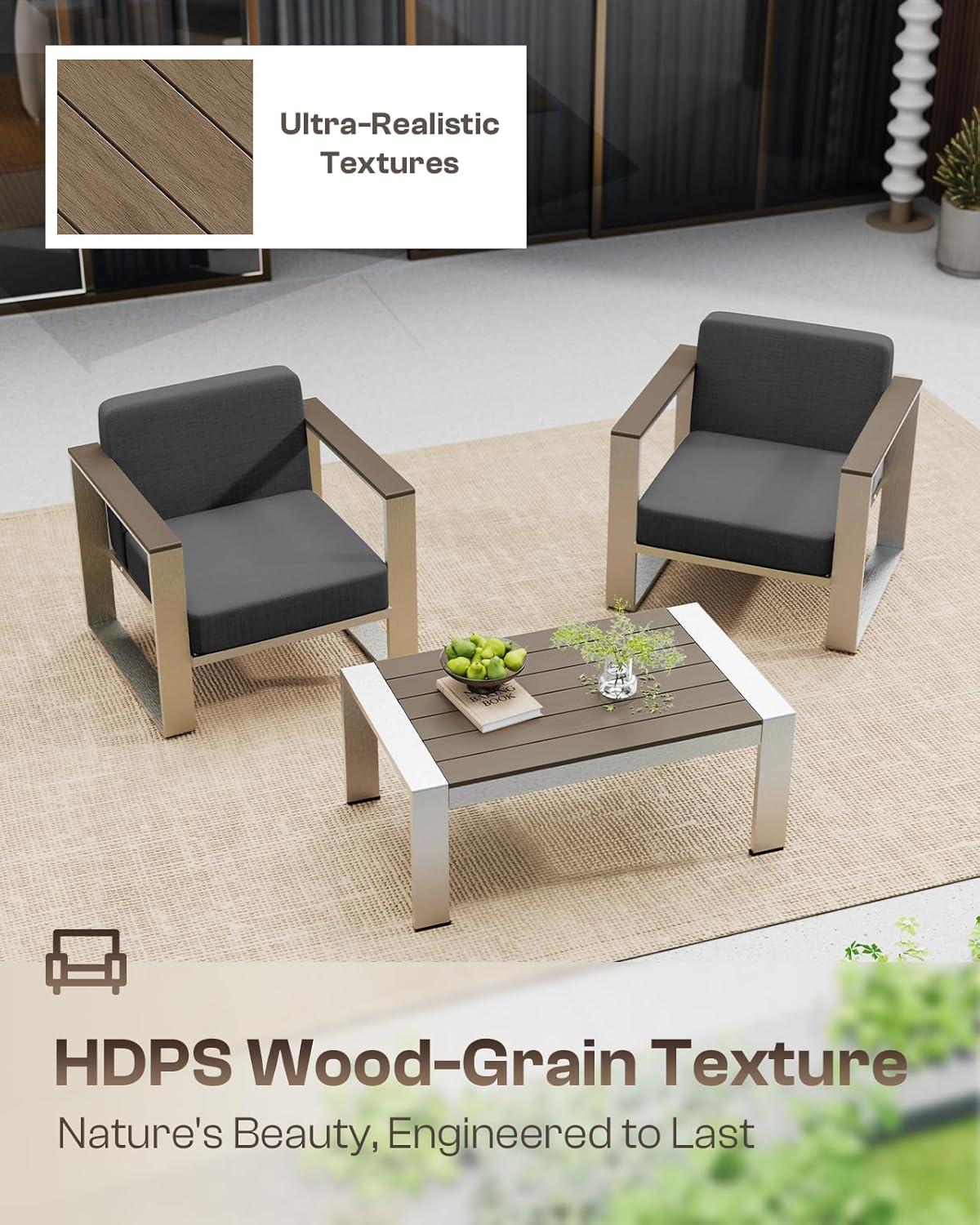
| Table top | Wood-grain panel set into a metal rim, textured to the touch with narrow gaps at the join |
Run your hand across the coffee table and the wood-grain panel reads as a textured laminate rather than raw wood; you can feel the simulated grain and the slight seam where the panel meets the aluminum rim. The tabletop sits a little recessed into its frame,so crumbs and drizzle tend to settle along that edge until you wipe them away. Cushion covers use hidden zippers and the fabric hugs seams; you’ll often find yourself smoothing a stitch line or nudging a corner back over the frame after people get up.
Wide seating and thick cushions: measurements, cushion thickness, and how the seats compress when you sit

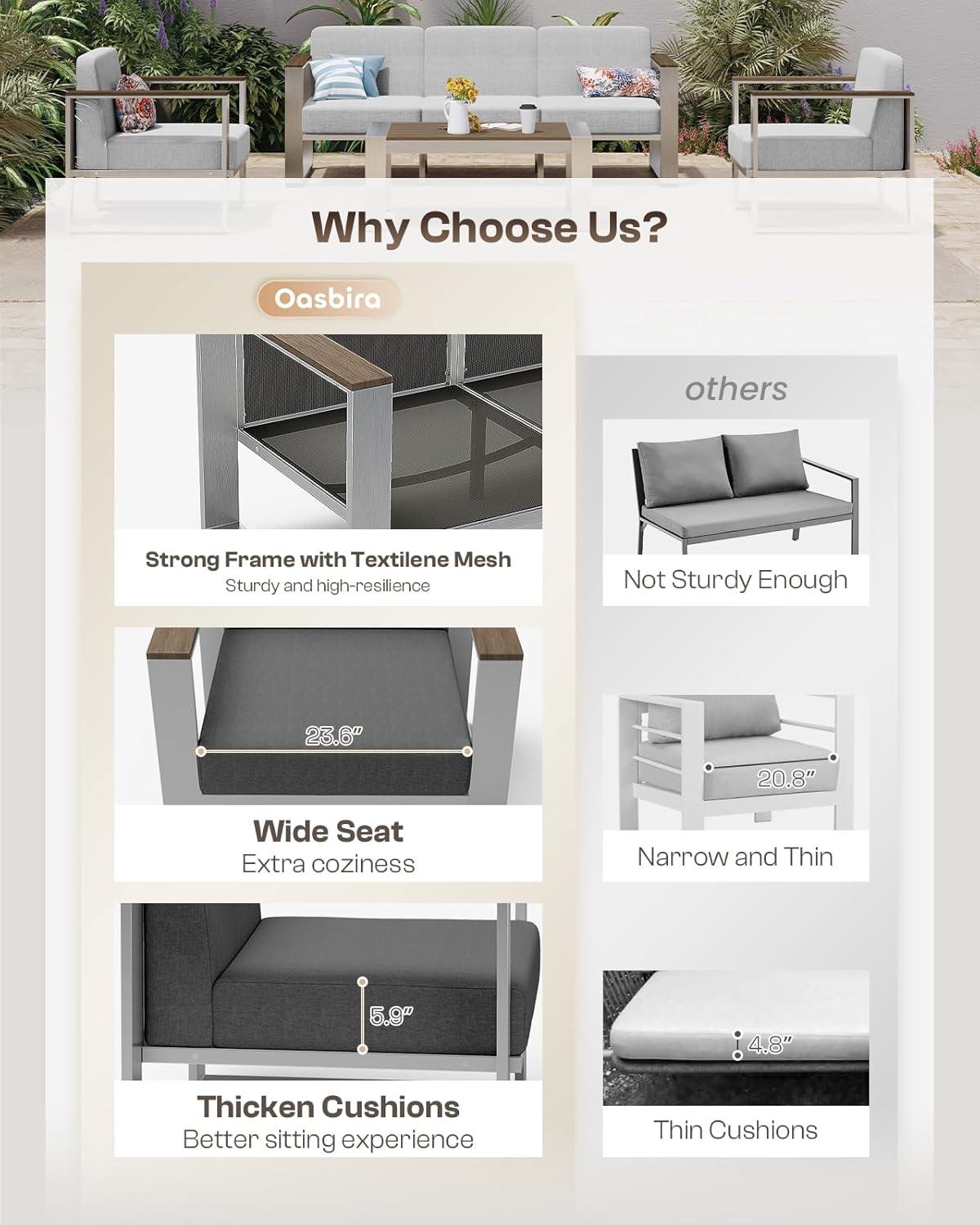
When you settle into a seat, the first thing you notice is the breadth under you — the base gives you room to change position without feeling cramped. The seat platform measures roughly 23.6″ by 27.6″, and the cushions sit a few inches above the aluminum frame so you don’t press directly onto the metal. As you move, the top layer compresses and the fabric smooths; there’s a small habit of sliding the cushion back into place after you stand up, and the piping along the seams often needs a quick straighten to keep the edges looking even.
| Measured detail | Approximate Thickness / Behavior |
|---|---|
| Seat cushion (uncompressed) | About 4″ — soft top layer with denser core |
| Back cushion (uncompressed) | About 5″ — loftier, conforms as you lean back |
| Compression when seated | Tends to compress ~1–2″ under an average adult; the mesh support below provides a slight give before any firm contact with the frame |
Pressing down with your hands or sitting in different postures shows how the cushions recover: they rebound but not instantly, so there’s a brief sense of settling before they spring back. If you shift toward the armrest, the cushion compresses more at that edge and you’ll often nudge it back into place. The seat bottom’s mesh layer adds a taut,responsive feel beneath the foam,so the compression feels layered rather than a single collapse; over short uses the foam regains shape,though consistent repositioning becomes part of how you use the set.
Measurements and layout: the footprint each piece occupies on a typical deck or porch
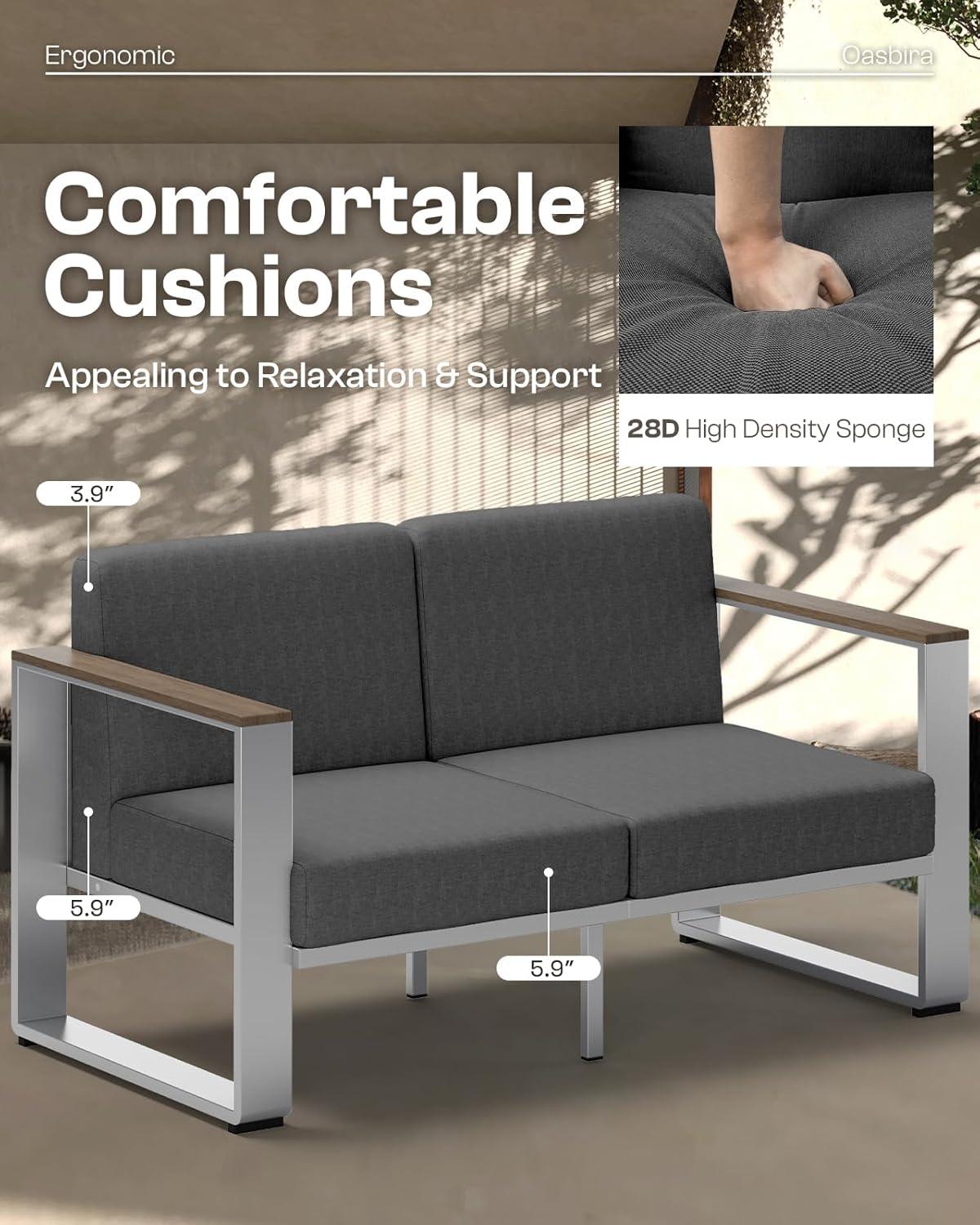
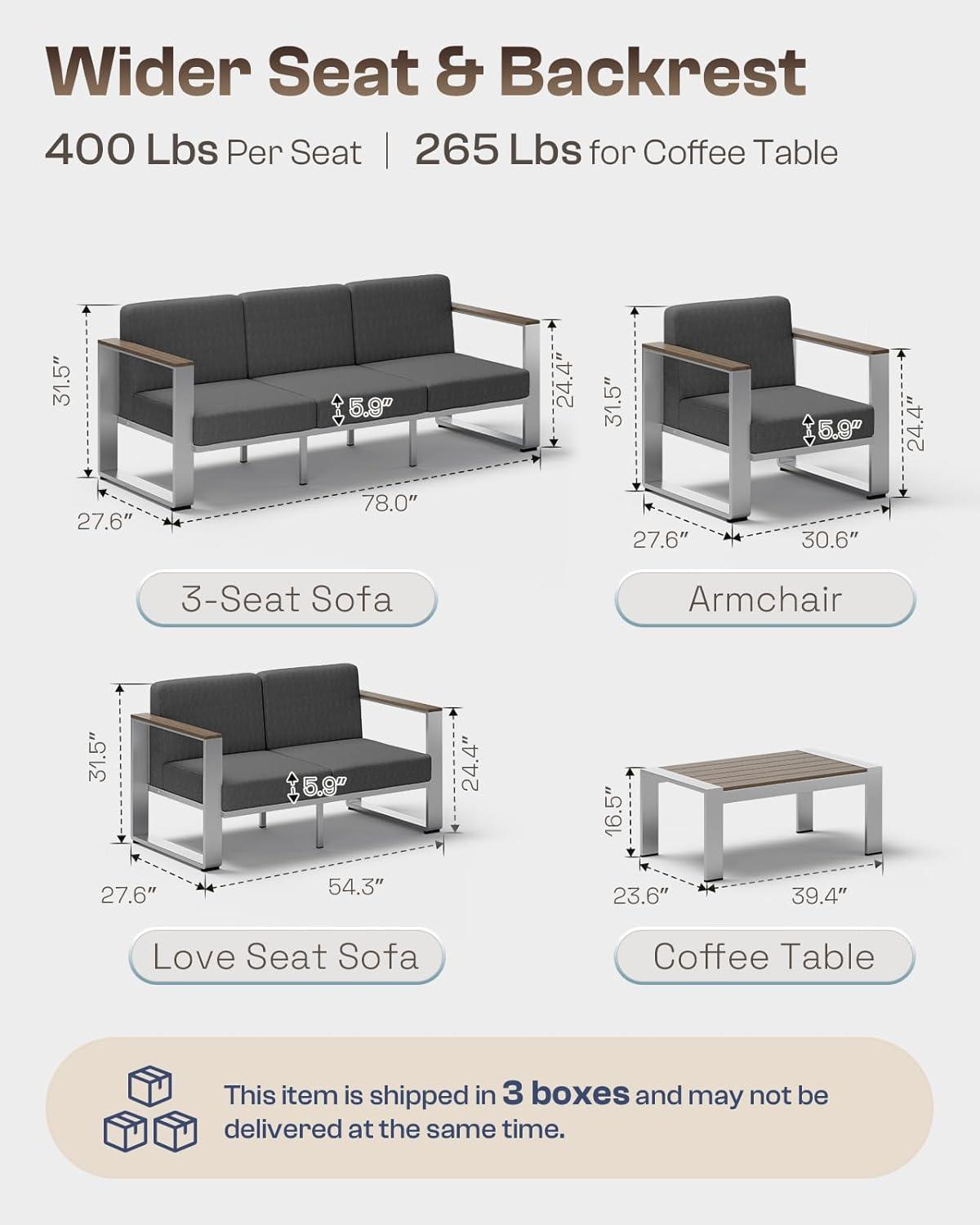
You’ll notice the single seating module sits more compactly than it looks in photos: the seat base measures 23.6″ by 27.6″,so on bare decking it occupies roughly a 2′ × 2.3′ rectangle. Once the back cushion is fluffed and you push the seat slightly away from a railing or wall, the informal “in-use” footprint tends to expand—cushions shift, people scoot their feet, and seams tuck or pull—so you should expect a little extra room around that measured rectangle.
| piece | Nominal floor footprint | Typical in-use footprint (approx.) |
|---|---|---|
| Individual seat | 23.6″ × 27.6″ | ~30″ × 34″ (allows for cushions and legroom) |
| Coffee table (between seats) | Varies by model | Typically needs 18″–24″ clearance to seating edges to allow access |
When you arrange the pieces into a conversation grouping on a typical porch, the overall footprint depends on how much passage space you leave. In moast cases,placing two seats opposite a coffee surface produces a rectangle of roughly 6’–7′ by 4’–5′ when you count the seat depths,table gap,and a narrow walking path. If you set seats at right angles to one another the layout can feel more compact but will still require that similar perimeter space as cushions and arms extend beyond the frame.
Practically speaking, the ensemble rarely sits as a set of precise boxes—cushions compress, people slide chairs an inch or two, and the coffee table becomes the point around which you clear a few inches for cups or trays. those small shifts are what determine the lived footprint on your deck or porch,rather than the raw frame dimensions alone.
How this set matches your expectations and handles everyday constraints
Expectations about daily life with this set tend to align with what one actually encounters: cushions compress under regular use and settle into preferred positions, prompting occasional smoothing or a quick nudge to realign seams. Lounging sessions reveal that padding softens with movement, and occupants often shift cushions or slide them back into place after getting up. The seating and armrest surfaces show the small marks and impressions typical of repeated contact, which gently disappear as cushions relax and fabric fibers resettle over hours or days.
Everyday constraints—weather,pets,gusts,and active use—produce predictable behaviors rather than surprises. After brief exposure to moisture the soft parts can retain a light dampness and feel heavier until fully dried; on breezy afternoons cushions sometimes migrate an inch or two from their original alignment; an uneven deck may introduce a slight,occasional rock when leaning against a corner. High-traffic routines lead to gradual flattening in the highest-contact spots, and routine adjustments like readjusting backrests or smoothing slip seams are common household gestures.
| constraint | Typical observation |
|---|---|
| Frequent sitting | Cushions soften in spots and require occasional reshaping |
| Rain or dampness | Soft parts can hold slight moisture and feel heavier until dried |
| Wind or movement | Cushion positions tend to shift modestly; nothing slides dramatically in most cases |
| Uneven surfaces | Minor rocking or settling at contact points may occur |
View full specifications and available color and size options
Care, storage, and seasonal handling observed during testing
During the weeks of use you notice small, habitual gestures become part of the routine: smoothing the cushion tops after someone stands up, nudging a back cushion back into place, and shifting a seat pad so seams sit flush with the frame. The cushions compress where bodies rest and then rebound; you catch yourself patting corners and running a hand along the fabric to re-seat the fill. After a sudden shower you tend to lift the cushions,shake off beads of water,and leave them angled to dry in the sun for a while — in most cases the dampness evaporates within hours on warm days,though wetter mornings can leave a lingering coolness in the fabric.
Handling the frames and tabletop during seasonal changes also falls into a pattern. When you move pieces to a covered spot or slide them close together for short-term shelter, the aluminum feels light enough to manage without tools, and the table top panels stay flush enough that sliding doesn’t require much repositioning. Over a season you’ll find yourself consolidating cushions into an upright stack on the porch on rainy afternoons and,when colder weather sets in,transferring cushions and smaller items to a dry area indoors or under a tarp for longer stretches.There are moments of fiddling — tightening a bolt you notice has loosened, or straightening an armrest after shifting furniture for storage — that seem to come up sporadically rather than on a fixed schedule.
| Observed task | Cadence during testing | Notes from use |
|---|---|---|
| Smoothing/reshaping cushions | Daily to every few days | often done unconsciously after standing or stretching |
| Spot wiping frames/table | Weekly to after heavy precipitation | Quick wipe usually removes surface residue; beads of water roll off |
| Drying cushions after wetting | Hours to a day, depending on weather | Sun helps; cool, damp days prolong drying |
| Consolidating for seasonal storage | At seasonal transition | Smaller items moved first; larger pieces shifted as needed |
How the Set Settles Into the Room
Over time, as the room is used and in regular household rhythms, you notice the Outdoor Furniture Set, 4 Piece Aluminum Patio Furniture Set with Coffee Table, Wide Seat and Thick Cushions, Outdoor Patio Conversation Sets for Deck, Porch (Darkgray) claiming a quiet corner. The wide seats sink into familiar hollows and the cushions rearrange themselves into a softer, habitual comfort that matches slow mornings and evening conversations. Small scuffs and a slight dulling on the surfaces mark the passage of daily routines, while the coffee table keeps becoming the ordinary landing place for mugs, mail, and a plant. You notice it stays.
As an Amazon Associate I earn from qualifying purchases.
