
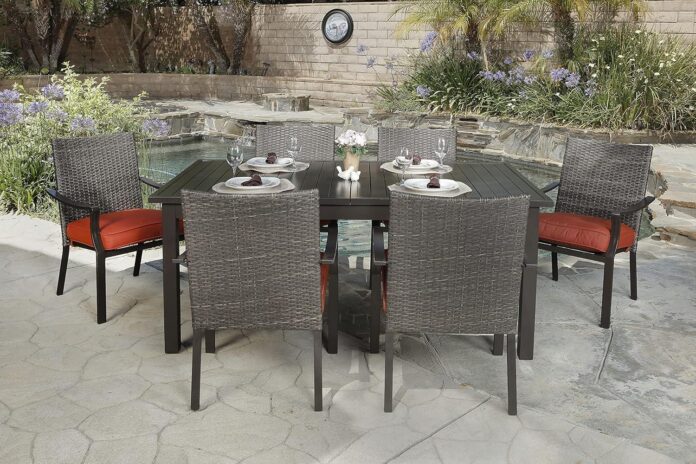
You step outside and the set reads like a small, purposeful arrangement rather than a pile of outdoor furniture — a broad, hand-woven tabletop with six chairs that immediately change how the patio feels. It’s the Pacific Casual Somerset 7-piece dining set in the corner, though you quickly shorten the name in conversation. The aluminum frame is cool where your hand rests, the woven seats give a faint, flexible bounce, and the deep-red cushions mute the sun’s glare without shouting. Open the butterfly leaf and the table stretches outward, shifting sightlines and leaving you noting the slatted surface and the way light threads through it.
What you notice first when the Somerset seven piece set arrives at your patio
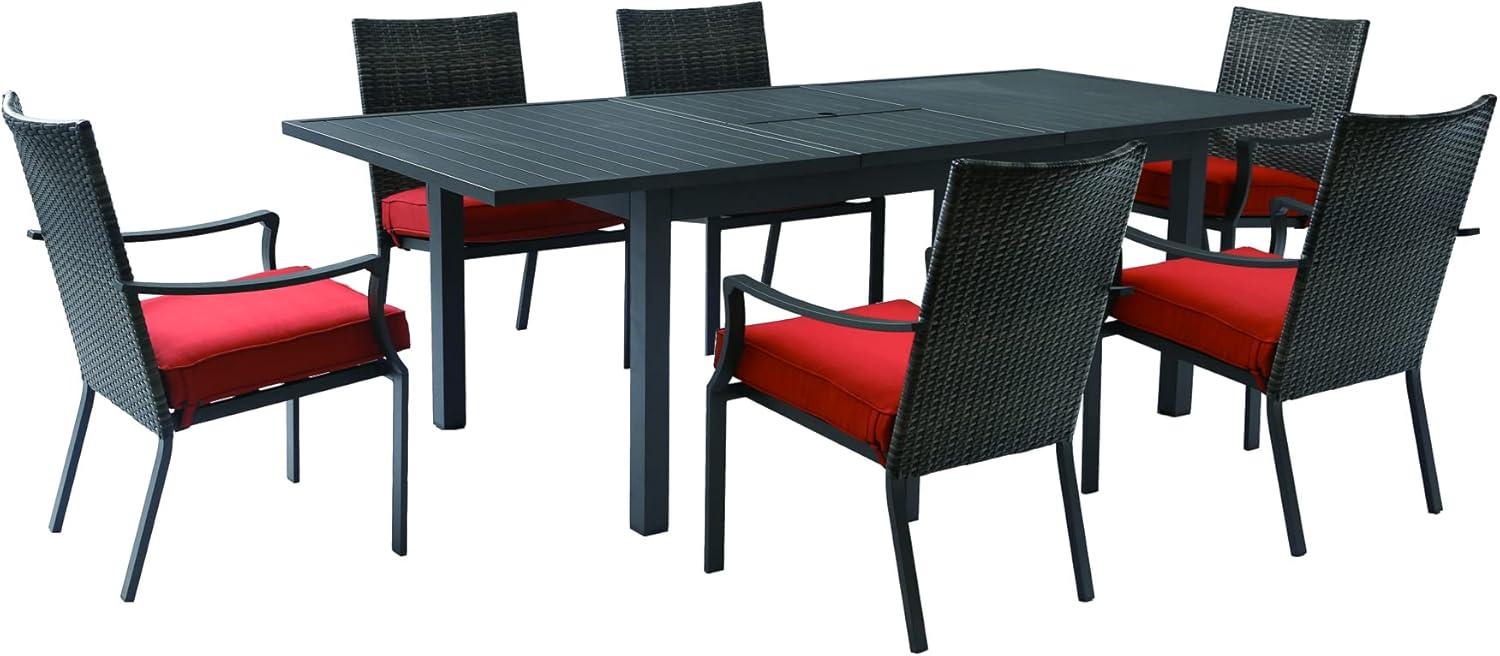
When the delivery arrives and you open the boxes, the first thing that hits you is how the pieces occupy the space — the chairs form an immediate ring around the table, turning an empty patch of patio into a defined dining area. The woven backs catch the light in thin bands, and the cushions sit slightly relaxed on their seats, inviting a quick finger-smooth across a seam or two.There’s a faint, new-material scent mixed with a metallic note from the frames; paper and foam packing are stacked to one side and the instruction booklet rustles on top.
You find yourself doing small, automatic checks: nudging a chair to see how it glides on the pavers, fluffing a cushion where it creases, and running a hand along the table edge to feel how the top meets the frame. Moving a chair produces a soft scrape and the occasional clink where feet meet frame; the woven surfaces give under pressure in a way that feels familiar — not rigid, not sinking — and the table’s central area sits low and solid until you lift or peer closer. For a few minutes you adjust placements and smooth seams, letting the arrangement settle into the rhythm of the patio rather than inspecting each part in isolation.
How the hand woven silhouette and aluminum frame shape your outdoor room
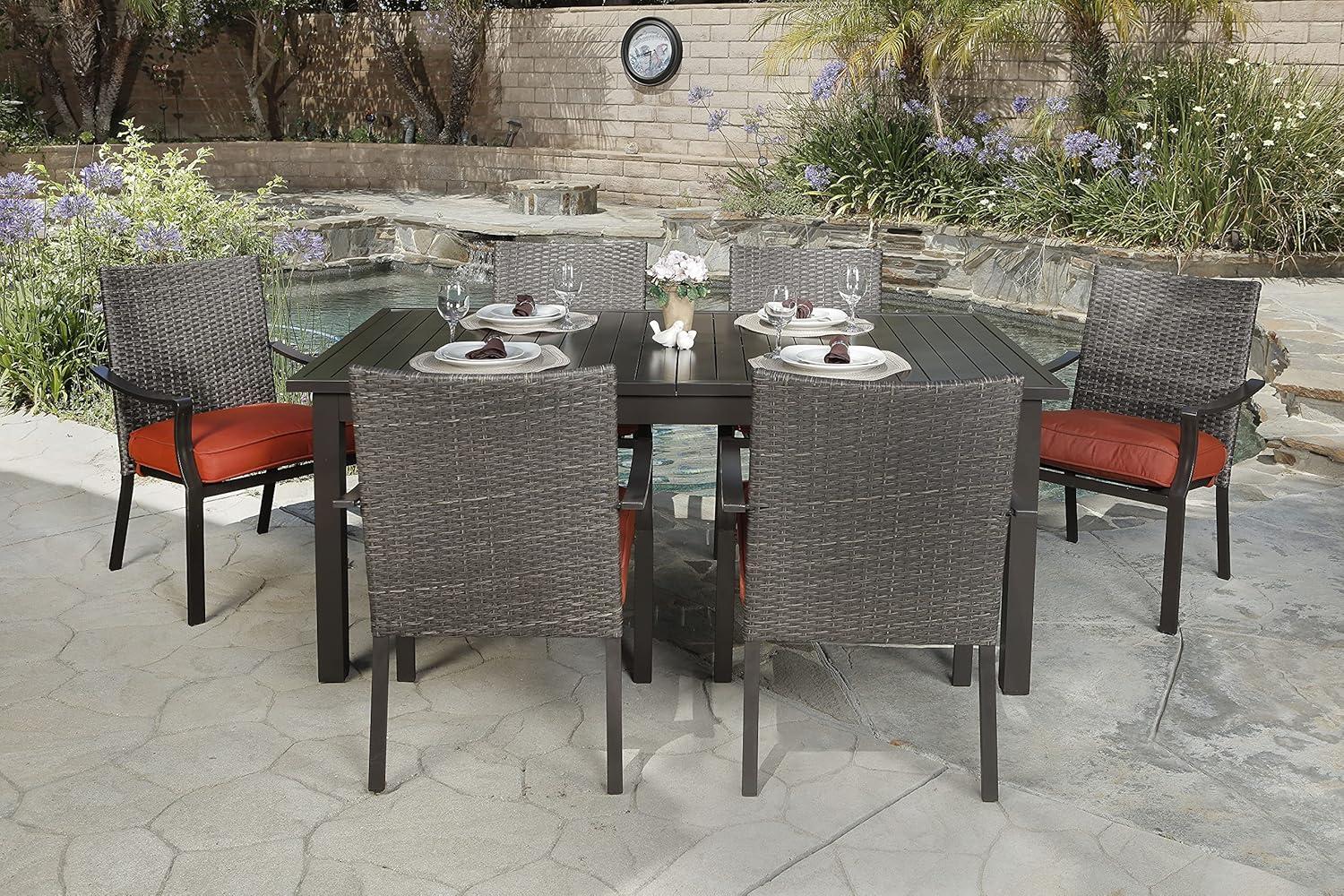
From where you stand at the patio door, the hand-woven silhouette reads as a soft, interrupted outline rather than a block of furniture. The open weave breaks up large surfaces: sunlight slips through the pattern and throws shifting latticed shadows across the deck as the day moves. When you pull a chair out or slide it back, the weave catches at your fingertips and the surface gives a faint, textured friction beneath your palm.Cushions are often smoothed or nudged into place after someone sits, and the woven sides show those small disturbances as a slight change in the fabric’s rhythm.
The aluminum frame keeps those woven forms held to a clear geometry. Thin frame lines create sightlines through and around the set, so your seating area reads as a defined zone without feeling visually heavy. From diffrent angles the frame’s edges align with the table and path, shaping where people tend to stand or linger.As guests shift chairs or extend the table, you notice how the frame’s structure sets the spacing — the negative space under the table, the way chairs tuck in, the brief clink when legs meet the deck.In most cases the combination of weave and frame makes the dining area feel like a composed room outdoors: textured surfaces that invite touch, and a light skeletal structure that organizes movement and view rather than blocking it.
| Element | How it appears in use |
|---|---|
| Hand-woven silhouette | Creates patterned shadows, tactile friction when handled, and visible changes where cushions or hands smooth the weave |
| Aluminum frame | Defines sightlines and spacing, guides how chairs tuck and move, and establishes the outdoor dining footprint |
What the materials and construction reveal about build and finish
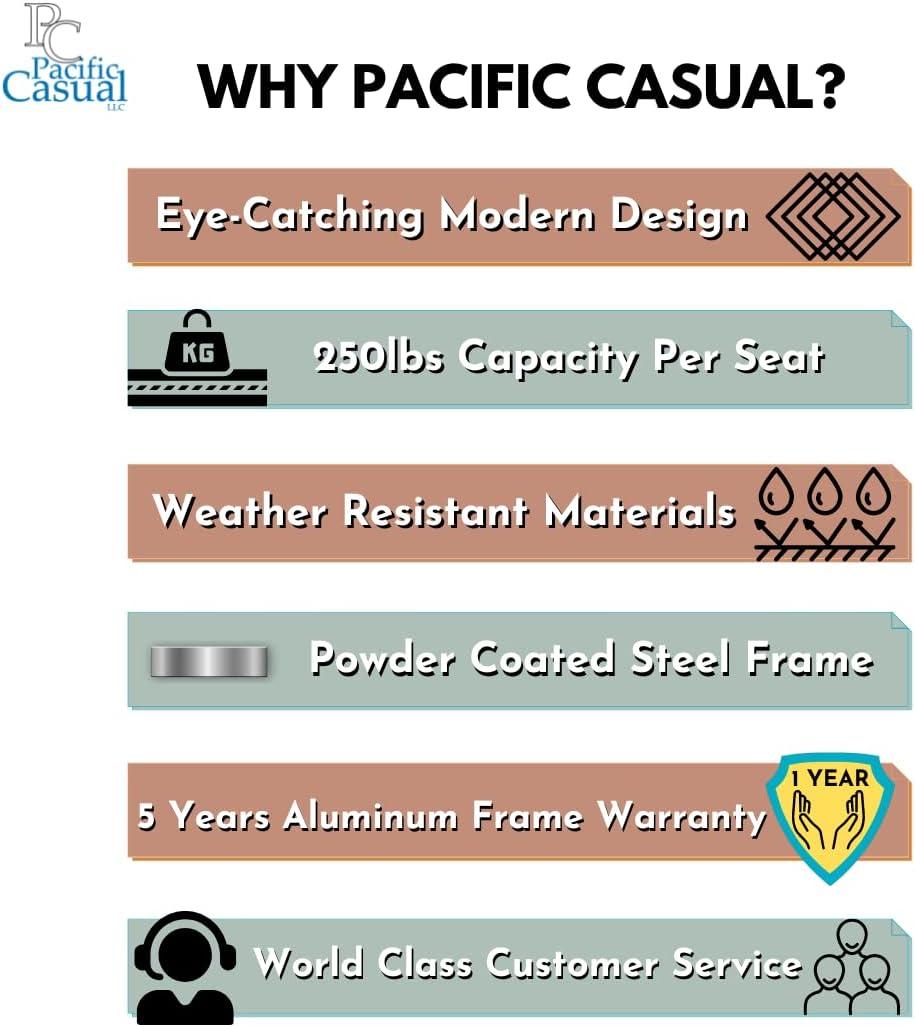
When you run your hand along the metal frame,the powder-coated surface feels uniformly smooth with a faint texture under the fingertips. The finish hides most welds so the lines read as continuous, though a closer look at joints reveals where welding and grinding meet the coating — small ridges and slightly different sheen that point to post-weld finishing. End caps and plastic glides sit where the legs meet the ground; they compress quietly as you shift a chair and keep the metal from biting into a deck or patio tile.
As you adjust the cushions and settle into a seat, the hand‑woven material wraps around the frame and tucks into creases near the armrests. The weave shows tiny irregularities in spacing and tension that come with handwork, and those overlaps and tucked ends make the pattern read as deliberately finished rather than machine-perfect. Zippers and seam lines on the cushions sit mostly out of sight; when you smooth the fabric you’ll notice stitching runs that follow the chair contours and piping that helps the cushions keep their shape under use.
Operating the table’s extension exposes the way parts meet: the sliding rails track the leaf, and the slatted top aligns into place with a gentle click from latches or catches. Fasteners are accessible during assembly and frequently enough recessed or covered once tightened, and plastic washers or bushings appear where metal meets metal to reduce rattles. in everyday handling this construction tends to reveal small tolerances — slight play when the leaf is in motion or a faint shift after repeated opening — rather than dramatic gaps.
| Observed element | You notice |
|---|---|
| Frame finish | Consistent powder coat with faint seam lines at welds and protective end caps at the legs |
| Hand‑woven panels | subtle irregularities and tucked ends that read as hand‑finished rather than uniform machine weave |
| Extension mechanism & fasteners | Tracks and catches that align the leaf, with recessed screws and plastic interfaces where parts meet |
How the chairs sit and how the cushions feel when you take a seat
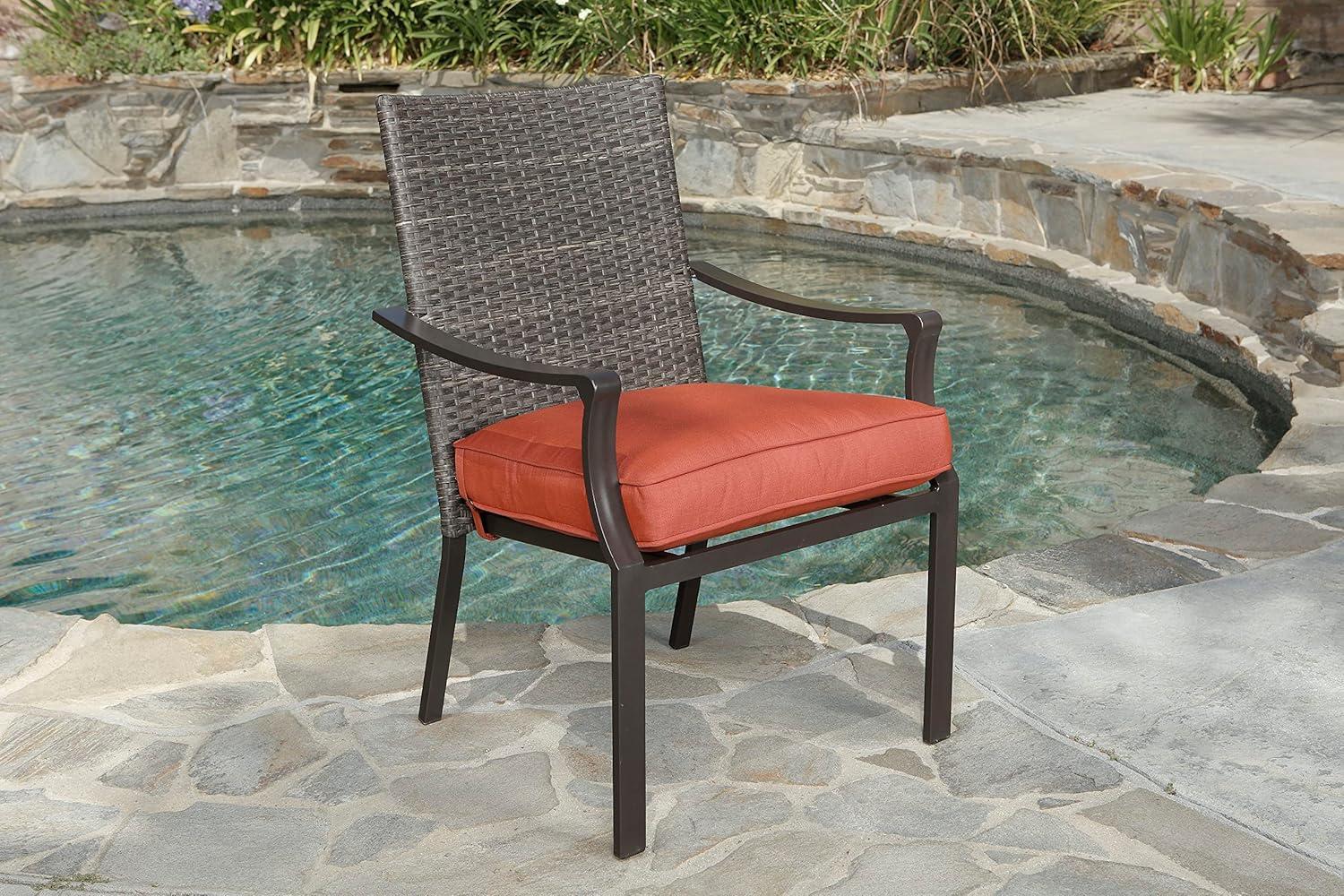
When you lower yourself into one of the chairs, there’s an immediate give from the seat that feels like a gentle cradle rather than a hard stop. The woven surface beneath the cushion has a faint springiness that you notice as the cushion compresses under your weight; the top layer softens first, then the base supports more as you settle. Your hips sink in a little and the backrest catches around mid-back,so you naturally shift once or twice to find the spot where the weave and cushion meet the curve of your spine. You’ll find yourself smoothing the cushion or nudging it into place out of habit the first few times you sit.
Over a longer stretch of sitting the cushion’s compression becomes more familiar: it flattens to a stable level and then rebounds slowly when you stand.The fabric can feel slightly warm on a sunny day and cooler after a breeze, and the woven texture beneath the cushion remains perceptible at the edges where the padding thins. if you move around—cross a leg or lean to one side—the seams and piping shift under you, so small adjustments happen unconsciously. In most cases the seat supports short meals and conversations without noticeable sagging, while longer sessions prompt those small readjustments that become part of using the chair.
| Moment | Typical sensation |
|---|---|
| First sit | Immediate give, cushion compresses, slight spring from the weave |
| After 20–30 minutes | Cushion settles to a steady depth, fabric temperature evens out, small shifting to re-center |
How the table size of ninety one by thirty nine inches and the seven pieces fit into common layouts
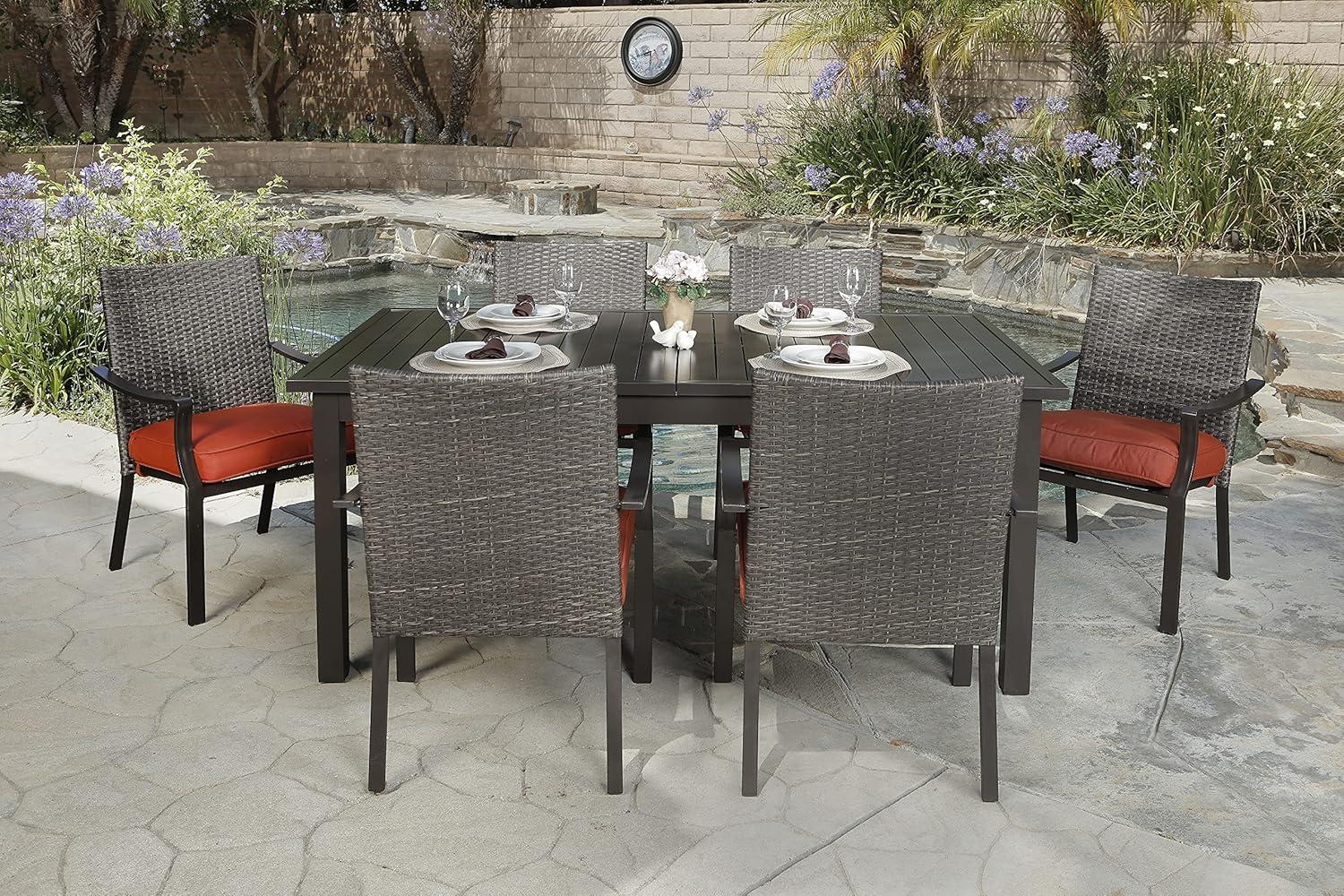
A dining table that reaches about 91 by 39 inches changes how the set sits in most outdoor rooms: it lays out as a clear linear anchor rather than a small center fixture. In elongated patios the table tends to run lengthwise, with chairs pushed under the rails when not in use; people often nudge cushions and tuck chair backs to reclaim walking space. When the chairs are pulled out for seating, sightlines across the patio shift — gaps that looked generous at first can feel narrower once six chairs are in use and cushions are smoothed down.
In squarer or cornered arrangements the set usually becomes the dominant element, so traffic paths form around the table’s long edges. Observers note that some households rotate chairs slightly or slide one end a few inches from the wall to ease access, a small, repeated adjustment as people sit and stand. On narrow balconies the table’s length tends to run parallel to the railing; this leaves a corridor for passing but can limit how far chairs are pulled back. Poolside placements often show the table slightly offset from the pool edge,with chairs angled a touch outward to avoid damp feet brushing against fabric.
| Common layout | Typical space | Observed fit and behavior |
|---|---|---|
| Rectangular patio (runs lengthwise) | 10–14 ft deep | Table anchors center; chairs slide under when unused; minor shifting of cushions |
| Square or corner patio | 10–12 ft each side | Set dominates area; traffic routes form around long edges; chairs often slightly angled |
| Narrow balcony | 6–10 ft long | Table runs parallel to railing; limited chair setback; users tend to tuck chairs close after use |
| Poolside or open deck | Varies | Table sits offset from water; chairs angled outward to avoid splashes; fabric smoothed frequently |
the seven-piece arrangement commonly prompts small, repeated adjustments — shifting chairs a few inches, straightening cushions, and sliding the table marginally — as livable compromises to make pathways and seating coexist within different patio geometries.
View full specifications and size options on Amazon
How the Somerset seven piece set aligns with your expectations, your space needs, and practical limits

Observed in everyday use, the set generally behaves like a deliberate, space-conscious dining arrangement. When the table is in it’s compact configuration it settles into a tidy rectangle with chairs pushed close; people tend to nudge cushions or smooth seams after sitting, and the woven seats flex slightly as occupants shift. Opening the butterfly extension is a two-handed motion in most cases — it slides out and locks into place, then the umbrella hole becomes a visible center point that alters how the group orients itself around the table. Chairs do not slip under the extended apron as neatly as they do when the table is closed, so the seating layout changes from tidy to more spread-out once the leaf is deployed.
Practical limits emerge in routine moments: maneuvering the set across a narrow doorway or rotating the table to accommodate an existing outdoor layout can require a pause and small adjustments, and cushions are often lifted or re-fluffed when the furniture is stored or stacked against a wall. wet weather use tends to produce more smoothing and repositioning after rain, while clear evenings show how much room the set asks for when fully opened. For many households this translates into a predictable pattern—compact for weekday meals, more spatially generous for longer gatherings—rather than an all-or-nothing fit.
| Configuration | Observed spatial behavior |
|---|---|
| Compact | Chairs tuck close; circulation around the table is easier; quick posturing of cushions is common |
| Extended | Seating spreads outward; chair placement becomes looser; moving the set or passing behind seats can feel tighter |
View full specifications and available options
How everyday use looks from casual dinners to rainy weekends and what upkeep involves
When you set this up for a casual dinner, the scene settles quickly: you pull the chairs close, tug the cushions flatter where they’ve softened over several uses, and slide the tabletop out to make room if more people arrive. Place settings nestle into the slatted top and crumbs tend to collect along the gaps until someone brushes them with a hand or napkin. the woven backs give slightly as you lean, and the arms stay cool unless the sun has been beating on them all afternoon. If you raise the umbrella, it drops naturally through the center hole while conversations move from food to the small rituals of outdoor life—smoothing a cushion, tucking a napkin, nudging a chair a few inches to catch a breeze.
On rainy weekends the rhythms change. Water beads on the powder coat and streams through the table slats; the sling seats shed most of the runoff and dry out without much fuss, though the cushions can hold moisture in seams if left exposed.You’ll find yourself habitually sliding cushions under an eave or stacking them indoors after a downpour, and running a hand over the frame to clear beads and leaves. Hinges and the table’s extension track can attract grit,so wiping or rinsing after storms becomes part of the routine; over time you may tighten bolts that loosen a little with repeated use. Small habits—shaking cushions, cinching straps, smoothing creased fabric—keep the set feeling maintained in everyday life rather than requiring big interventions.
Upkeep at a glance:
| Task | Typical frequency | How it usually looks |
|---|---|---|
| Quick rinse or wipe of frames and slats | After heavy rain or dusty weekends | beads and surface grit rinse away; gaps clear with a cloth |
| Blot and air cushions | After they get wet | Cushions may show creases where seams bunch; airing restores loft |
| Vacuum or brush crumbs from slats | Weekly during regular use | Little debris collects in the slat gaps until brushed out |
| Check and tighten fasteners, clear extension track | Every few months or after frequent adjustments | Bolts can feel a touch loose; tracks may trap leaves |
For many days you’ll do small, almost unconscious things—shift a cushion before sitting, smooth a seam after someone stands up—that add up to low-effort upkeep. Occasionally a deeper clean or a move indoors for cushions is necesary after prolonged bad weather, but most of the maintainance shows itself as these brief, familiar interactions rather than a single big chore.
View full specifications and options
How the Set Settles Into the Room
over time the Somerset 7 Piece Aluminum Hand Woven Dining Set Patio Furniture with Butterfly Extension Table 91 x 39 Inches shifts from a new arrival to a steady presence in the room, quietly taking on the rhythms of daily life. You notice how the space around it opens and contracts — chairs pulled out in habitual places, cushions softening where people tend to sit. Surfaces pick up faint marks and a touch of sun-fade in regular household rhythms, and comfort becomes less about the first impression and more about the spots you keep returning to. By then it stays,part of the room,blending into your everyday rhythms.
As an Amazon Associate I earn from qualifying purchases.
