
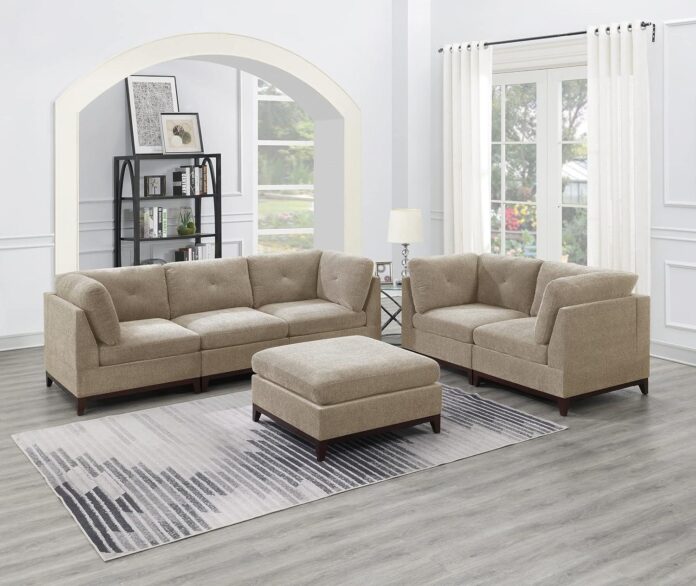
Afternoon light slants across the camel chenille and you notice the fabric’s subtle nap catching a soft sheen. The Camel Chenille Fabric Modular Sofa Set sits in the room with an honest, low-profile presence — big enough to anchor the space without shouting. From a few steps back it reads as a broad, sculpted mass; up close the tufted backs break the surface into quiet rhythms and the chenille has a slight, satisfying resistance under your palm. The exposed wooden base trims the silhouette, and a separate ottoman and armless module make the whole arrangement feel like furniture you can nudge into a new conversation.
A first look in your living room at the camel chenille modular sofa set
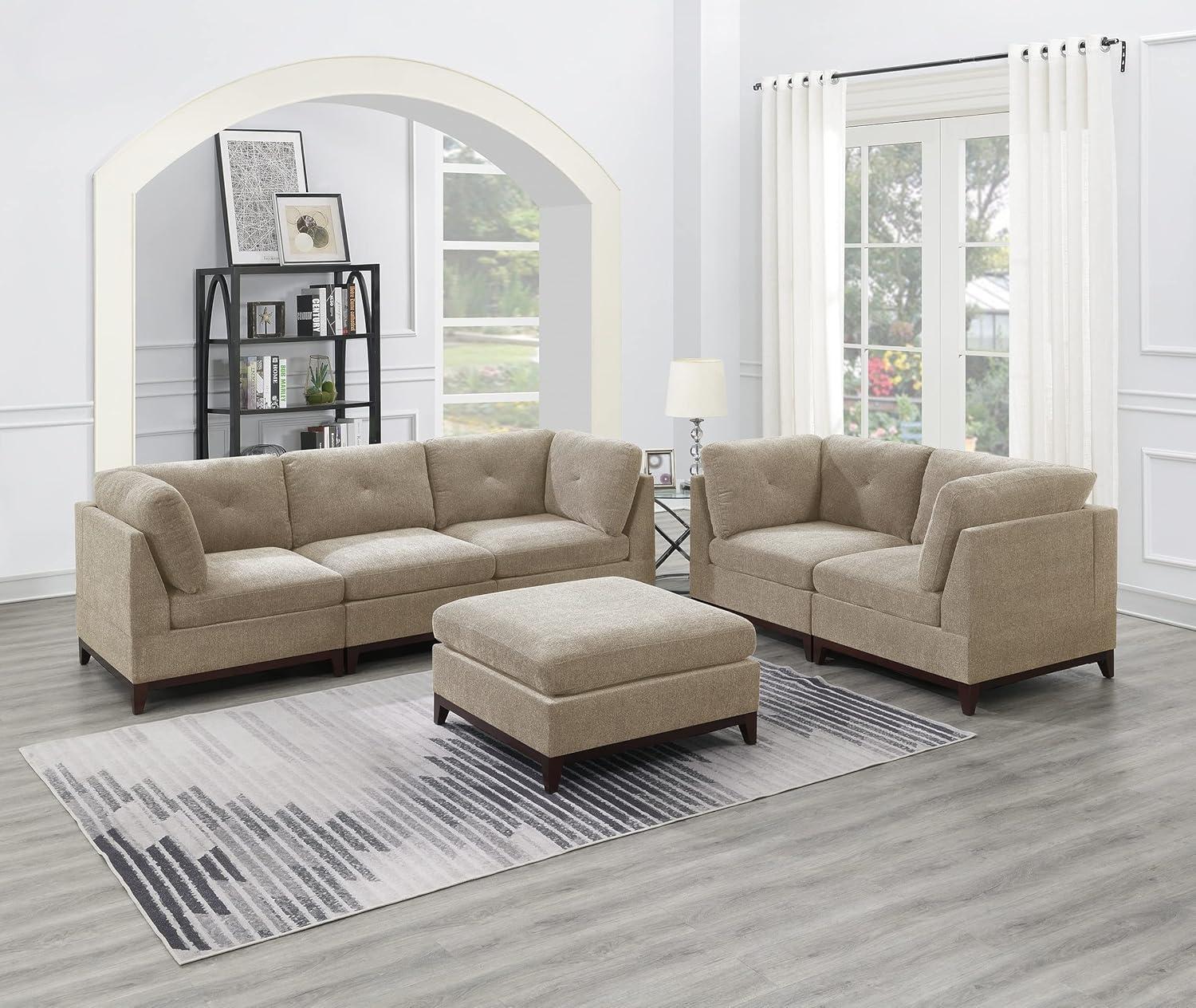
When you first place the sofa set in your living room, the camel chenille reads as a soft, warm backdrop rather than a loud centerpiece. Under natural light the weave slightly changes tone across the cushions; the tufted backs throw shallow shadows that give the backline more presence than a flat surface would. The exposed wooden base is visible beneath the lowest edge, so as you walk around the arrangement it helps define the sofa’s footprint on the floor. the modules meet at right angles and, from most vantage points, form a continuous seat; up close you’ll notice the seams and the small ridges were pieces join, and the armless section and ottoman break the line in ways you can both see and reach.
Once you start using it,small household rhythms show up: you smooth the cushions after sliding down,shift a wedge slightly to close a gap,and nudge the ottoman toward your feet. The chenille moves with those gestures, collecting faint creases along common sit zones and softening where people settle most often. The tufting holds a textured pattern even as the seat cushions relax, and the corners tend to keep their shape while the removable surfaces settle into their usual positions. These are the first, everyday impressions you’ll notice in the room as the pieces live there.
How the tufted backs, exposed wooden base, and chenille weave read up close
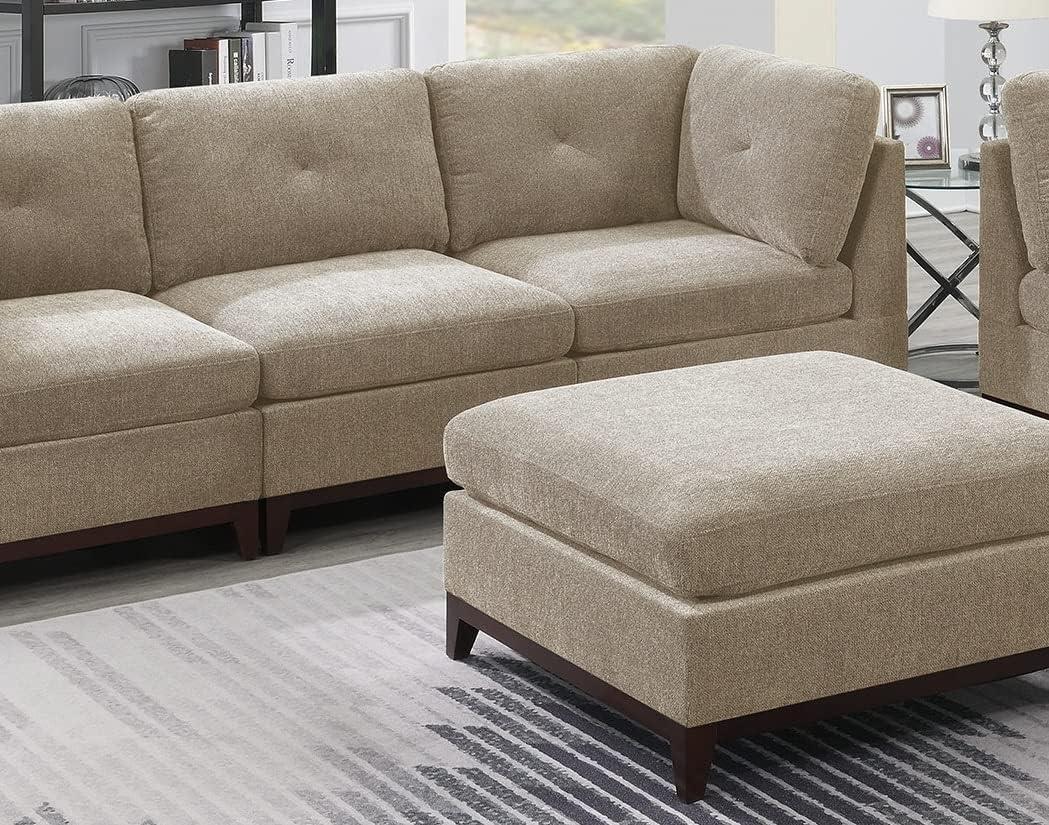
Up close, the tufted backs read as a shallow, stitched topography rather than deep pockets. When you press a hand into a tuft or lean back, the buttoned points sink slightly and the surrounding fabric puckers; the seams that radiate from each tuft become more visible as the pile flattens under your palm. You catch yourself smoothing those little ridges with your fingertips or shifting a cushion so the tuft lines sit straighter again, and over the course of an evening the tufting can take on a subtly relaxed look where people rest most often.
The exposed wooden base stops the chenille just above the floor and gives a crisp visual edge. if you crouch to look, you’ll see grain and finish variations at the joints and along the underside where dust collects; a knock with knuckles or a scuff from moving a module makes the wood feel cool and solid to the touch. when you slide pieces around to reconfigure the seating, the base shows handling marks at contact points and the areas where the modules meet can whisper tiny gaps or shadow lines as the modules settle into place.
| Feature | Close-up look | How it behaves in use |
|---|---|---|
| Tufted back | buttons slightly recessed, radiating seam lines, shallow puckering | Sinks and recovers with pressure; seams become more pronounced where you lean |
| Exposed wooden base | Visible grain and join lines, thin finishing variations, edge that meets fabric | Feels solid and cool; shows handling marks where modules are moved or bumped |
| Chenille weave | Soft looped pile with a slight directional sheen, nap that flips under touch | Tends to attract lint and hair; finger smoothing and cushion shifts alter the nap visibly |
At arm’s reach the chenille reads as a textured surface that reacts to small gestures: a drag of your hand will flip the nap and leave a faint trace, and repeated motion across an edge can flatten the pile so that seams and cushion edges look fuzzier than the flat panels.You’ll notice crumbs or pet hair settle into the tiny loops until you brush them away, and over time the spots of heaviest contact develop a different sheen from the less-used areas.
How the individual pieces feel when you sit, lounge, and shift positions
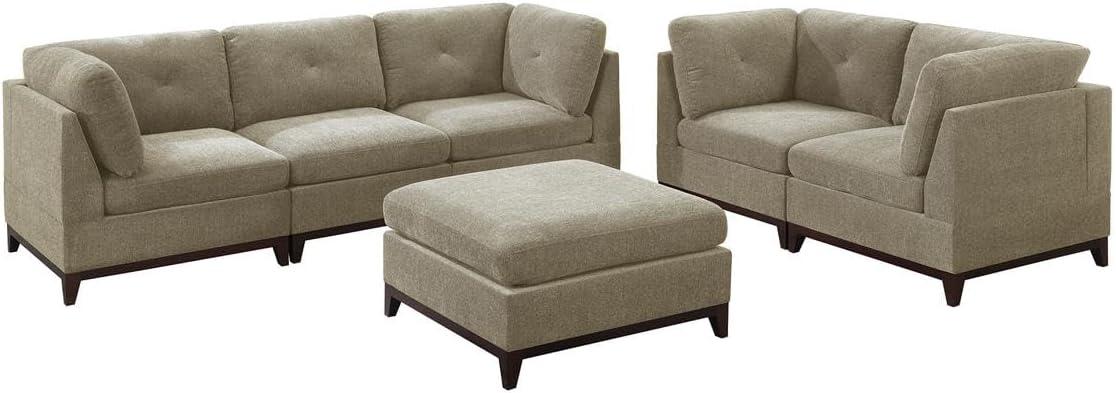
When you lower into a seat,the surface gives first along your hips and then beneath your thighs; the top layer of padding molds gently,and the tufted back compresses in discrete spots as your back settles against it. On the corner wedges you tend to sink a little deeper toward the seam where the sections meet, so one shoulder frequently enough tucks into the joint while the opposite side rests on a flatter plane. The armless chair invites lateral movement—you slide sideways without an arm getting in the way—and the ottoman responds like a continuation of the seat, lifting your legs up to the same plane and making the whole arrangement feel more continuous. As you stand or shift, cushions resettle with a soft, brief rebound and you’ll find yourself smoothing the chenille and nudging seams back into place more than once during a session.
Shifting from upright to lounging changes which parts you notice: when you recline toward the back cushions their tufted pattern offers small pressure points that flatten under long use, and the inner corners of the wedges create a slight cradle if you curl up. Moving to the edge gives a firmer sense of the underlying frame and the exposed base feels stable beneath your feet; when you pivot or swing a leg over the ottoman the sections can micro-slide against one another, so you habitually correct alignment with a gentle nudge. Small,unconscious adjustments—tucking a throw,smoothing fabric,shifting a hip—are part of the experience and tend to redistribute how the cushions sit over the course of an evening.
How the modules fit in your floor plan and what the measurements translate to in real rooms
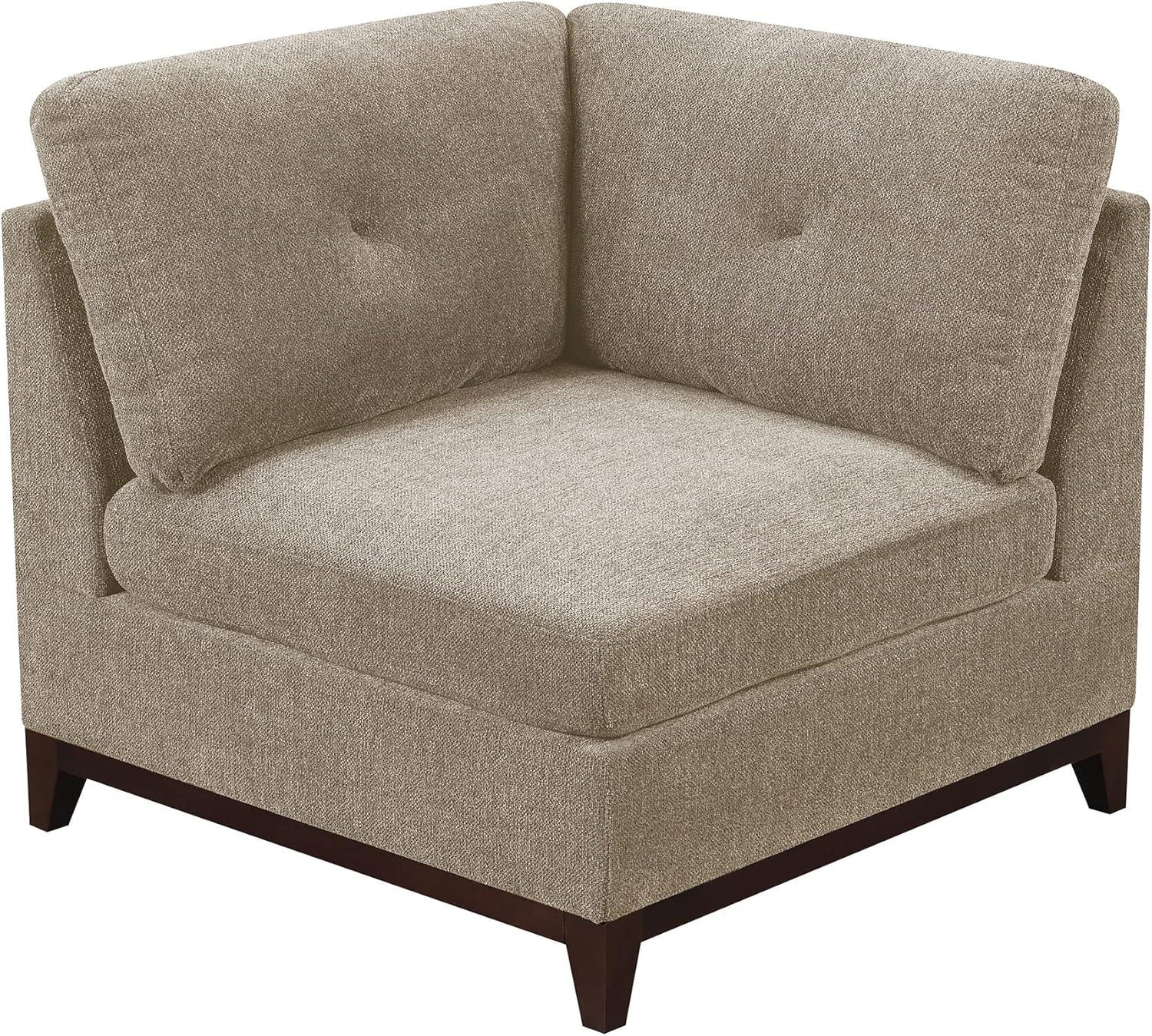
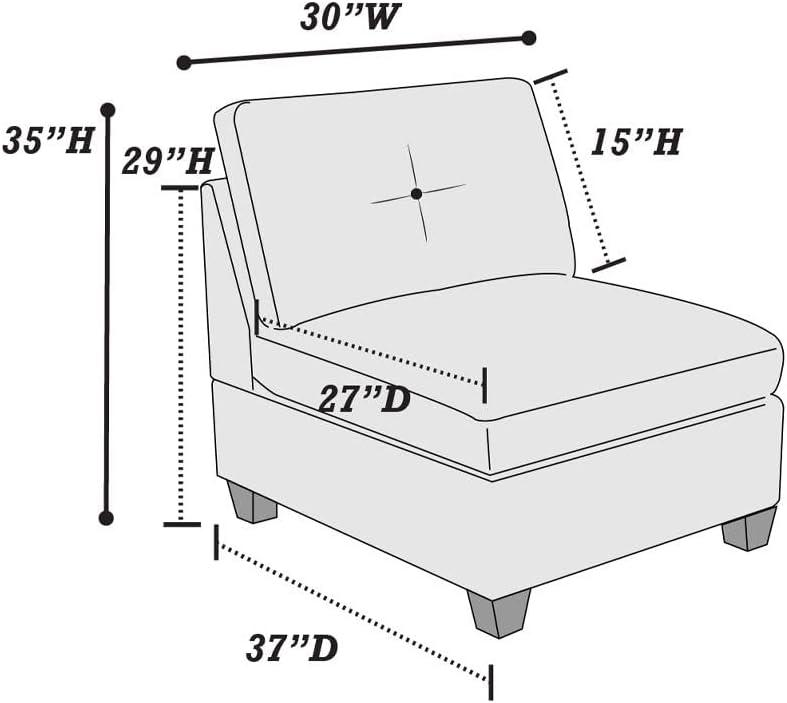
When assembled, the six modules map onto living areas in ways that often feel larger in use than they read on paper. Arranged as an L or a shallow U, the group defines a clear seating bowl: cushions compress toward the centre, seams shift a little where sections meet, and the ottoman usually becomes the most moved piece as people nudge it for knees or a coffee tray. In open-plan rooms the set tends to anchor a conversation zone; in smaller rectangular rooms it will occupy a significant portion of the floor, leaving roughly a comfortable walking band in front unless other furniture is pulled back.
| Typical arrangement | Rough footprint (ft) | Rough footprint (m) | Observed behavior in a room |
|---|---|---|---|
| L-shape along two walls | ~9′ × 9′ | ~2.7 × 2.7 | Creates a corner seating area with a 3–4′ clear central zone; cushions are smoothed after use and seams may separate slightly at joins. |
| U-shape (more inward-facing) | ~9’ × 7′ | ~2.7 × 2.1 | Forms a contained gathering space; ottoman frequently enough shifts to serve as extra seat or footrest, reducing open floor in the center. |
| Scatter / conversation cluster | ~10′ × 10′ | ~3.0 × 3.0 | Pieces separated for flexible flow; armless module functions as a transition piece and tends to get nudged when people move through the area. |
| Chaise-like extension (ottoman as footrest) | ~8′ × 6′ | ~2.4 × 1.8 | Depth increases for lounging; tufted backs show obvious compression where heads or shoulders rest over time. |
Clearance and circulation are best judged in the room itself: the modular pieces allow several placement options but also shift with use, so doorways and paths that seem adequate on paper can feel tighter once cushions are smoothed and people sit down. Moving the ottoman or armless section a few inches usually changes how the grouping reads in the space, and seams that look neat when new can open up a bit after normal settling.
View full specifications and size options
Everyday handling and rearranging and what living with the modular pieces looks like
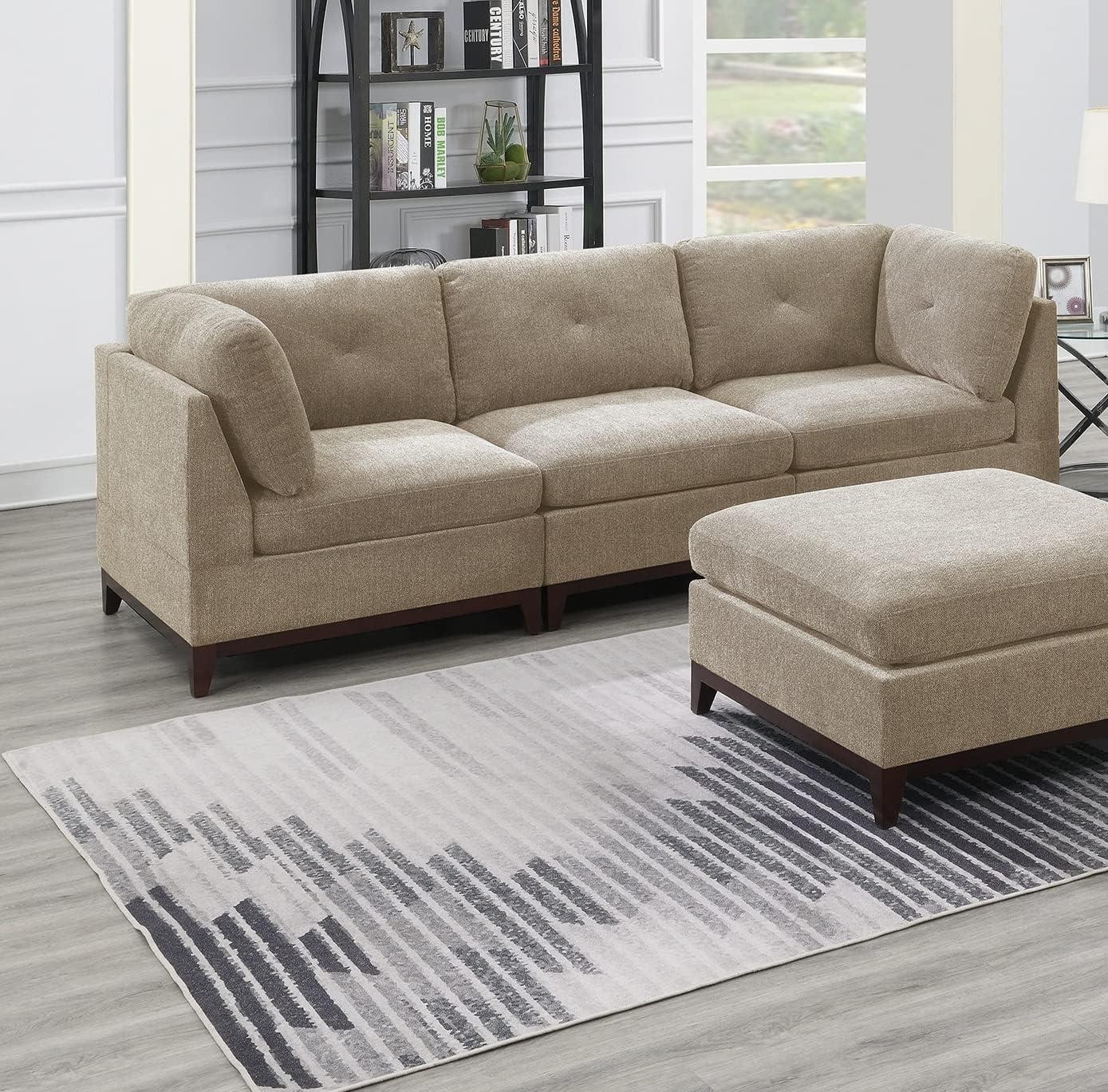
When you live with the pieces day to day,most of the handling is tactile and repetitive — you slide a corner wedge a few inches to make room for a guest, nudging seams back into place with the side of your hand, or you habitually fluff the seat cushions after someone gets up. The tufted backs show impressions where heads rest and fingers pick at the buttons; you find yourself smoothing those areas without thinking about it. Moving the ottoman happens almost automatically: it’s lighter and glides across the floor more easily than the wedges, so it ends up in different spots around the room depending on what you’re doing that afternoon.
Rearranging larger modules usually involves a bit more friction than you expect. You tend to slide rather than lift, catching the exposed wooden bases on low rugs or floorboards as you push; the connectors don’t always align on the first try, so there’s a short ritual of nudging pieces until the gaps close. Seat cushions shift toward the center over time and you’ll push them back into place,easing the seams where they bunch.Crumbs and pet hair collect in the creases of the corner joints and along the lower wooden edge, so those areas are where you most frequently enough pause with a hand brush or fast vacuum.
| Typical action | what it feels like in practice |
|---|---|
| Sliding an ottoman | Instant,low-effort—usually done alone |
| Reconfiguring a wedge | Takes a few minutes and some nudging; often easier with two people |
| smoothing cushions/tufts | A quick,frequent motion to restore appearance after use |
Small imperfections appear with normal use: seams can shift,tufted dimples deepen where people lean,and the wooden base picks up scuffs from repeated moving. These changes happen gradually and become part of the daily rhythm — you notice them when you run a hand along the edge or when pieces no longer meet as snugly as they once did. In most cases, the handling is low-key: short, repeated adjustments rather than major overhauls, and the set reshapes to the household’s patterns over weeks and months.
How this set lines up with your expectations and the practical limits it reveals
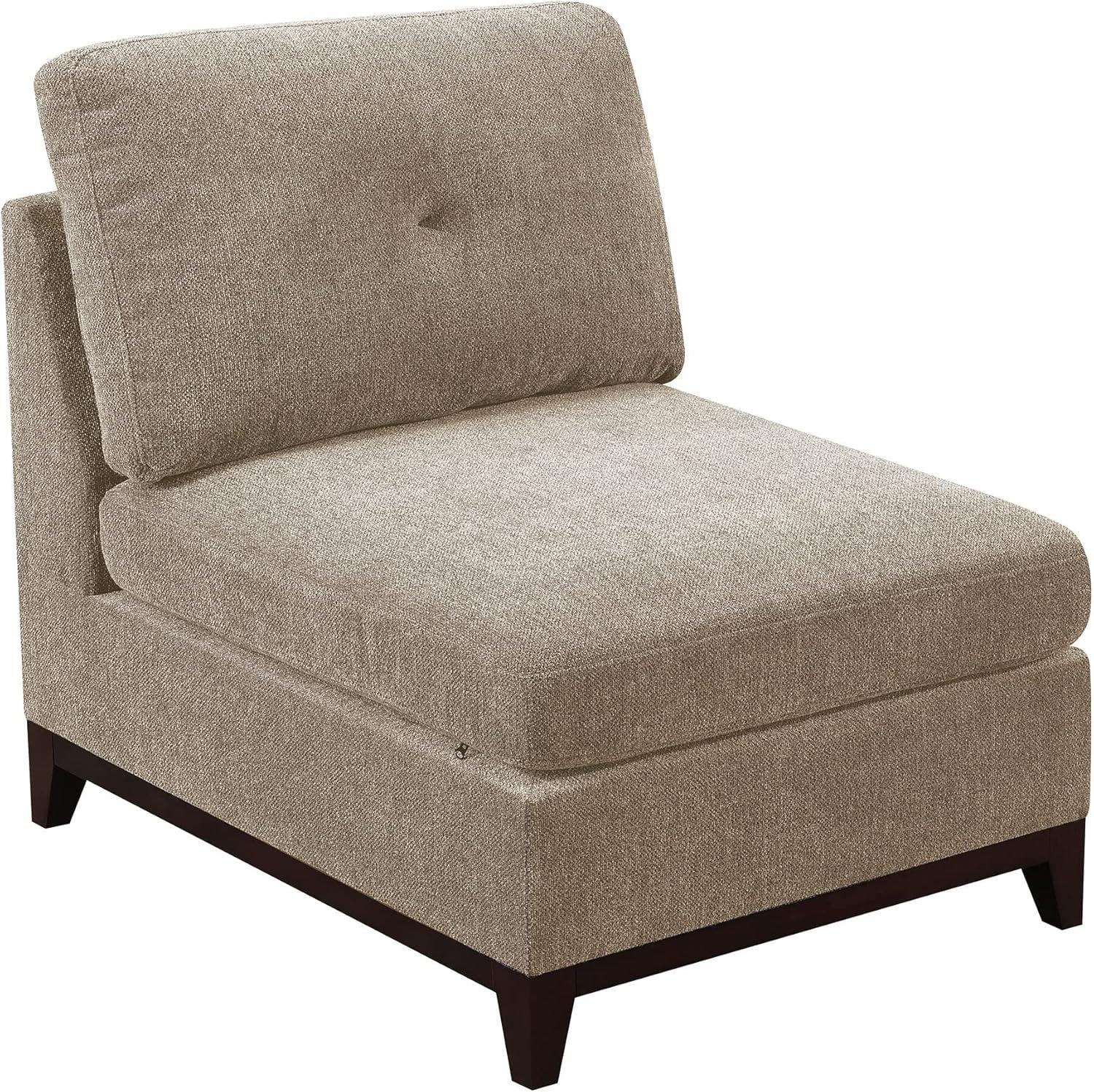
The set largely performs as a modular grouping in everyday use: pieces sit together neatly at first but can develop small gaps after repeated reconfigurations or when cushions are shifted. The tufted backs show subtle flattening where occupants lean most often, and seat cushions tend to form low spots that are smoothed out by routine patting and repositioning. The chenille surface takes on a soft sheen along regular traffic paths, and the ottoman and armless module can drift slightly on smooth flooring when someone stands or moves across the arrangement. The exposed wooden base also shows light contact marks from normal movement rather than sudden damage.
These behaviors point to practical limits rather than abrupt failures. The low, continuous profile preserves sightlines but makes moving modules feel like nudging pieces into place rather than snapping them together; the tufting adds shape that slowly relaxes under repeated pressure; and the modular joins resist large shifts but allow modest lateral drift. Such patterns tend to emerge over days to weeks of typical living-room use and feel situational rather than systemic.
| Expectation | Practical limit observed |
|---|---|
| Effortless, exact reconfiguration | Reconfigurations work but often require nudging to close small gaps |
| perennial tufted fullness | Tufting retains shape initially, then softens in high-contact zones |
| Fixed ottoman placement | Ottoman and armless sections can shift on smooth floors |
View full specifications and available sizes and colors
Care, cleaning, and moving notes from setup to week to week wear
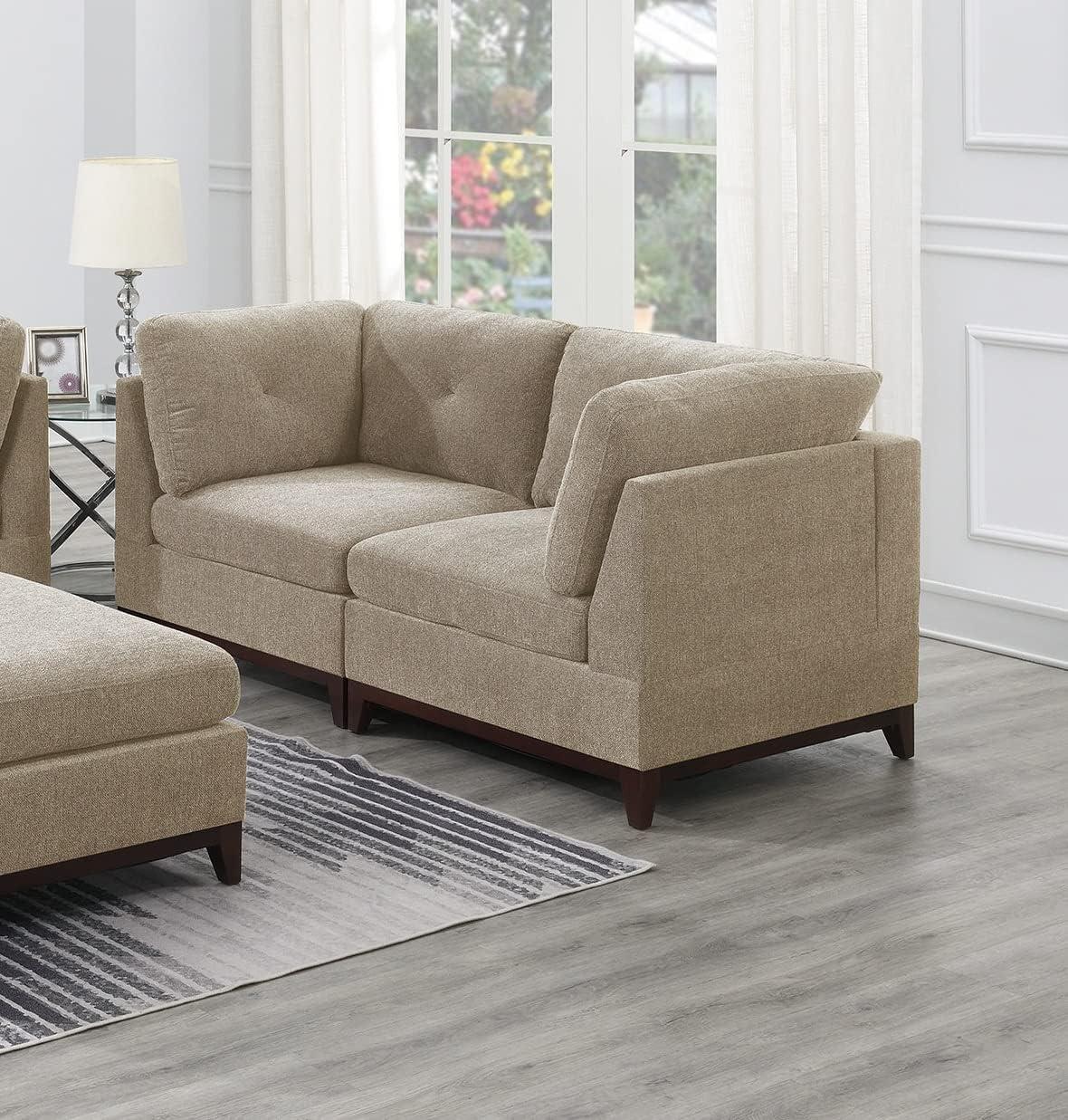
When you first move the pieces into place you’ll notice the fabric settles and the cushions need a little nudging to sit flush against the tufted backs. As you use the sections week to week, the surface will develop the kind of small disturbances you might unconsciously smooth out — a brushed nap that shows directionality after someone leans back, tiny creases where knees meet the front edge, and seams that catch a bit of lint. Routine pats and a quick run with a soft brush or the upholstery attachment on a vacuum restore an even look faster than a deep clean, and rotating or flipping the ottoman and armless piece evens out compression over time.
Spills and smudges tend to show most where you touch the arms and seat fronts. Blotting excess liquid right away and gently dabbing at marks keeps them from working into the pile; rubbing usually shifts the nap and leaves a visible trail. Pet hair and crumbs collect in the tufted areas and along the seam lines, so you’ll find a handheld vacuum or a lint roller becomes part of your weekly habit. The wooden base can pick up scuffs if the set is shifted without lifting; when you move a section, you’ll likely lift and pivot rather than drag, and you may notice the base catches dust along its edge more than the fabric does.
Quick care at-a-glance
| When | What you’ll typically do | What you’ll notice afterward |
|---|---|---|
| Daily/after use | Plump cushions, smooth fabric nap with your hand | Back and seat look more uniform; minor creases relax |
| Weekly | Vacuum seams and tufting, roll with lint roller | Less visible lint and pet hair; tufted areas sit cleaner |
| As needed (spills) | Blot promptly, gently dab the spot | Stain is less likely to set; nap disturbance may be visible until smoothed |
| When moving | Lift sections, avoid dragging; check base for scuffs | Wood edges stay intact; modules realign without stretching seams |
Over time you’ll develop small habits — tucking cushions back into place after sitting, brushing the nap in the same direction, or nudging sections to close tiny gaps — that keep the set looking consistent between deeper cleanings. Expect minor shifts in texture and compression where the pieces get the most use, and plan light, frequent attention rather than sporadic heavy cleaning for the smoothest week-to-week wear.
How the Set Settles Into the Room
You watch it ease into the room’s daily rhythms, edges softened by habitual use and the way people actually sit and move around it over time. Living with the Camel Chenille Fabric Modular Sofa Set 6pc Set Living Room Furniture Couch Sofa Loveseat 4X Corner Wedge 1x armless Chair and 1x Ottoman Tufted Back Exposed Wooden Base, the pieces rearrange themselves in your routines and the configuration slowly answers the room’s needs. The chenille takes on faint paths where you rest, the cushions relax into the ordinary behavior of comfort and the wooden base gathers small scuffs as the space is used. After a while you hardly notice it at all; it simply stays.
As an Amazon Associate I earn from qualifying purchases.
