
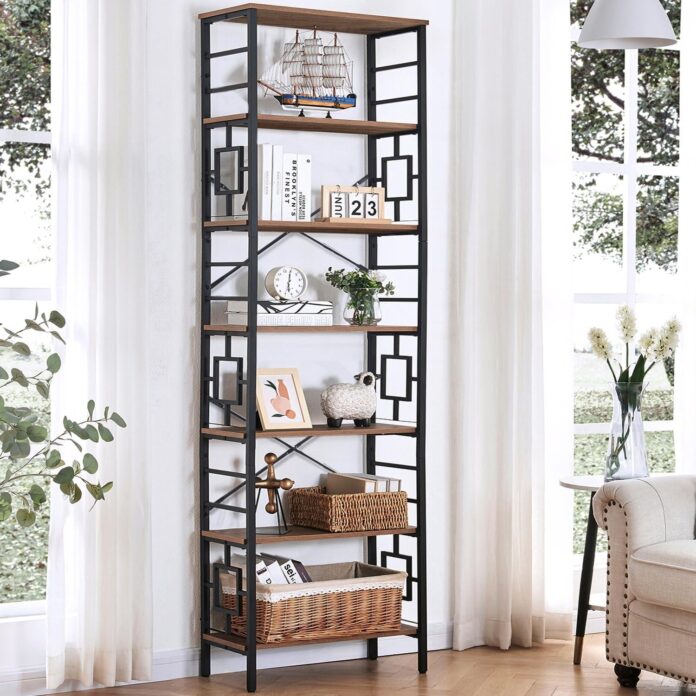
You notice it as you walk by — a tall plane of dark metal and warm, grained boards that makes your eye travel up. HOMISSUE’s Tall Bookshelf (the 84‑inch industrial bookcase) sits in your living room with its shelves stacking toward the ceiling, quietly claiming vertical real estate. Up close the metal is cool and matte under your palm, the wood-like panels have a faint texture that hides small scuffs, and the whole thing reads visually heavy without feeling clumsy. Light from the window slips through the open sides and paints thin shadows between the shelves, so the books seem to step down and back into the room. An X-brace at the rear gives it a planted, non-wobbly presence — more an architectural rhythm than just storage.
What you notice first when you bring the HOMISSUE tall bookshelf into your room
The first thing you notice is scale: the piece instantly pulls the eye upward and reorients the room’s vertical lines. From across the room it reads more as a silhouette than a piece of furniture — a slim, stacked presence that creates a stepped rhythm along the wall rather than a solid block.Up close, the open shelving and metal edges catch light differently, so shadows and wood grain become part of the impression as you move around it.
As you wheel or lift it into place there’s a lived-in routine to the interaction — you find yourself angling it to avoid bumping a lamp, smoothing a tabletop, maybe nudging a picture frame to line up with a shelf. The finish looks warmer under soft light and a slight metallic edge keeps the overall look measured; for a moment you’re more aware of sight-lines, how the piece frames objects placed on it, and how it changes the room’s sense of height and breathing space.
| Immediate sensory note | How it translates in the room |
|---|---|
| Tall, vertical stance | Draws the eye up, alters perceived ceiling height |
| Open shelves and gaps | Lets light pass through, keeps the wall from feeling heavy |
| Metal lines and visible grain | Adds a linear, textured silhouette as you walk by |
| Compact depth | Occupies little floor space while changing wall dynamics |
How the rustic brown boards and metal frame look when you examine them up close
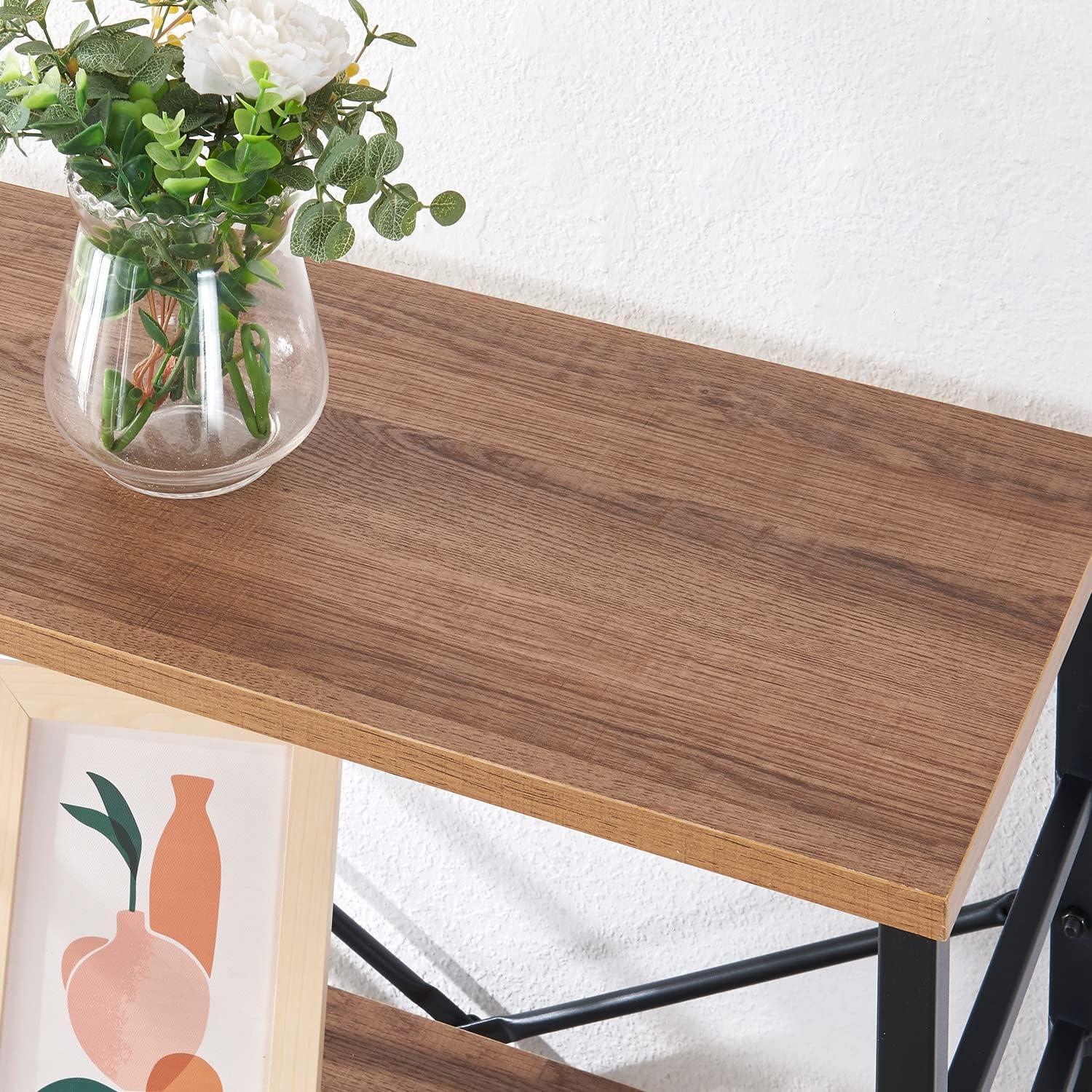
When you crouch and bring your face level with the shelves, the rustic brown boards read like a printed wood grain rather than raw timber. Under soft room light the tone shifts—lighter streaks running along darker bands—and small faux knots give the panels a lived-in look. If you run a fingertip along the surface you’ll notice it is mostly smooth with a faint textured feel were the pattern sits; dust and fingerprints tend to show in the low spots of the pattern more than on the flatter areas. At the shelf edges the laminate wraps with a thin seam, and from certain angles the line where one panel meets another becomes visible, revealing a slightly paler core at the cut ends.
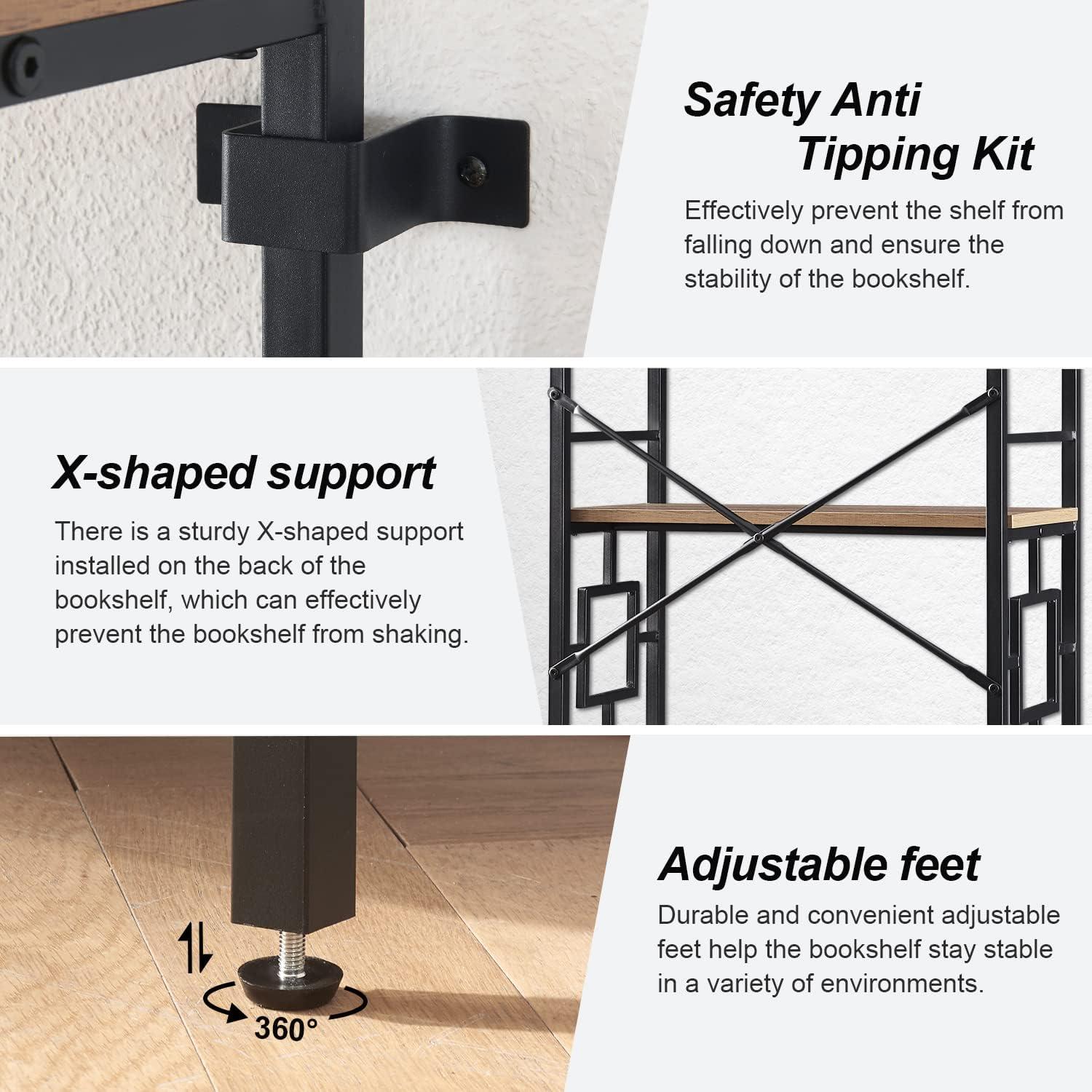
Up close, the metal frame presents a different set of details. The finish is matte and even at first glance, but standing close you’ll find minor tool marks around welds and recessed screw heads that interrupt the visual flow. Where metal brackets contact the boards there are small gaps and visible fasteners; if you nudge a shelf you can feel a millimeter or two of give at those connection points. The adjustable feet reveal exposed threads and a rubber pad when you crouch to inspect them, and the contrast between the warm brown surfaces and the cool, dark metal becomes more pronounced the nearer you look.
| Element | What you notice up close |
|---|---|
| Rustic brown boards | Printed grain with tonal variation, smooth-but-slightly-textured finish, visible seams at edges, paler core at cut points |
| Metal frame | matte coating with subtle tool marks, visible fasteners and welds, small clearances where it meets the boards, exposed threading on leveling feet |
The way the open shelves feel when you reach for a book or arrange your decor
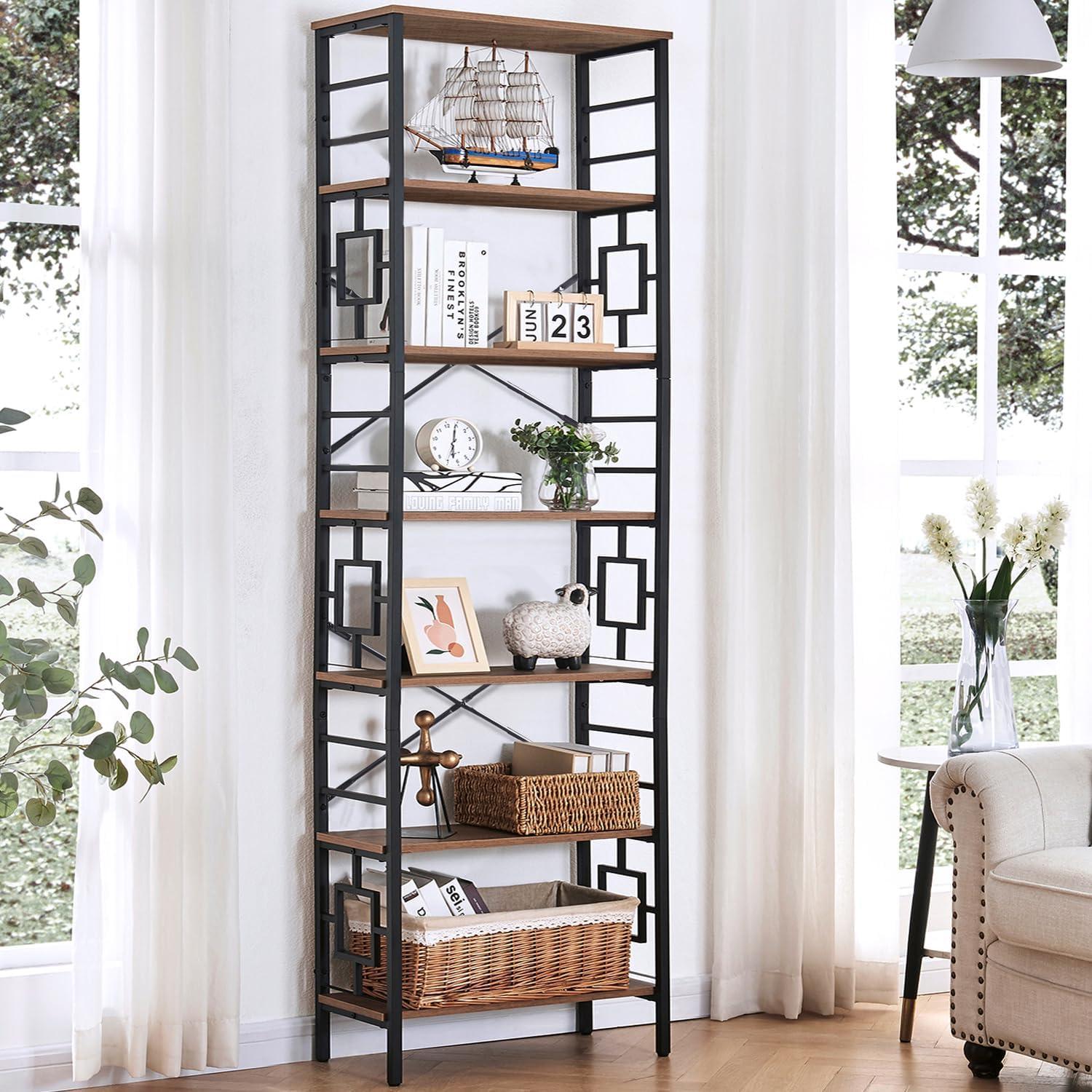
When you reach for a book the first thing you notice is the openness: your hand passes into space rather than against a solid back, so fetching an item feels fast and unobstructed. The shelf surface under your palm is mostly smooth and slightly cool, with a thin finish that lets your fingers slide when you nudge a spine or a small ornament. Edges near the front can register as a faint bevel or a firmer corner depending on where you touch, and you’ll often steady yourself with a fingertip on the frame as you tilt to pull something free. heavier books settle with a soft thud rather than a bounce, and two-handed reaches feel uncomplicated as the lack of a boxed-in back gives room for both hands to work.
As you arrange decor, habits show up: you tend to slide objects into place rather of lifting them, smoothing dust with the side of your hand and nudging collections closer together untill they look aligned. Small adjustments ripple along the shelf—move one stack and nearby items may shift a fraction—so you often pause, straighten a spine, then step back. Over time you may notice faint wear on the finish where items are repeatedly dragged, and the constantly open face makes these surfaces easy to inspect as you move things around.
How the tall proportions and tiered shelving occupy your wall and floor space as you place it
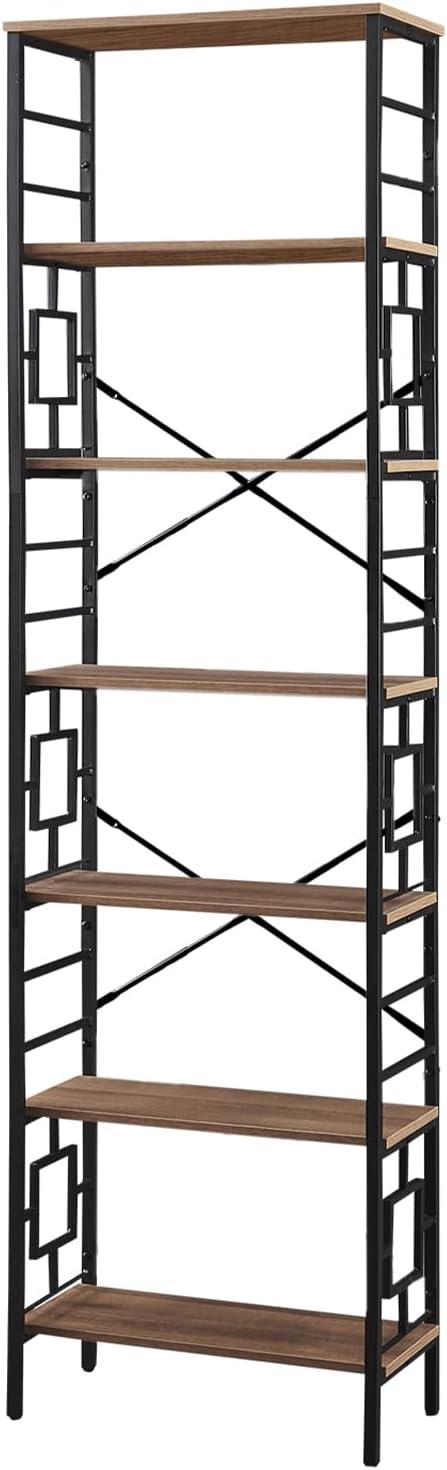
The unit reads immediately as a vertical element when brought into a room: its stacked tiers draw the eye upward and interrupt the wall plane more than a shorter, wider piece would. From a placement outlook, the shelves create a series of horizontal breaks that give the wall a layered rhythm; this is felt physically as alternating bands of shadow and shelf edge rather than as a single, flat surface. During maneuvering, installers often find themselves nudging the base and then stepping back to judge how much of the wall the piece now occupies, a small, repeated adjustment until the vertical mass feels balanced with surrounding furniture.
On the floor, the footprint comes across as comparatively modest. The slim base leaves a narrow strip of floor visible in front of the lowest shelf,and the adjustable feet reveal themselves in use—turned and re-turned to settle the unit on slightly uneven surfaces. When set against plaster or older walls, the upper back brace and provided wall anchors typically become part of the placement process, producing a subtle offset where the top meets the wall; over time, slight settling can make the top feel marginally closer or farther from the wall than it did right after install.
| Aspect | Observed affect |
|---|---|
| Wall occupation | Vertical emphasis with layered shelving lines; shifts perception of wall height without covering wide horizontal space |
| Floor occupation | Narrow floor footprint; adjustable feet used to correct minor floor unevenness during placement |
For full specifications and to review size and colour options, see the product details here.
What happens when you fill it with books, plants and everyday items in real rooms
Filled and placed in living rooms and bedrooms, the unit settles into its role as a working storage wall: the middle tiers commonly bear the visual weight of stacked novels and large-format magazines, while the highest shelf tends to collect lighter objects and potted plants. Under these everyday loads the shelves usually remain level; when many hardcover volumes are packed across a single shelf a very slight downward curve can appear at the center, most noticeable only from a close distance. Pulling a book or reaching for a small object sometimes produces a faint ripple through the frame and a soft thunk on the floor if the adjustable feet weren’t nudged into place first.
Plants and water-bearing containers change the feel of the pieces over time. Moisture beads on the shelf surfaces instead of soaking in, and trays or saucers are often nudged into place after watering — small adjustments that leave impressions of regular use. Decorative items and framed photos sit securely behind the vertical side elements; the side design reduces the chance of a pot or knickknack sliding off when things are bumped. Dust accumulates in the open faces, so the shelves develop a lived-in look that highlights the objects rather than the frame.
| Observed shelf role | Typical contents (common patterns) |
|---|---|
| Top tiers | Light plants, small décor, items rotated infrequently |
| Middle tiers | Books in one or two rows, magazines, occasional electronics |
| Lower tiers | Storage boxes, folded linens, heavier or bulky items |
In everyday use, the bookcase’s height and openness shape how rooms feel: it casts a vertical shadow and becomes a backdrop for the objects placed on it, and actions — adjusting a plant, smoothing a stack of paperbacks, shifting a box on a lower shelf — create small, habitual interactions that mark its presence. When anchored to a wall, the unit behaves more rigidly under change; without that restraint it can feel slightly more responsive to hurried movements, particularly if the top shelves are heavily loaded.
View full specifications and available color options
How the bookshelf matches your expectations and where its limitations become apparent in daily use
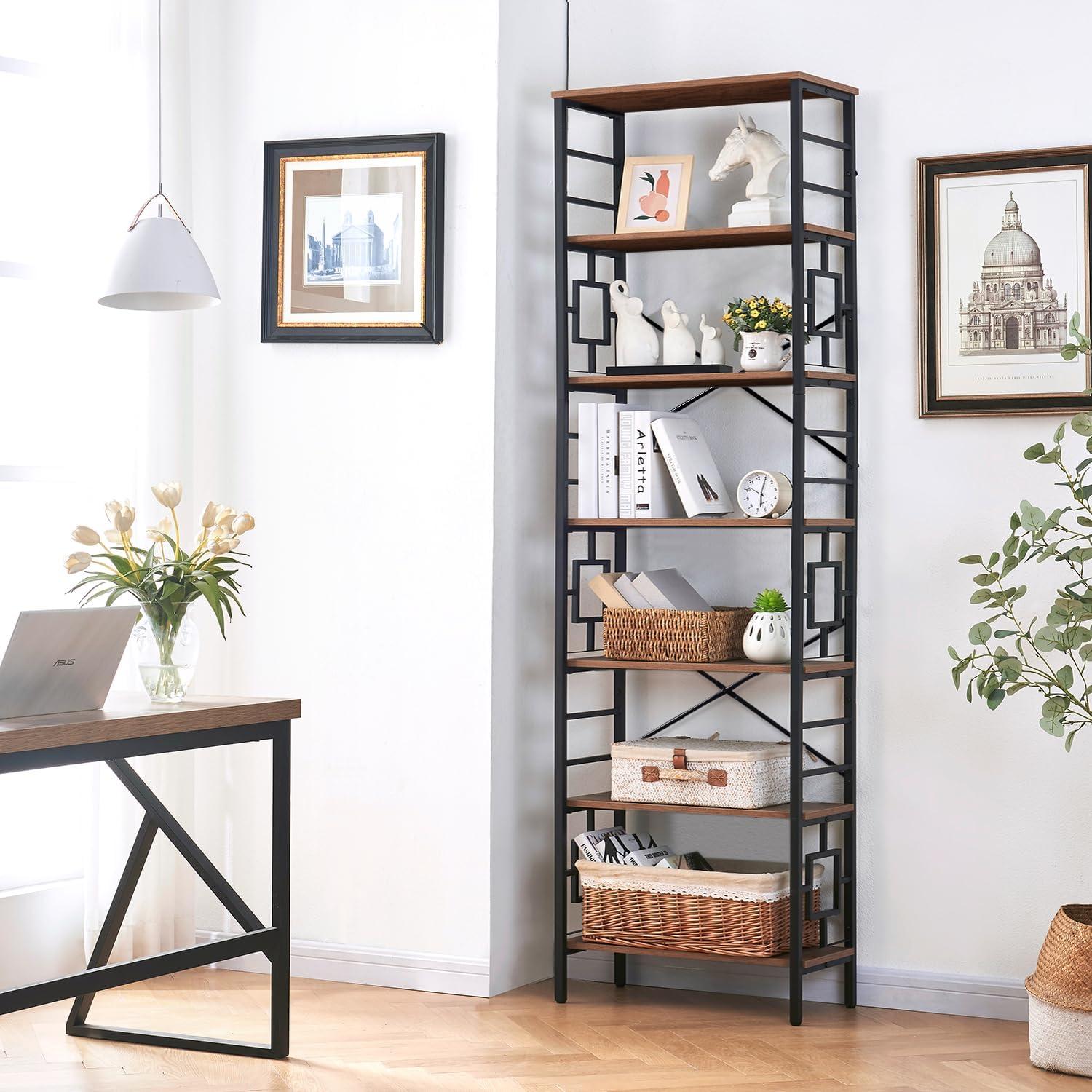
In everyday use, the bookshelf often behaves like the picture in the listing: once assembled and leveled, the frame holds stacks of books and ornaments without frequent readjustment, and the open shelving makes quick retrieval and casual restacking straightforward. Items placed toward the center of each shelf feel secure, and the overall silhouette tends to keep the room from looking crowded even when several shelves are filled. There’s a familiar rhythm to living with it — occasional nudges to straighten a leaning row of paperbacks, the small habit of smoothing a stack after taking one volume out, and the predictable reach issues that come with higher tiers.
Where limitations show up, they are practical, situational things rather than sudden failures. The uppermost shelves require extra reach, so items that are handled daily tend to migrate downward over time.Narrower or deeper objects may need a little angling to sit flush, and heavier loads on the same shelf repeatedly can result in a slight bow that becomes noticeable after months of use. Dust accumulates visibly on open surfaces, inviting frequent wiping, and the metal frame can collect fingerprints or small scuffs that show with movement and daily handling. On uneven floors, occasional micro-adjustments to the feet or a quick check of the anchoring hardware are part of the routine rather than a one-time step.
| Expectation | Daily experience |
|---|---|
| Stable, steady shelving | Generally steady, but occasional settling or minor wobble appears on very uneven floors |
| Easy access to all tiers | top tiers are accessible but not convenient for frequent use |
| Low maintenance | Open surfaces show dust and fingerprints, prompting regular light cleaning |
View full specifications and available options on Amazon
What assembly and moving it around look like for you and your home
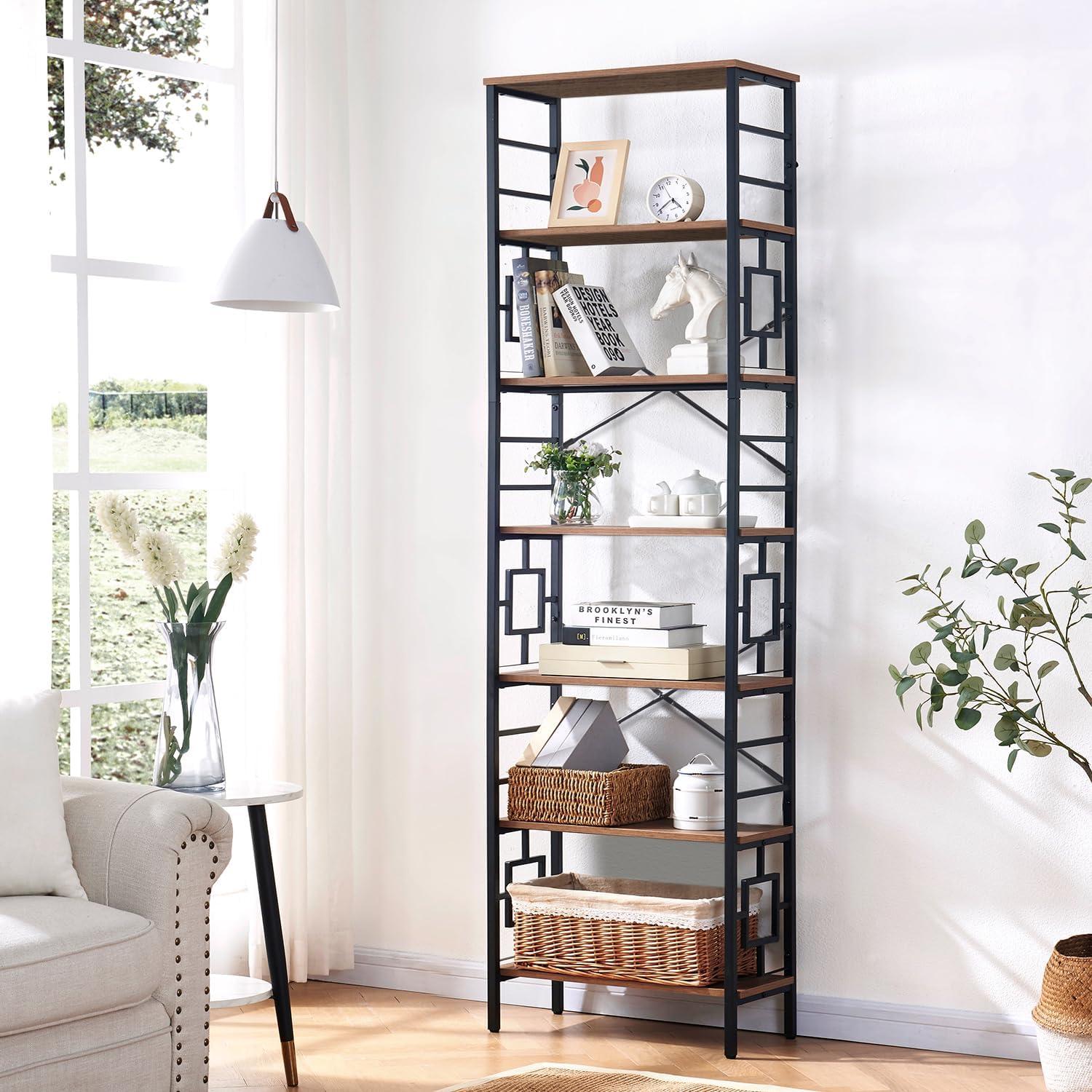
You’ll most likely find assembly unfolding like a small project in the middle of a room: cardboard flattened out, parts laid side by side, and a sheet of instructions on top.Panels slide into the frame and the first few bolts feel like they set the rhythm — some you hold steady while you reach for a screwdriver, others require leaning the frame slightly to line holes up. at times you’ll kneel and shift between tightening and checking alignment; a few components need minor nudges as the structure takes shape, and it’s common to go back over a couple of screws once the unit is upright because things settle differently once gravity does its work.
Moving the finished piece around the house reads like a separate, slower moment. When it’s empty you may handle it solo by tipping and pivoting through doorways; once it’s loaded the whole thing responds more sluggishly, shelves creak and objects slide a little unless you’ve taken a pause to secure them. You’ll notice the base meeting the floor in slightly different ways depending on hardwood, tile, or carpet — a quick shove, a small lift, or a gentle readjustment often follows relocation. After each shift there’s a ritual of straightening and smoothing: nudging it flush against a wall, re-centering stacks on a shelf, and occasionally fine-tuning the little supports under the feet so the unit sits even.
| Stage | Typical scene in your home | What usually happens next |
|---|---|---|
| Unboxing & Layout | Pieces spread on the floor, instruction sheet on top, hardware in small bags | you sort parts, find the first fasteners, and start assembling on your knees |
| Assembly to Upright | Holding panels steady while attaching braces and tightening bolts | The frame settles, you recheck a few screws, then stand it up and inspect alignment |
| Relocation | Tipping and pivoting through doorways; sliding or lifting on different floors | You smooth items on shelves and tweak the supports so it sits level |
How It Lives in the Room
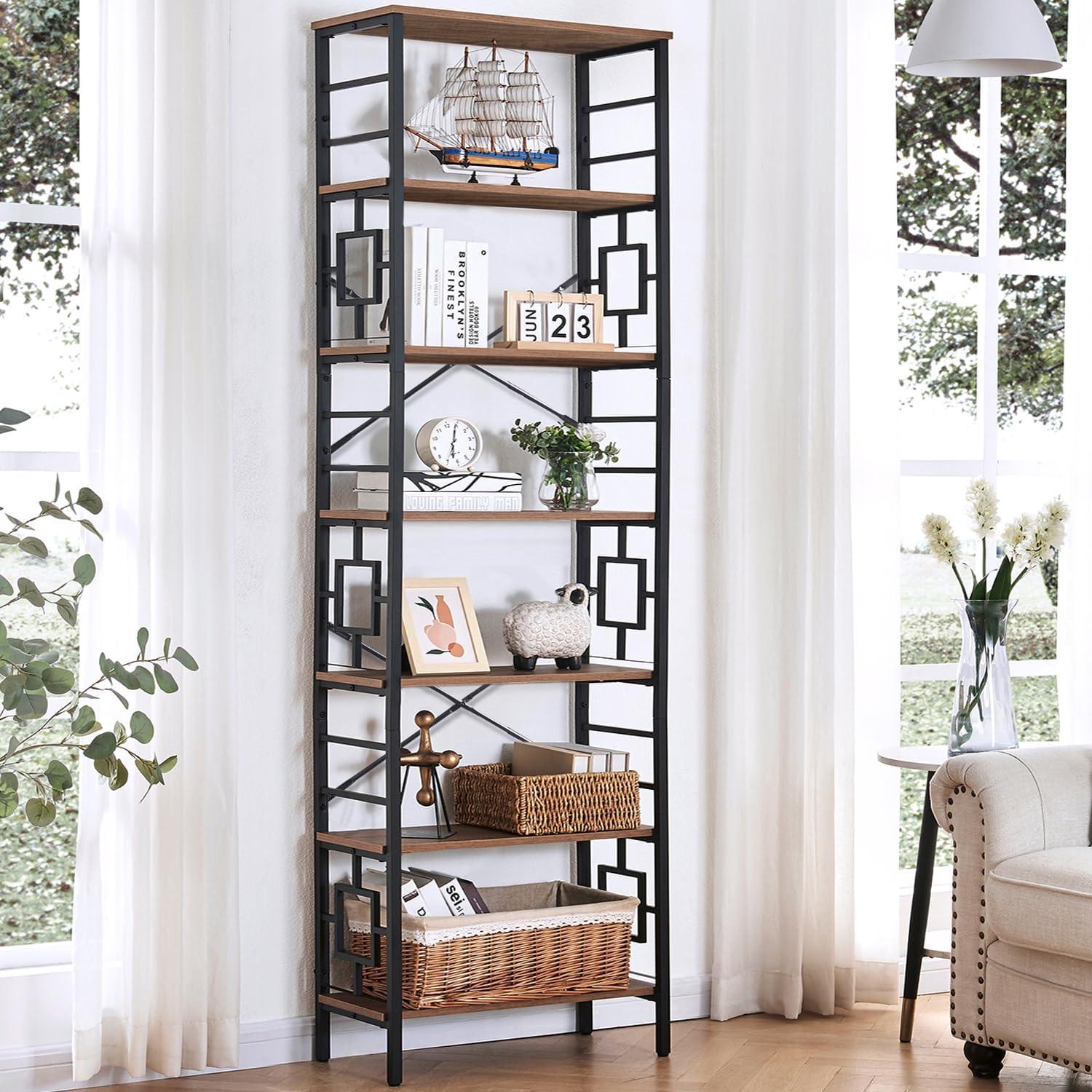
Over time, the HOMISSUE Tall Bookshelf settles into the corner and you notice the small marks and soft rearrangements that come with daily use. In regular household rhythms it becomes a landing place for a half-read book or a cup set down between tasks, a shelf you reach for by habit and a quiet backdrop that shifts with what you put on it. Surfaces pick up faint scuffs and fingerprints, edges are brushed by shoulders and bags, and those little signs fold into the ordinary way the piece is present in your life. In time it simply stays.
As an Amazon Associate I earn from qualifying purchases.
