
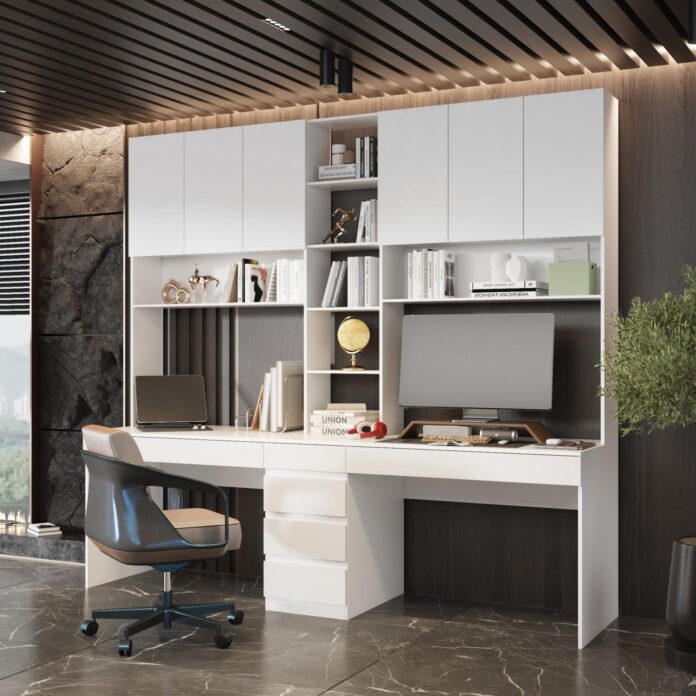
You notice the piece before you name it: a wide, white bank of work surfaces and shelving that quietly reorders the room. Up close it’s stamped MOUMON Double Office Desk with Drawers and Shelves, though in everyday life it reads as a stacked, two-person workstation. The veneer is smooth under your hand and the joins where boards meet are plainly visible—engineered, not ornate—with a visual weight that pulls your eye along the long desktop and then up into the tall cupboards. Doors,drawers and open shelves interrupt the mass into small pockets where a lamp,a stack of notebooks and a stray cable seem to belong,giving the assembly a steady,utilitarian presence rather than a staged one.
A first look at the MOUMON double office desk in white and what you receive
When you first open the boxes, the experience is hands-on: two packages usually arrive, one containing the larger boards and the other holding smaller components and hardware. You’ll find many flat panels wrapped in corrugated cardboard or foam — the boards feel rigid and the white veneer gives a smooth, slightly satiny touch. Most pieces are labeled with letters or numbers, so as you pull parts out you’ll notice those small stickers and a tendency to sort things into groups before you start moving them around the room.
Alongside the panels,the instruction booklet sits on top of a handful of clear plastic bags filled with screws,dowels and metal fittings. The bags are organized but numerous, so you’ll often reach for a label to match a fastener with a diagram. The doors, drawer fronts and shelf boards arrive loose rather than prefastened; hinges and runners are packaged separately. A small anti‑tip strap or bracket is also included in the hardware pack and is easy to spot if you scan the contents before you start. As you handle the white surfaces, you may find light dust or the occasional transport scuff that smooths out with a gentle wipe — the finish shows fingerprints more readily than darker surfaces.
| Typical package | What you’ll find inside (in most shipments) |
|---|---|
| Box 1 | Large panels (desktops, side panels, tall back/shelving pieces), wrapped for protection |
| Box 2 | Smaller boards, doors/drawer fronts, instruction manual, labeled hardware bags and fixing brackets |
Before you begin assembly, it helps to lay out the labeled parts and quick‑scan the hardware list in the manual; most people find checking things off as they unpack avoids surprise mid‑build. You’ll also get a sense right away of how the white finish reads in your space — bright under overhead light, softer in natural light — and whether you want to clear a staging area for the many pieces that need to be assembled.
Unboxing and assembly: the first hour you spend with the frame, doors and drawers
You open the first box and the smell of cardboard and foam is immediate. Panels and long planks lie flat, each wrapped in a thin film. The instruction booklet is on top; beneath it, small bags of hardware are taped to larger boards. As you peel back tape and slide out parts, you’ll notice labels on many pieces — A, B, C — and several identical-looking screws in tiny zip bags. It feels like laying out puzzle pieces on the floor: a few large boards, several narrower boards that will become the vertical sections, a pair of doors stacked together, and drawer components tucked separately.
Setting pieces side by side helps to see what will come together first. the larger panels are noticeably heavier than the rest and tend to wobble if you stand them upright by yourself. when you lift and align a shelf board with the side panel, dowels slip into predrilled holes but sometimes need a small push to seat fully. cam locks sit nearby in their bag; as you pop one into a hole and turn, the two panels lock with a soft click.The hinges for the doors are mounted on small plates; you’ll find yourself holding a door level against the frame while guiding the hinge into place, the hinge screws catching before the door settles into its final alignment. Doors can swing a little as you tighten the last screw, so there’s a rhythm of tightening and nudging that develops as you work.
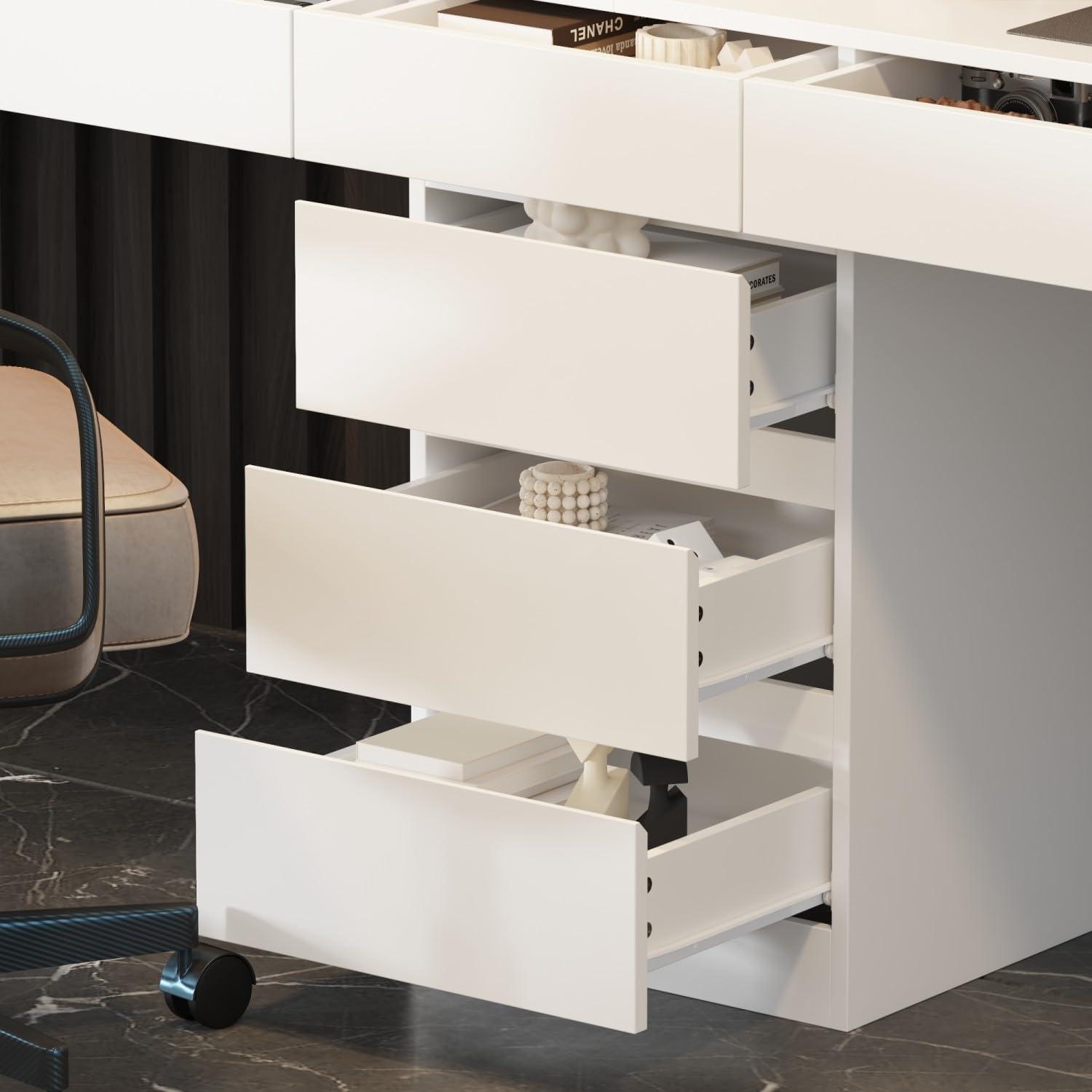
Drawer sections arrive in separate groups: sides, bottoms, fronts.Slide runners come in matched pairs and some rails already have small plastic clips clipped on. Assembling a drawer box involves feeding the bottom panel into grooves and lining up the runner holes; the wood can resist the glide until everything is squared. You’ll notice identical-looking screws in different lengths — pausing to compare them becomes a small, necessary habit. While attaching the front of a drawer, a small shim of cardboard or a fingertip to steady the panel is a familiar, nearly unconscious move.
By the end of the first hour you’ll usually have the basic carcass standing: the frame joined, a couple of shelves slotted, at least one door hinged, and one or two drawer boxes partly assembled or slid into place. Things shift a little as pieces settle and fasteners are tightened; edges rub packing film, and you might smooth a tiny scratch with the edge of your thumb just to see if it’s surface-only. Small leftover bits — an extra screw or two — are common and often get swept into a cup on the desk.
| Package | typical observable contents |
|---|---|
| Box 1 | Large panels (desktop/backs), hardware packet, instruction booklet |
| box 2 | Shelves, doors, drawer parts, additional fasteners |
The manual’s parts list proves useful even if you don’t follow every step verbatim; checking off bags and smoothing out instruction diagrams is part of the flow.At times you’ll pause, lean in, and squint at a line drawing to make sense of a bracket orientation. Little adjustments — turning a cam a fraction more,nudging a door slightly up or down — happen often. The first hour is mostly about transforming flat, labeled pieces into three-dimensional form and learning the small physical habits that make the rest of the build go smoother.
The look and build: how the doors, shelves and finish read in your room
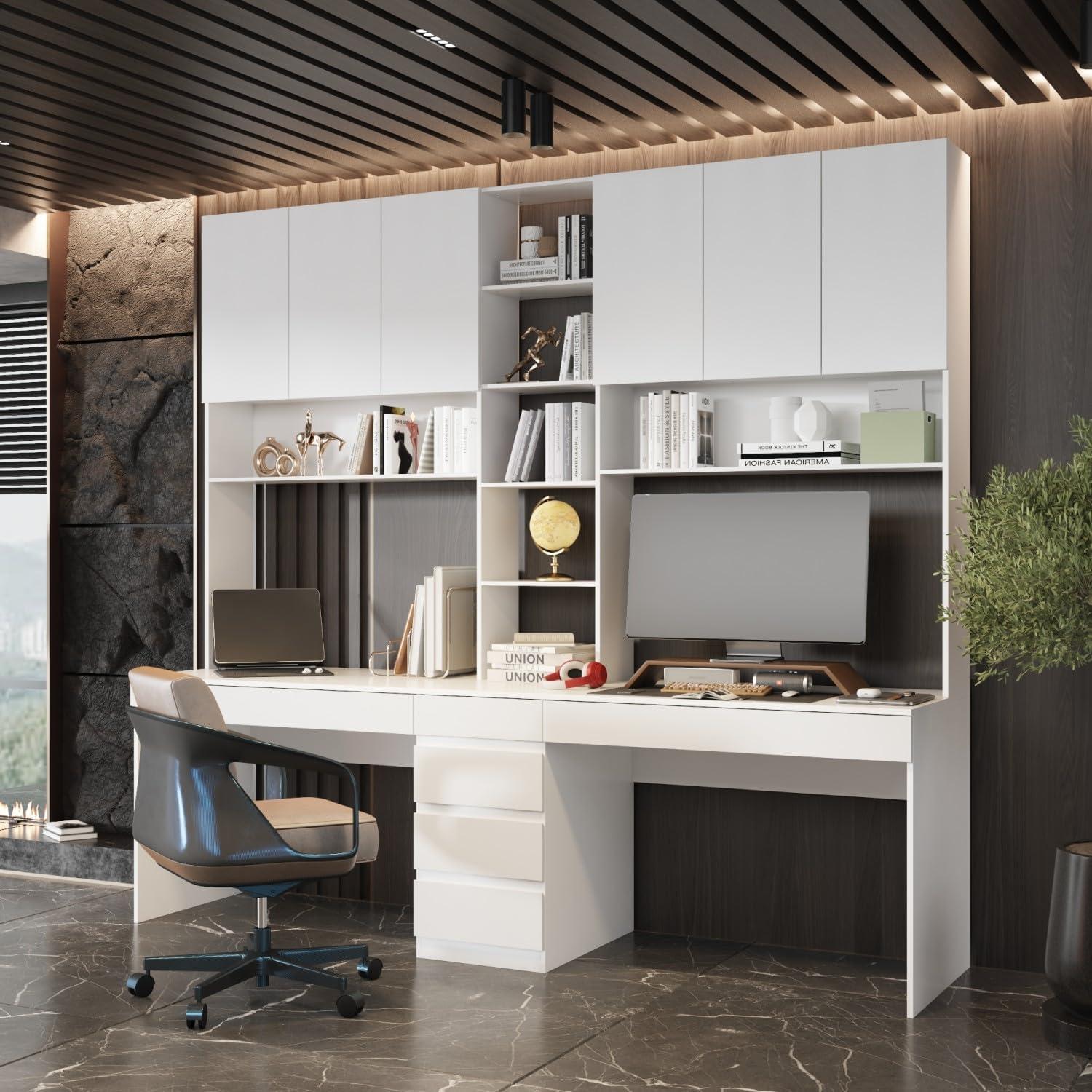
Placed against a wall or dividing a corner, the doors read as flat, quiet planes that break the visual flow of the workspace. When you close them they create a single smooth surface that makes the whole unit feel more built-in; when you open one, the rhythm of vertical lines is interrupted and the depth behind them becomes visible. Up close you notice the way the door edges meet — small gaps can appear after the piece settles or after a day of moving things around, and you’ll find yourself nudging a door or two as part of ordinary use.
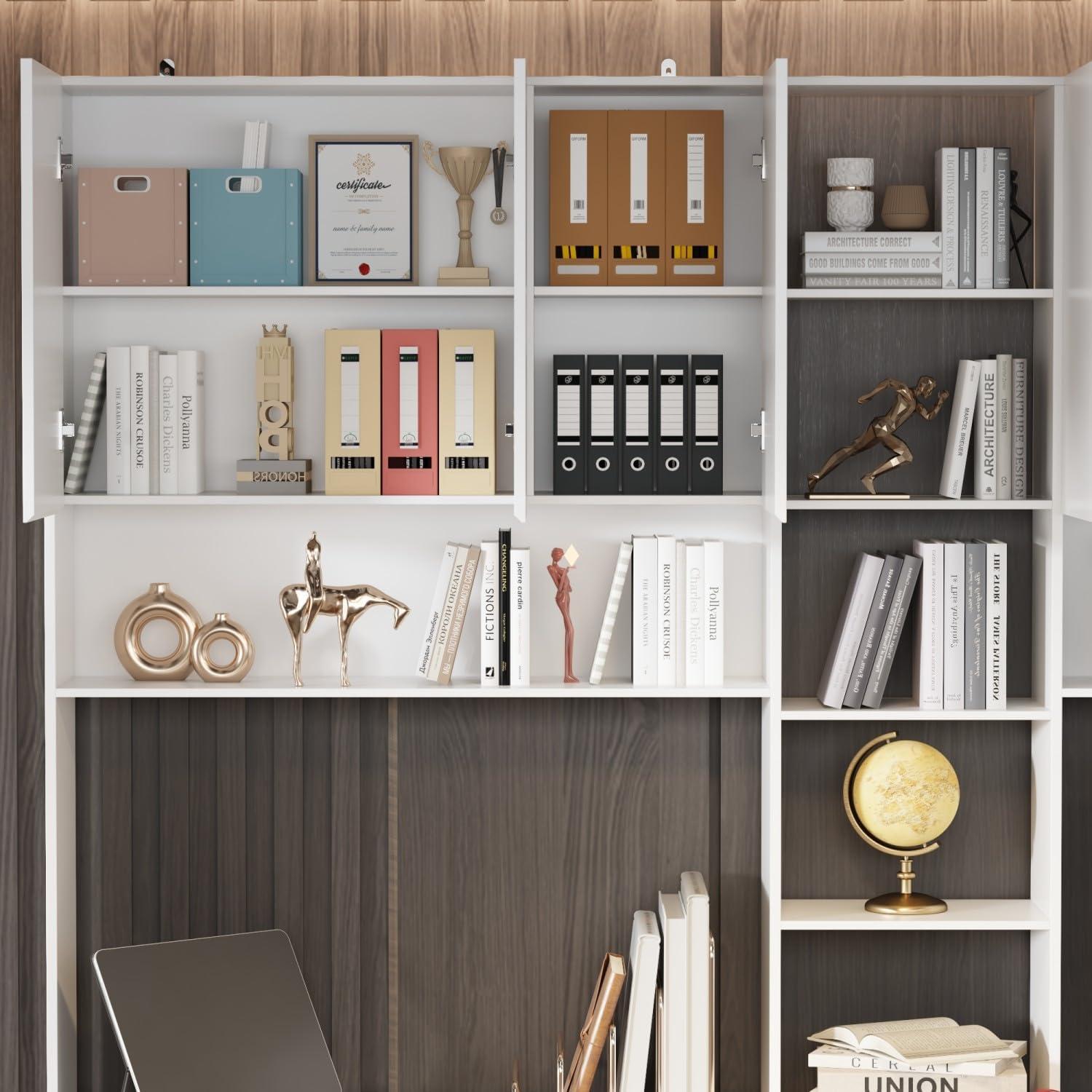
The shelves read differently depending on what you put on them.Left bare they give the unit a graphic stepped profile, catching shadows through the day; once filled, they become a series of visual planes that show the spines, stacks and silhouettes of whatever you keep there. Reaching for something frequently enough means brushing against an adjacent surface, and in everyday life you’ll smooth a stack of papers or slide a file to the back to steady a slightly wobbly arrangement.
The finish tends to show its character in passing: it catches morning light and looks cooler under fluorescent office lamps, and at arm’s reach you can see fingerprints or faint scuffs that settle into the grain. Running a hand along the top or around a door edge reveals seams where panels meet, and those seams can shift very subtly with use and humidity — not dramatic, but noticeable if you live with the piece every day.
| Element | How it reads in your room |
|---|---|
| Doors | Flatten the visual field when closed; interrupt the unit’s rhythm when open; small alignment quirks show with use. |
| Shelves | Create depth and shadow; become the visible story of your belongings as soon as they’re filled. |
| finish | Reflects light differently by time of day; shows everyday marks up close and reveals panel seams to the touch. |
Materials and hardware up close: the surface feel and how the glides and hinges behave for you
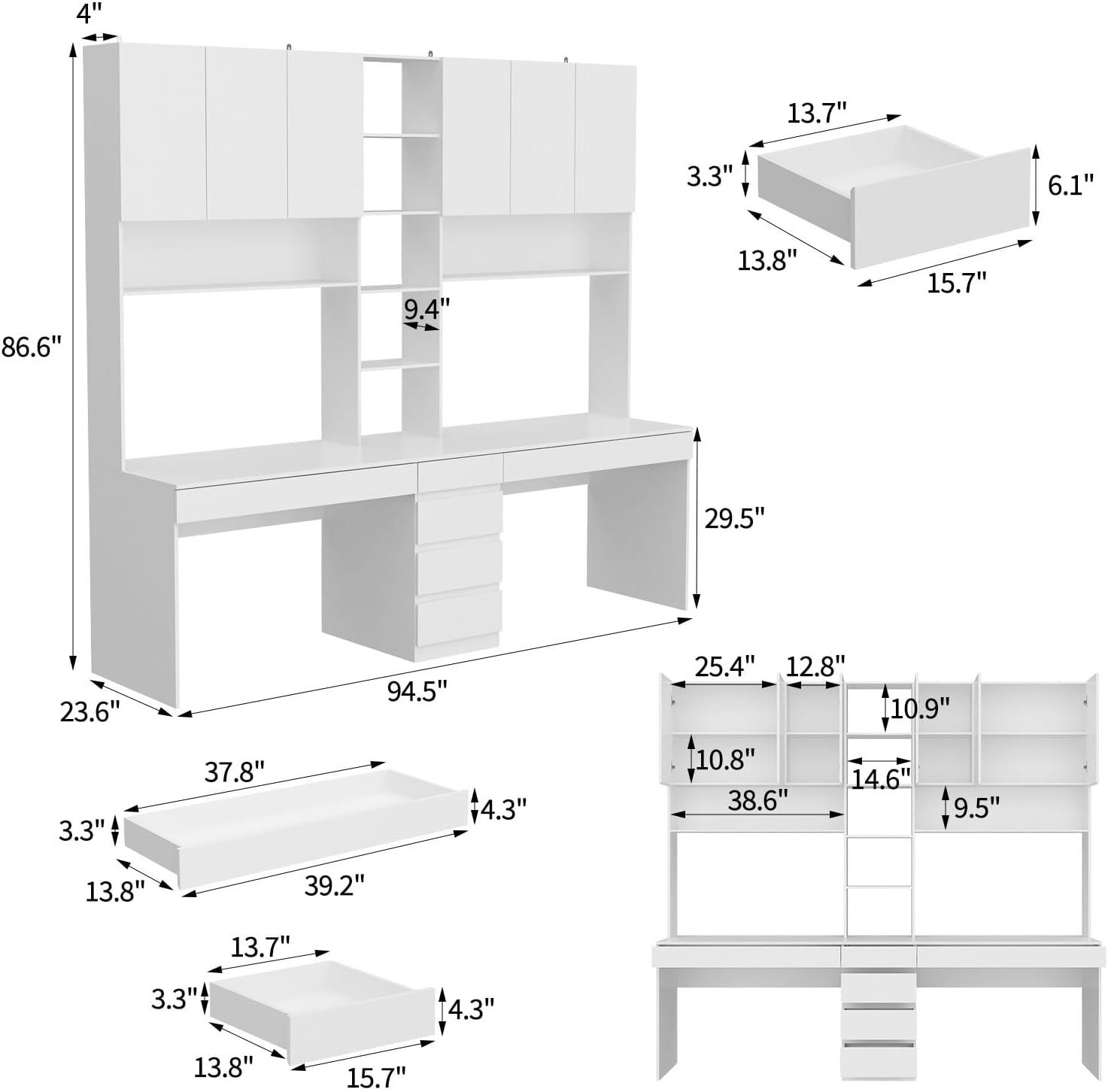
When you pass your hand across the desktop and shelf faces the first impression is of a smooth, veneered surface that gives a slightly satiny feel rather than a glassy shine.If you run your fingertips along the joins where the desktop boards meet, you can feel a faint ridge and the occasional glue line — nothing sharp, but enough that you notice it when you flatten your palm to smooth papers or slide a mouse. The edges are finished with a thin band of laminate that tends to feel firmer than the top; when you brush past them they don’t bite into your skin,but they do register as a distinct edge under your fingers. Inside the cubbies and drawers the finish can feel a touch more raw — the inner panels have a drier texture and,for some units,a faint factory scent the first few days you use it.
Open and close the storage repeatedly and you’ll learn the small rhythms of the hardware. The drawers move on basic glides that often start with a little stiffness; after a few pulls they tend to loosen up and run more freely, though you may notice a bit of lateral play when a drawer is fully extended. The doors swing on concealed hinges that have a defined stop — they don’t drift on their own — and you can hear a muted click as they settle into place. With a fingertip you can feel a slight resistance at the start of the motion, then a smoother sweep; in certain specific cases tightening or loosening the hinge screws changes how that first resistance feels, so the motion can be tuned a little if you spend a few minutes on it.
| Element | What you feel and hear | Typical behavior over short use |
|---|---|---|
| Desktop/shelves | Satiny veneer, faint ridges at panel joins | Feels smoother after light wear; seams remain perceptible |
| Drawers (glides) | Initial stiffness, slight lateral play when extended | Loosens with repeated use but not perfectly silent |
| Cabinet hinges | Defined stop, muted click, mild start resistance | Motion can be adjusted via screws; stays aligned once set |
Everyday at your desk: comfort, reach and fitting monitors, keyboards and chairs
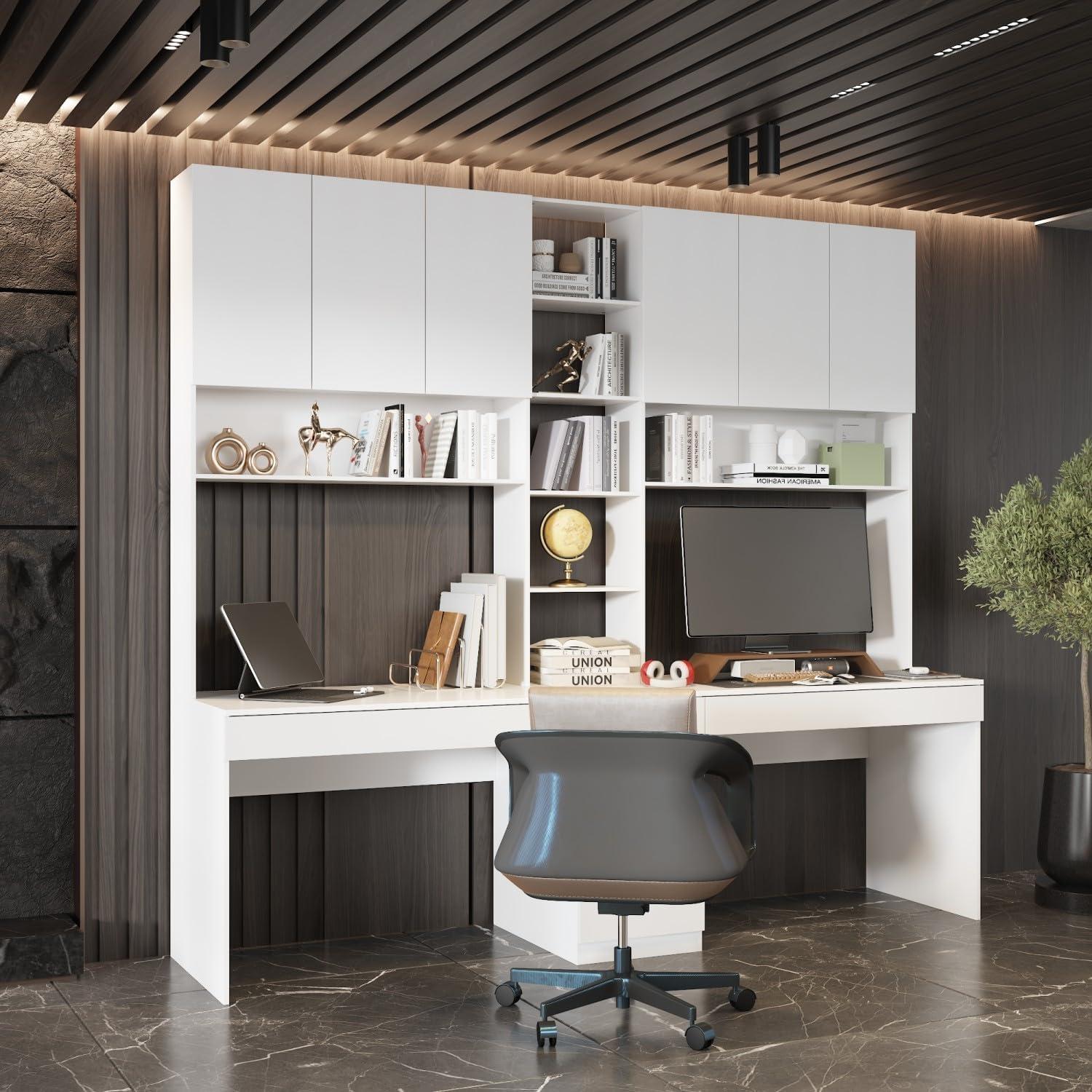
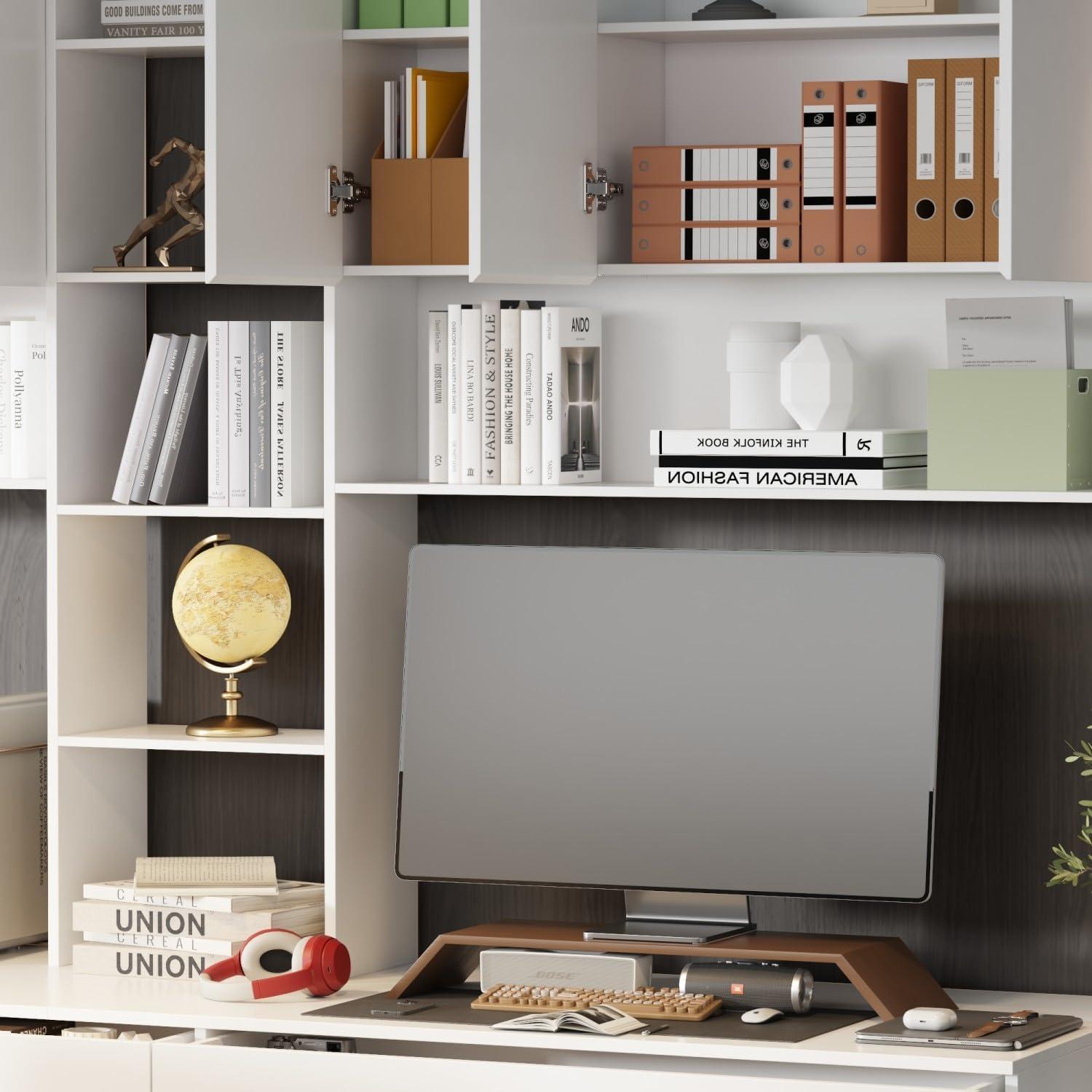
When you settle in, the wide surface encourages a habit of spreading gear across a single plane rather than stacking vertically. Monitors sit on the desktop with room to spare between bases, so you tend to center screens in front of your chair to avoid twisting.Your keyboard and mouse usually live on the same plane; reaching for them feels natural from a seated position, though you will sometimes slide the keyboard a little closer when leaning into detailed work or push it back to clear space for writing.
your chair movement becomes part of the workflow: shifting forward to access lower shelves, nudging back to open doors, smoothing a cushion before returning to the keyboard. Cables and small peripherals frequently enough gather near the rear edge of the desktop, so you find yourself reaching slightly higher or stretching an arm behind a monitor to plug in a headset or swap a drive. In ordinary use, the desktop depth allows for a agreeable viewing distance without constant forward-leaning, but longer sessions prompt habitual micro-adjustments — straightening posture, rotating wrists, or angling the mouse pad for a less cramped reach.
| Zone | Typical items placed there | How it feels in use |
|---|---|---|
| Primary reach | Keyboard, mouse, notebook | Hands rest naturally; small shifts suffice to access items |
| Secondary reach | Monitors, desk lamp, speakers | Requires minor torso rotation to adjust or reach connectors |
| Peripheral reach | Storage cubbies, paperwork piles | often reached by leaning or standing up to retrieve |
everyday use settles into a rhythm of small fixes — angling a keyboard, scooting the chair an inch, smoothing a sleeve before typing — more than big rearrangements.Observers tend to notice that most setups end up with monitors centered and frequently used items kept close at hand to minimize those repeated stretches.
View full specifications and options
how it performs for your needs and where expectations meet reality
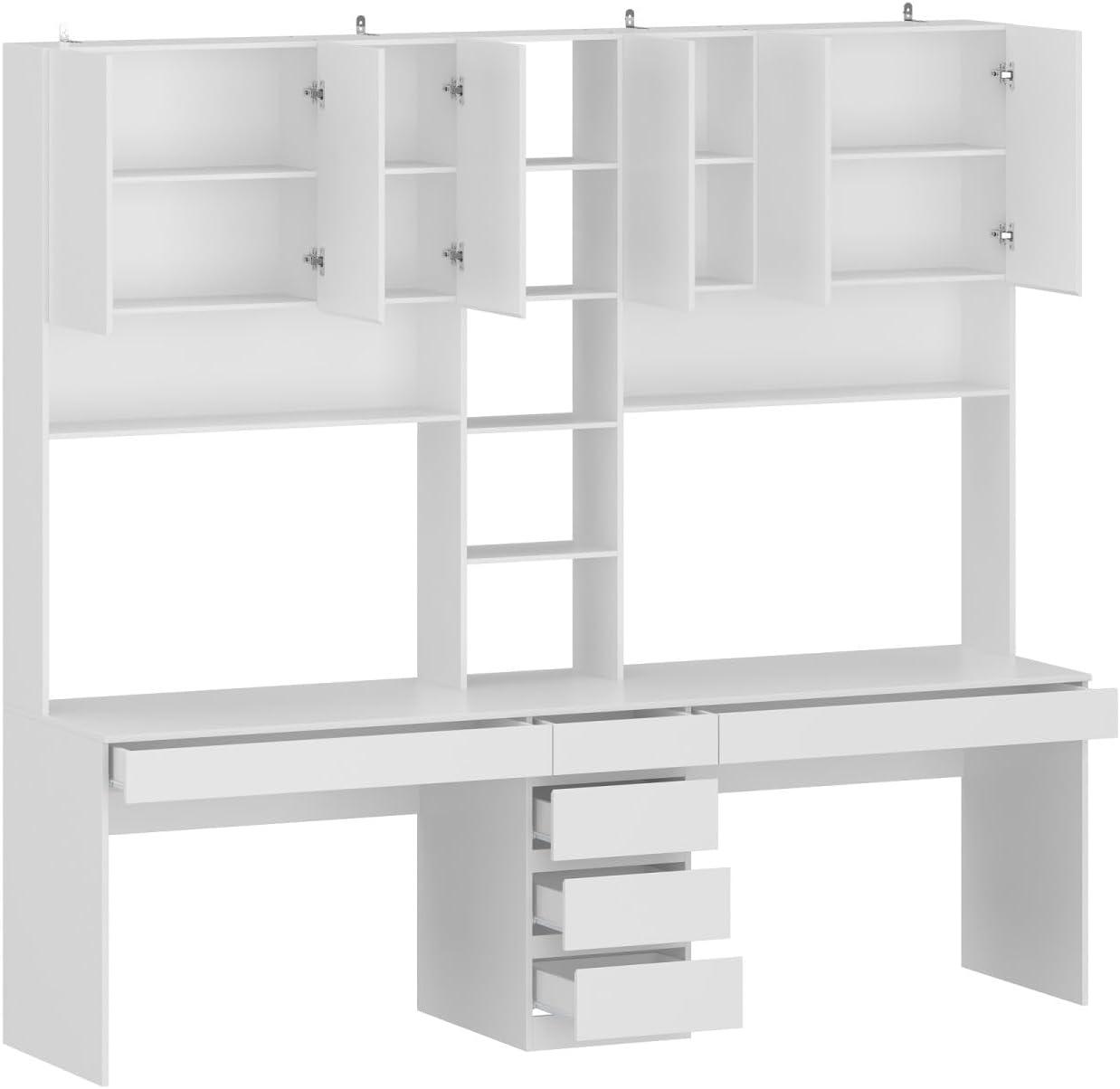
In everyday use the desk mostly behaves as a large, multi-zone workstation. The continuous span of the desktop provides an uninterrupted area for keyboards,monitors and paperwork,though the seams where the desktop sections meet are noticeable when sliding a mouse or nudging items across the center. Drawers and cabinet doors present themselves as practical storage: drawers tend to loosen and glide more smoothly after a short break‑in period, while doors can sit a little proud until hinges are nudged into alignment. The overall footprint stays steady during typical activity,but a firm push near an unsupported edge can produce a slight give.
Shelves take boxes, binders and stacks of paper without drama, yet repeated heavy loading shows modest sagging over time on the deeper runs. Upper compartments sit high enough that reaching for frequently used items frequently enough becomes a quick, recurring habit—users commonly rotate wich items stay up top as access becomes awkward during seated work. Surface finish collects scuffs and fine dust in the join lines; those areas reveal themselves most clearly under lateral motion or when rearranging equipment.
| Expectation | Observed |
|---|---|
| Seamless desktop for continuous mouse/keyboard use | Seams remain perceptible during lateral motion and can catch small objects |
| Ready-to-smooth drawers and doors | Movement improves after initial use; some hinge adjustments helpful |
| Long-term shelf rigidity | Holds typical loads well but shows slight bow under sustained heavy weight |
Small, everyday interactions reveal most trade-offs: tightening fasteners becomes a casual maintenance task, and routine cleaning targets the seams and backs of shelves. Over weeks the unit settles into a practical rhythm—functional and spacious, with a few lived-in quirks that show up when items are moved, loaded, or reached for repeatedly.
View full specifications and size options on Amazon
Care, tweaks and the small adjustments observed as it settles into your home
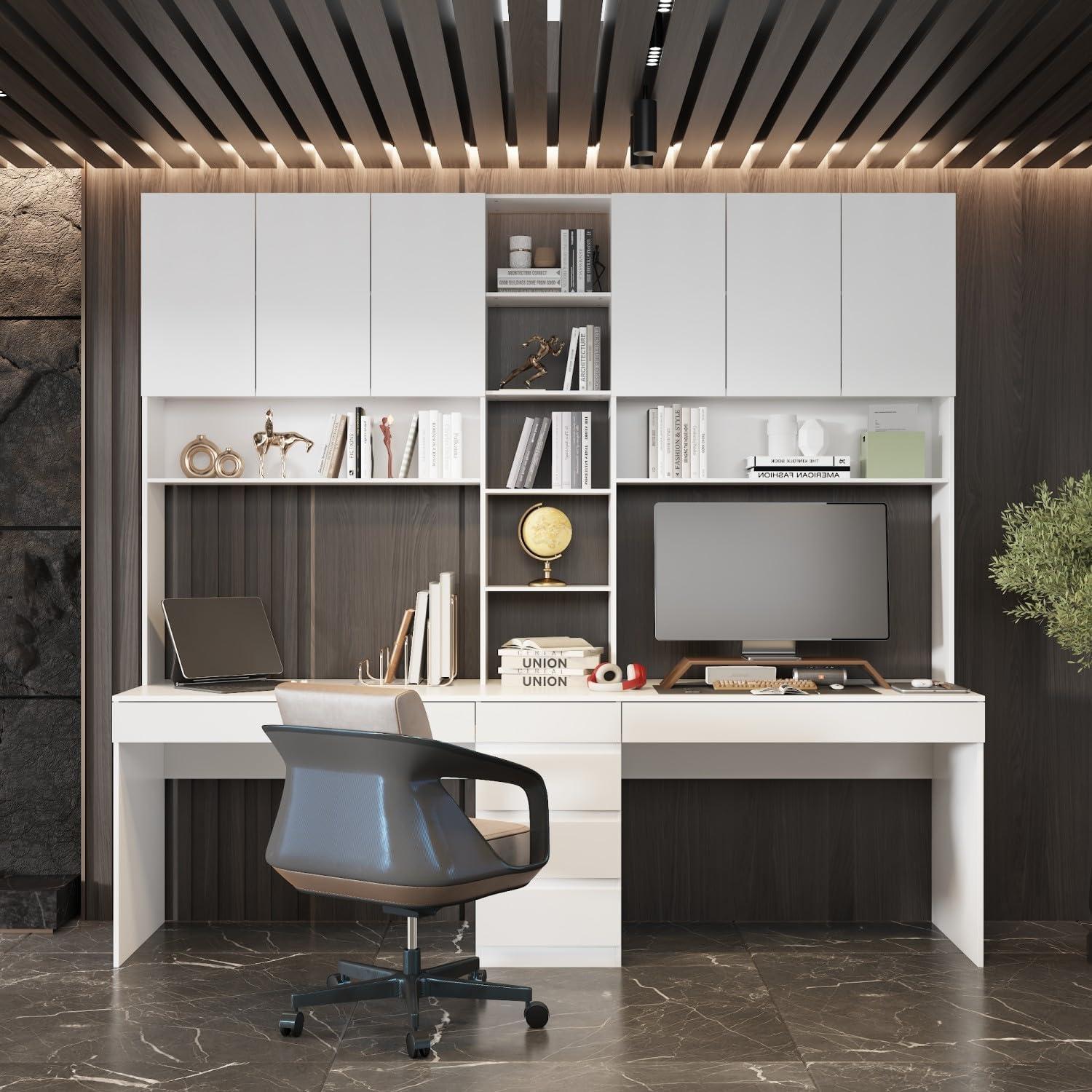
Once put into regular use, the piece tends to reveal a few small habits that only become obvious as weight, motion and daily routines interact with its panels and hardware. In the first days the largest surfaces can feel slightly less rigid where the desktop boards meet; seams settle and look more integrated after a week or two of normal use. Drawers and doors commonly soften in their motion after a handful of openings — hinges and glides find a working rhythm and may produce a faint creak or take a little extra nudge before moving smoothly. Leveling points show their effect quickly: tiny differences in floor surface are reflected in small wobbles that usually disappear once the unit has sat under its regular load for a while.
Other adjustments surface over a longer span. Shelves under continuous load can show a very slight bowing after several weeks, and drawer alignment sometimes drifts a hair as screws and cam locks respond to repeated use; the finish around high-contact edges can pick up faint scuffs from ordinary activity. Cable routing and the placement of frequently reached items also shape the lived-in feel — pathways behind the desk open up, and the arrangement of objects will change to accommodate reach and sightlines. For some households, the anti-tip hardware and any exposed fasteners become part of the routine checks as pieces settle, while in many cases the visible changes remain subtle and blend into daily wear.
| Tweak observed | typical timing | How it shows up |
|---|---|---|
| seam settling on desktop | Days to 2 weeks | slight gap reduction; surfaces appear more even |
| Drawer/door motion change | First few weeks | Softer glide, occasional creak, minor realignment |
| Shelf deflection under load | Several weeks | Very slight bowing where heavy items rest |
| Hardware loosening | Weeks to months | Small play at joints or fasteners |
These are typical, situational changes rather than abrupt failures; they unfold as the piece adapts to a room’s floors, the rhythm of use and the objects it holds. Small imperfections tend to diffuse into everyday life rather than demand immediate attention.
See full specifications and options
How the Set Settles into the Room
Living with the MOUMON Double Office Desk with Drawers and Shelves,you notice how it settles into place as the room is used,picking up small scuffs and the faint polish where hands and mugs have met the surface. In daily routines it quietly redirects where papers pile and how you sit for long spells, its shelves and doors becoming the unremarked stops for chargers, notes, and the things you reach for without thinking. Over time that gentle wear and the way it holds familiar clutter make it feel less like a new piece and more like a steady presence in regular household rhythms. It simply becomes part of the room.
As an Amazon Associate I earn from qualifying purchases.
