
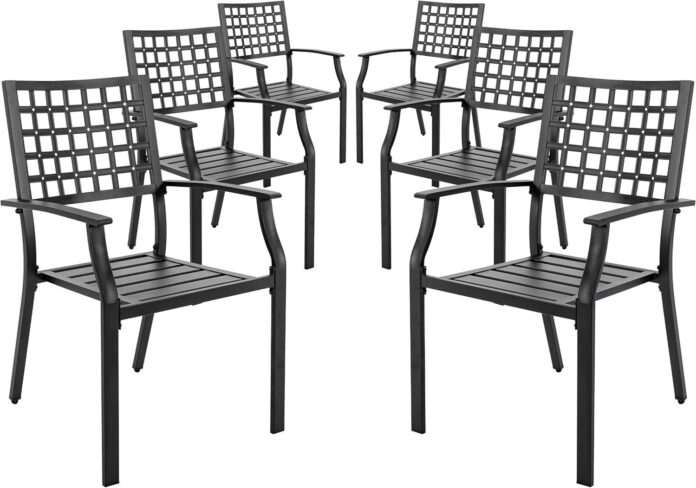
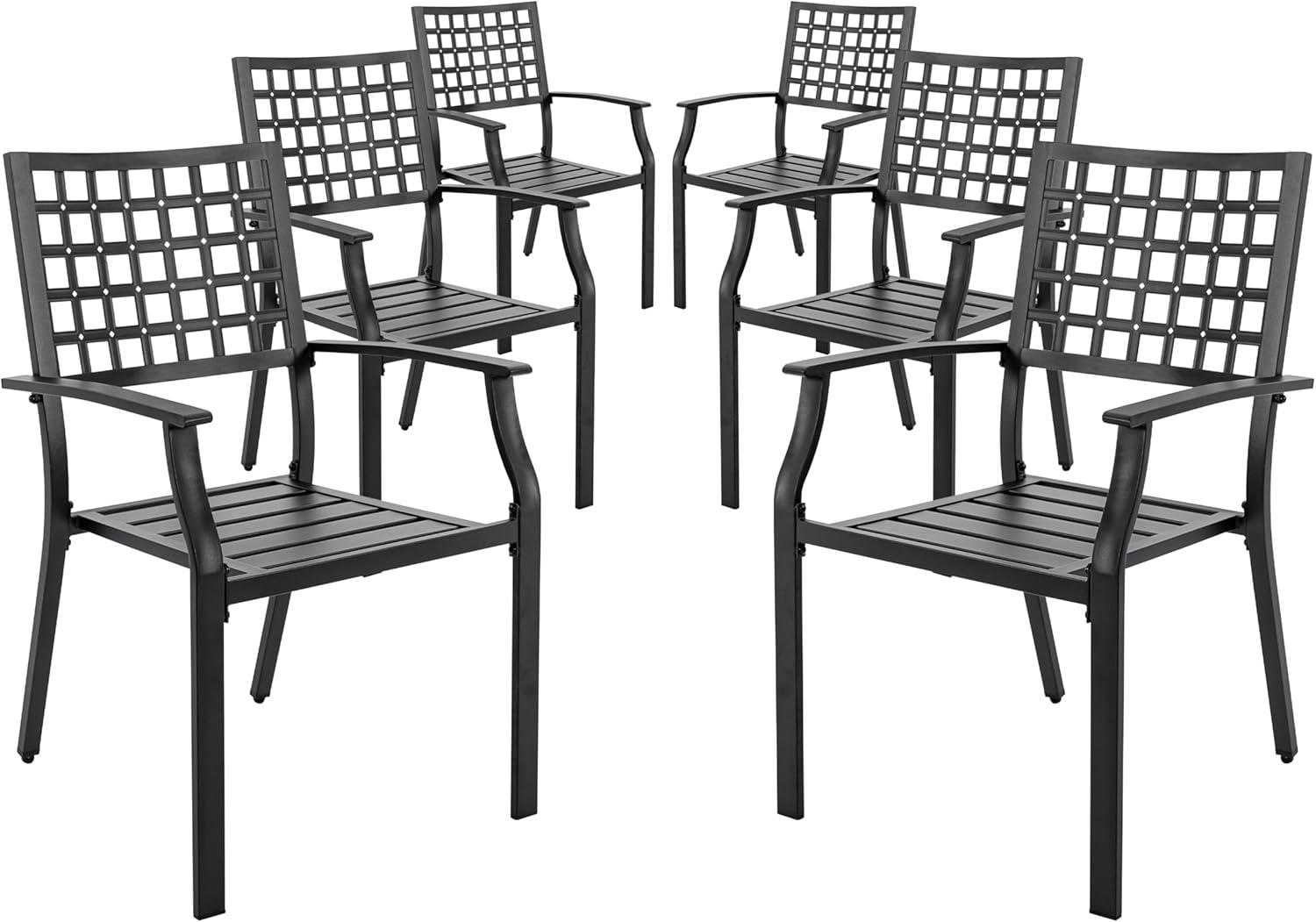
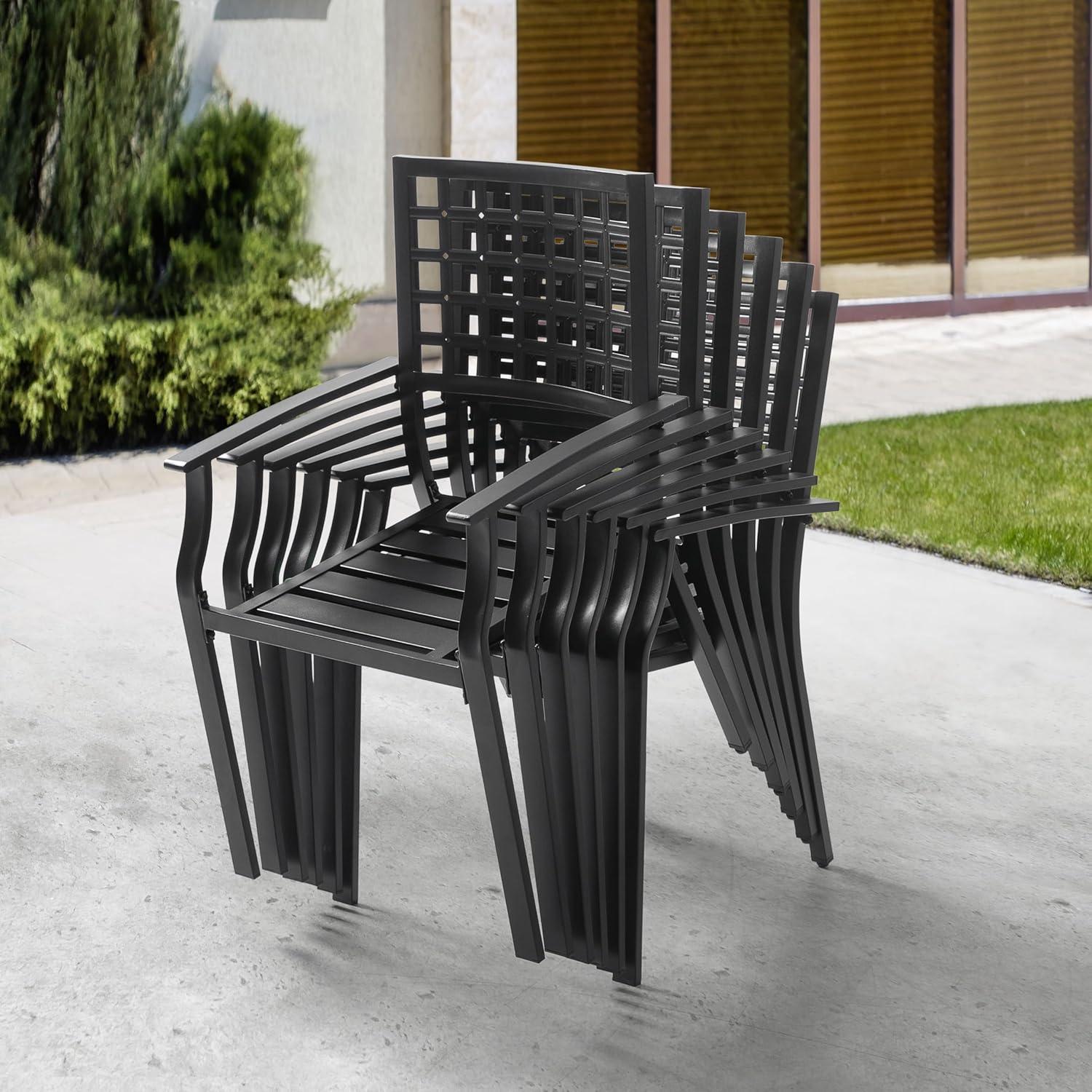
Light slips along the matte black frame and for a beat you almost forget you’re touching metal. Six NUU GARDEN Patio Dining Chairs sit around the small deck table, and up close the slatted seat and slightly textured powder coat register under your hand—cool, dry, and quietly significant. The armrests curve to a moderate height that feels natural as you push back, and the chairs read as a compact, vertical group rather than a scatter of pieces. Folded into a stack by the fence they lose some of their presence and gain an architectural simplicity you notice without trying.
The first impression you get when the set arrives on your patio

When the delivery lands on your patio the first thing you notice is how the set reads at a distance: a compact, dark silhouette against whatever surface it rests on. Up close you’ll find the pieces wrapped in corrugated boxes and a few small parts peeking from accessory bags; you instinctively brush away tape, lift a corner of the packaging and run a hand along an armrest to gauge the finish. The metal’s surface catches light in thin highlights rather than a gloss, and the backrests form a repeating rhythm that breaks up the expanse of your outdoor space.
As you slide one chair into place you get a sense of scale and spacing without measuring—how the lines fall beside potted plants, how shadows from the chair’s profile sketch across the deck. You may nudge chairs together, align legs, or stack one atop another out of habit; those small movements reveal how the set moves with you. For some households the arrival feels like a quick reshuffle of the patio; for others it will register as a distinct change in the way the area reads at a glance.
How the black wrought iron silhouette sits against your outdoor backdrop
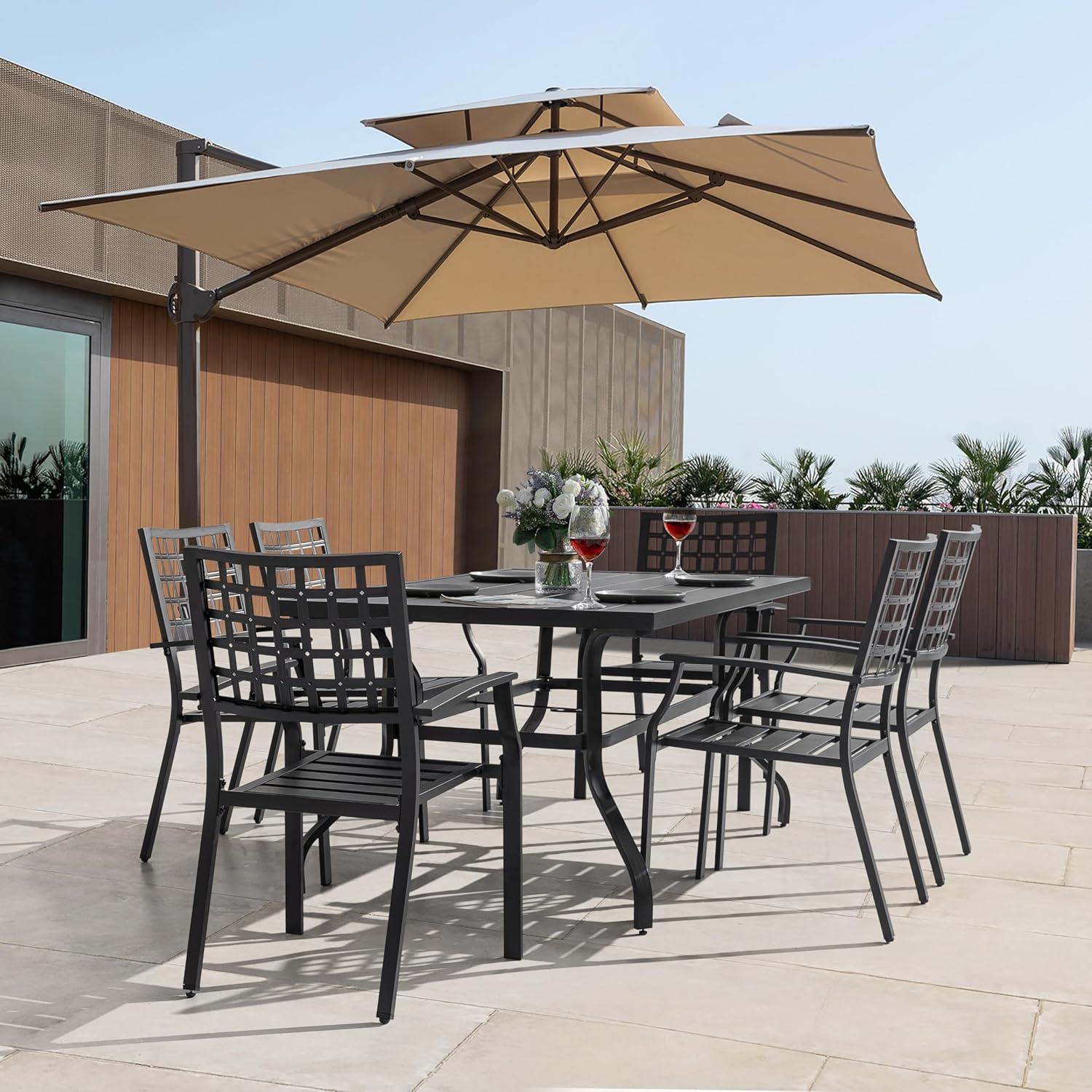
Placed against a stand of clipped boxwood or a bright cedar deck, the chair’s black wrought-iron outline reads like a crisp silhouette: arms form gentle arcs, the backrest settles into a soft V from certain angles, and the narrow gaps across the seat throw thin, linear shadows that lengthen as the sun drops. Up close you notice how light skims the powder-coated surface, catching on welds and the slightest nick, while from a few steps back the frame simplifies into a graphic shape that can either sit quietly in the middle distance or cut a sharper contrast against pale stone or sunlit tile.
When you move one to the table or slide a stack into storage, the profile shifts—lines compress, the arms tuck into a single repeating motif—and that movement changes how the chair reads against glassy water or textured gravel. After rain the finish tends to look deeper and the gaps in the seat let beads of water run through, so the silhouette can feel heavier; in late afternoon the same metal gives off a faint warmth where the sun hits it. You’ll find yourself smoothing a cushion or nudging a chair into a straighter line now and then, small rhythms that alter the visual weight of the set in your outdoor scene.
What the frame, finish and hardware tell you about materials and build

you notice the frame before you notice anything else: the chair has a low, hollow-throated weight when you lift or stack it, and the tubes meet at visible seams that tell you how the pieces were joined. As you slide into the seat and shift your weight, the joints that were welded give a continuous line from armrest to leg, while the bolted connections under the seat click into place when you nudge the frame. The legs sit with a slight outward flare; when you wiggle, the contact points at the floor reveal whether the chair was finessed for balance or left with small alignment variances you end up correcting by nudging the cap or moving a foot.
The finish reads like a practical surface in everyday use. Up close, the coating has a faint texture and a matte tone that hides fingerprints; when rain sits on the slats and then runs off, you see how the coating sheds water along the frame rather than letting it bead in seams. On occasion the edges where metal meets metal will show a hairline of wear from stacking or from sliding chairs across a deck, which is where the hardware — the little screws, plugs and plastic glides — reveal their role. As you stack and unstack, the glides can scuff or the paint can rub thin where contact repeats, and the exposed fasteners are the first places you tend to check for surface wear or early corrosion.
| Feature | What you see or feel | What that suggests about build |
|---|---|---|
| welded seams | Continuous joints, smooth or slightly raised bead | Fabrication focused on fixed joins rather than field-tightening |
| Bolts/screws under seat | Accessible fasteners, occasional tool marks | Modular assembly that lets you tighten or replace parts over time |
| Powder-coat texture | Matte, fine pebble finish; subtle friction under your hand | Surface meant to resist fingerprints and provide weather protection |
| Plastic glides/caps | Small plugs at leg tips that compress when pushed | Protection for floors and a wear point where finish may thin first |
What it feels like when you sit: armrests, seat shape and balance under you
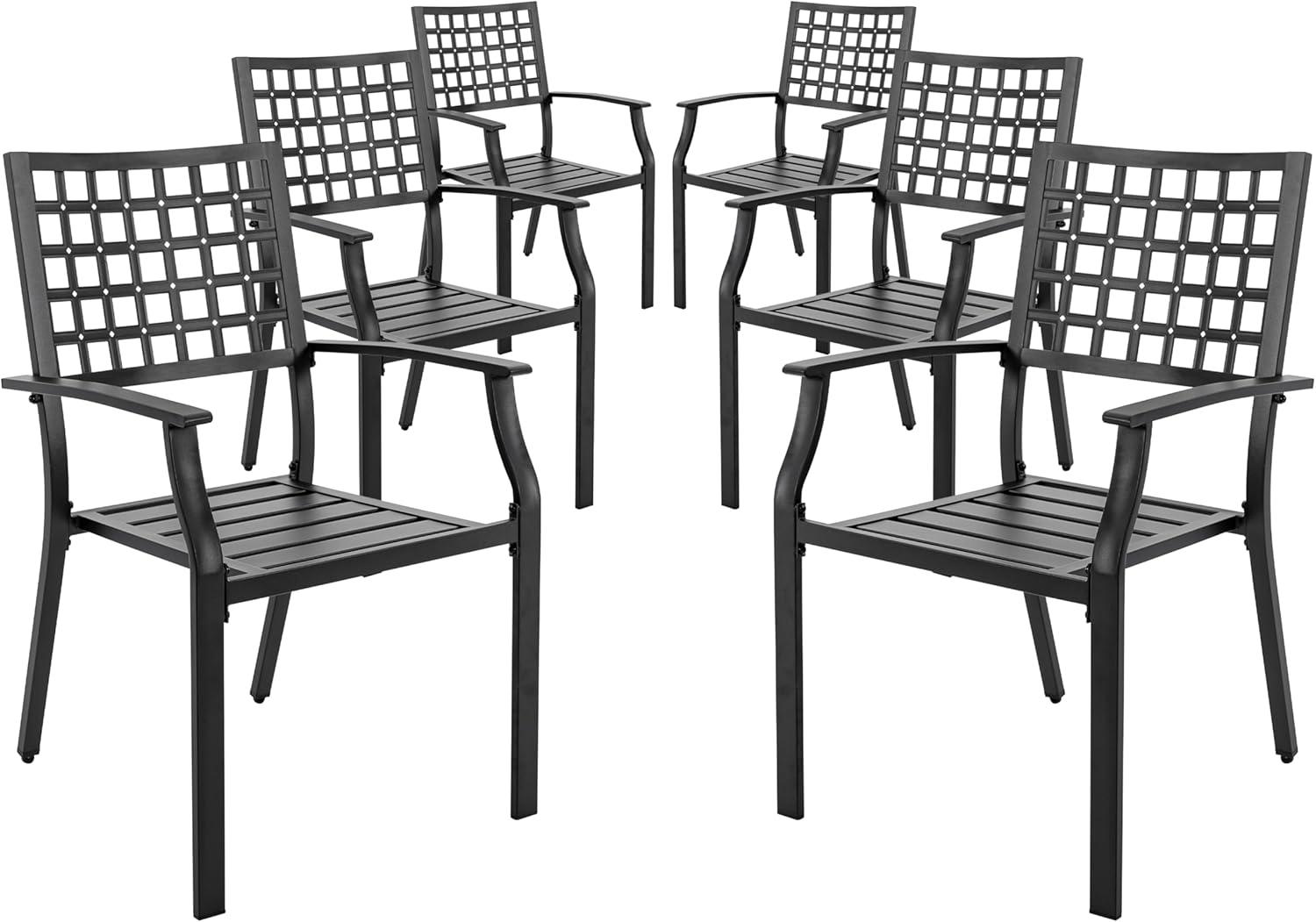
when you settle into the chair, the first impression is of firm, point-contact support: the slatted seat meets your thighs in a series of narrow bands rather than a continuous surface. That spacing lets air move around your legs and any residual dampness dry quickly, and it also means you’ll notice slight pressure lines where each slat hits—nothing sharp, but enough that you sometimes shift your position a fraction to find a more even feel. The seat’s shallow curve cradles your sit bones without sinking; as you move forward or back the contour follows, so you often end up sliding a little until the curve lines up under your pelvis the way you like.
The armrests are gently curved and sit at a height that lets you drop your elbows without lifting your shoulders; when you rest an arm they feel like a narrow rail rather than a broad pad, and you’ll unconsciously adjust your wrist or forearm to settle into the most comfortable spot. The whole unit gives a composed, grounded sensation under you — weight is spread across the frame and the chair doesn’t surprise you with sudden flex — though on sun-warmed surfaces the metal can register as noticeably hot and on cooler days a touch cold. Small habits emerge: smoothing a cushion, tucking one foot under, or angling your body toward the table until the balance feels right.
Everyday moments you have around dinners, pool breaks and quick coffee
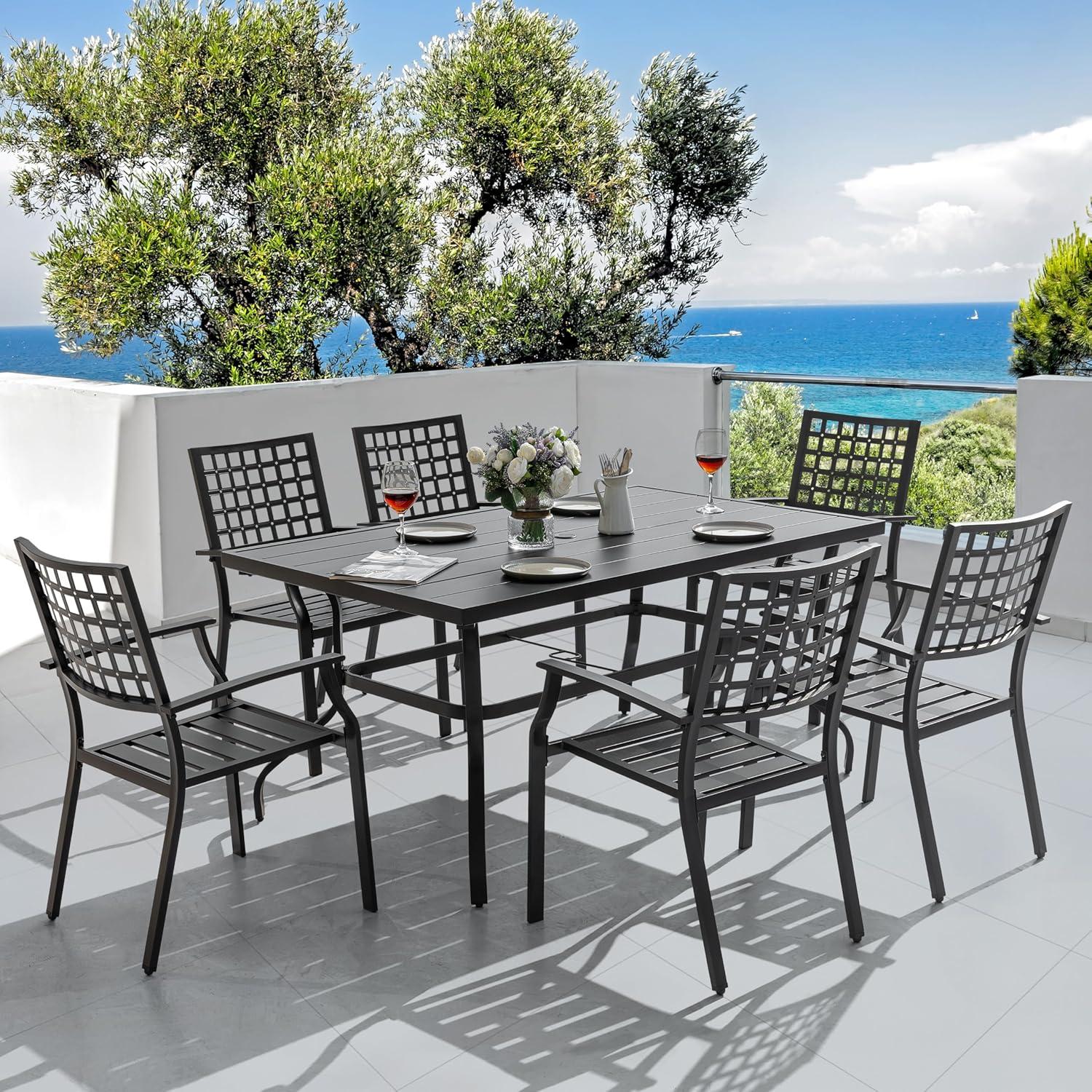
When you gather for a no-fuss weeknight dinner, the chairs settle into a predictable routine: someone nudges a chair closer to the table, you smooth the seat with the palm of your hand out of habit, and the armrests become a place to rest a forearm between bites. Conversations stretch and condense—plates are nudged aside, napkins tucked under knees, and the metal frame gives a light clink when someone stands up. On cooler evenings the seat can feel brisk against bare skin; in most cases you shift a bit,tuck a foot under the chair,or lean back to find a more comfortable angle.
Poolside and between quick coffees the chairs work differently. After a dip you’ll sit a moment to wring out a towel; the spaced seat lets water drip away so you’re not sitting in a puddle, and you may find yourself angling the chair to catch a breeze. During short coffee breaks the chair is frequently enough used for a two-minute pause—your fingers brush the armrest, you push back to tilt slightly, then you’re up again, sometimes leaving a faint ring of moisture where your cup sat. When the day winds down you might stack a couple with a quick shuffle to clear the deck; that motion is practical and a little habitual, not precise, and the chairs can clack softly as they settle into place.
How the set matches your needs and where real life exposes limitations

In everyday use the chairs present as straightforward outdoor seating: sitting down feels firm rather than plush, and occupants tend to shift position after longer periods rather than settle in for hours. The armrests serve as a convenient perch for hands or a plate when getting up, and the gaps in the seat make damp mornings less sticky — moisture usually runs off and the surface dries noticeably faster than a solid-top chair. Moving a single chair around the patio is easy enough, though a loaded stack can wobble a little when carried across uneven ground.
Real-life wear shows a few trade-offs that surface over time. Stacked metal edges sometimes rub together and small scuffs can develop, especially where chairs are nested repeatedly; finishes hold up well in daily use but can show edge wear after seasons of handling. On softer or sloped surfaces the chairs can settle or tilt slightly, and prolonged sitting on a bare metal seat encourages habitual adjustments such as shifting or adding a cushion. Assembly typically leaves fasteners accessible, and people often find themselves retightening after a few weeks of use. the following table summarizes common situations and the behaviors most often reported.
| Common situation | Observed behavior |
|---|---|
| After rain or morning dew | Seat dries relatively quickly; occasional pooling in joints but not prolonged dampness |
| Stacking for storage | Saves space but stacked sets can shift; metal-on-metal contact may create light scuffs |
| Extended sitting | Seating feels firm; users tend to adjust posture or add padding over time |
| Transporting across surfaces | Easy to move individually; stacks can wobble on uneven ground |
View full specifications and available options
Care, cleaning and signs of wear to look for as you keep them outdoors
When you keep these chairs outside,they collect the usual outdoor patina: a fine layer of pollen and dust after a dry week,tiny mineral rings from sprinkler spray,and the occasional bird drop that leaves a pale mark if left a while. After storms you’ll often see grit lodged between the slats and along the underside where water runs off. The painted finish can take on a slightly chalky look in places that get constant sun, and small chips tend to appear along edges that rub together when you stack or move the chairs.
You’ll find yourself wiping down surfaces more often than you expect — a quick rinse followed by a passed cloth clears most surface dirt and makes the finish look fresh again. When you try to push a broom or brush between the slats, some debris will come free while fine grit may need a firmer rub. At close range you can spot tiny dark flecks at welds or joints; these usually show up first as pinhead-sized dots before they spread into faint streaks. Fasteners can feel less snug after repeated use; a chair that creaks or wobbles after several seasons frequently enough has one or two bolts that have shifted or work-hardened.
| Visible sign | How it appears | What it commonly indicates |
|---|---|---|
| Small surface chips | Flakes of finish missing along corners or armrests | Repeated contact from stacking or shifting during storage |
| Pinpoint dark spots | tiny specks near welds or seams | Early surface corrosion developing in crevices |
| White or dusty patches | Dull, chalky areas on exposed surfaces | UV-related fading or finish breakdown over time |
| Wobble or creak | Chair shifts slightly when you sit or rock | Loosened fasteners or wear at contact points |
| Debris buildup | Leaves and grit between slats and under seat | Normal accumulation that can trap moisture if not cleared |
Over seasons you’ll notice patterns: the bottom of the legs can take more scuffs from lawn care and foot traffic, and stacking leaves faint abrasion marks where metal rests on metal. If the chairs spend long periods in one spot, areas exposed to constant sun or sprinkler spray may age a bit unevenly compared with shaded sides. These are the kinds of things that show up in day-to-day use — subtle at first, then more obvious if you don’t interact with the pieces for a while.
How the Set Settles Into the Room
Over time in your backyard or on the porch, the NUU GARDEN Patio Dining Chairs Set of 6 finds its place as part of the daily backdrop, a spot where mornings are paused and late conversations linger. You notice how people shift—arms resting on the armrests, seats softening into familiar hollows—and how the pieces arrange themselves into practical patterns as the space is used. Surface marks and a muted sheen appear quietly, folding into regular household rhythms so the chairs feel less new and more habitual. After a while you barely mark them as separate from the room; they simply stay.
As an Amazon Associate I earn from qualifying purchases.
: See how NUU GARDEN patio dining chairs fit your porch — sizing, weatherproof materials, and styling tips to create a cozy outdoor dining space. Two shorter alternatives: - NUU GARDEN patio dining chairs: sizing, weatherproof materials, and styling tips to perfectly fit your porch. - Fit NUU GARDEN patio dining chairs to your porch with practical sizing, material, and styling advice for better outdoor dining.)