
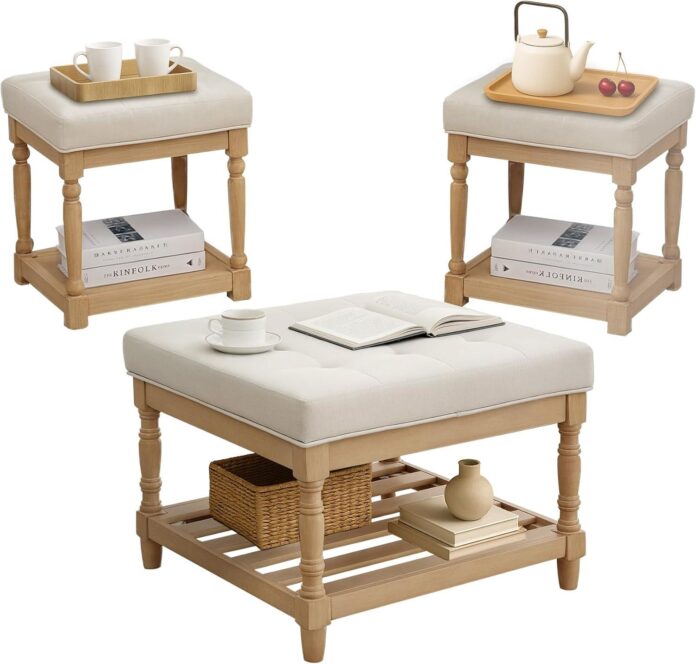
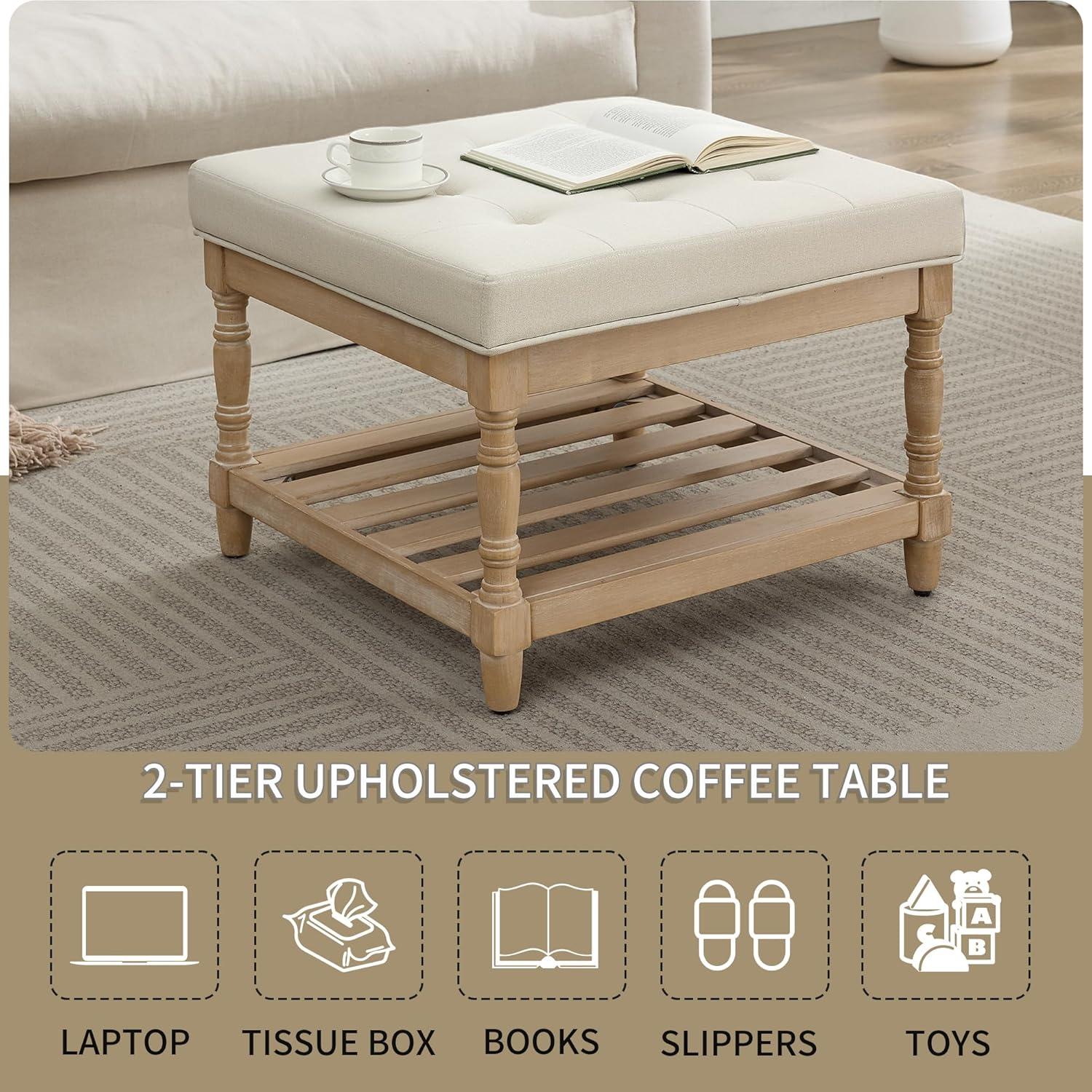
The UEV Ottoman Coffee Table Set of 3 — or simply the beige three-piece ottoman — settles into the room with a surprisingly grounded presence. Light skims the brushed wood base while the linen-like top softens the silhouette,and you catch the Roman-column legs just beneath the cushion edge. Press down with your palm and there’s a gentle, resilient give from dense foam; the stitching along the seams reads tidy under closer inspection. The largest piece sits around knee height, the two smaller tables noticeably more compact, so the group feels like low seating that doubles as surface. Open one lid and the storage space that quietly hides inside confirms this is an object meant to be used, not just seen.
A first look when you unbox the UEV Ottoman Coffee Table Set and set it in your room
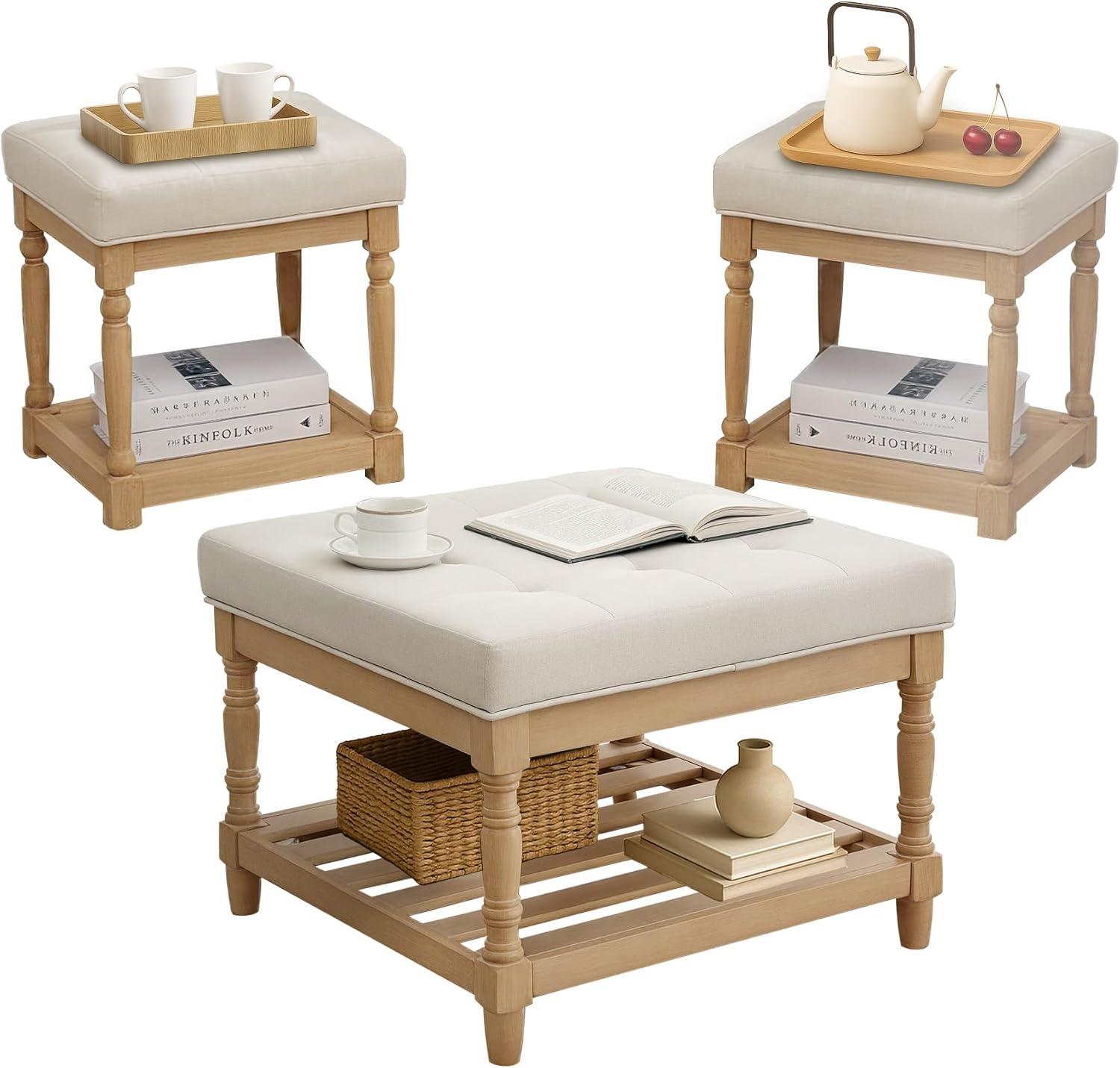
When you slice open the outer box, the pieces come out in separate layers—each upholstered top wrapped in thin foam and plastic, with the wooden legs and a small hardware bag tucked beneath. The fabric has a soft, slightly napped feel that catches light differently as you tilt each piece; in the warm light of your room the beige leans a touch warmer than it did online. A faint textile scent is noticeable at first and fades within an hour or so. as you lift the lids, you’ll find they hinge with a gentle resistance; the inside is hollow and echoes a hollow thump when you tap it. Small details show up only then: stitching lines that meet at corners, seams that need a little smoothing, and the brushed finish on the column-like legs that glints at certain angles.
Setting the pieces in place, you’ll instinctively nudge them a few inches to line them up with your sofa—an unconscious habit that reveals how they sit together as a group. The lids compress slightly under your palm and then bounce back,and you’ll problably smooth the fabric,tuck a seam,or shift a corner to reduce one wrinkle. The legs screw in with minimal fuss and, once attached, the set sits flush on typical flooring though it can show small rocking on an uneven patch until repositioned. these are the kinds of first impressions that settle in during the first hour: how the color reads in your light, how the fabric moves when you touch it, and how the pieces occupy the space when you walk around them.
| What you’ll see in the box | Immediate condition |
|---|---|
| upholstered tops (wrapped) | Protective foam removed easily; fabric crease that smooths out |
| Wooden legs | Finish intact; threaded hardware present |
| Hardware & instructions | Bagged and readable; no missing packets visible |
The Roman column legs and beige upholstery seen in your living room’s light
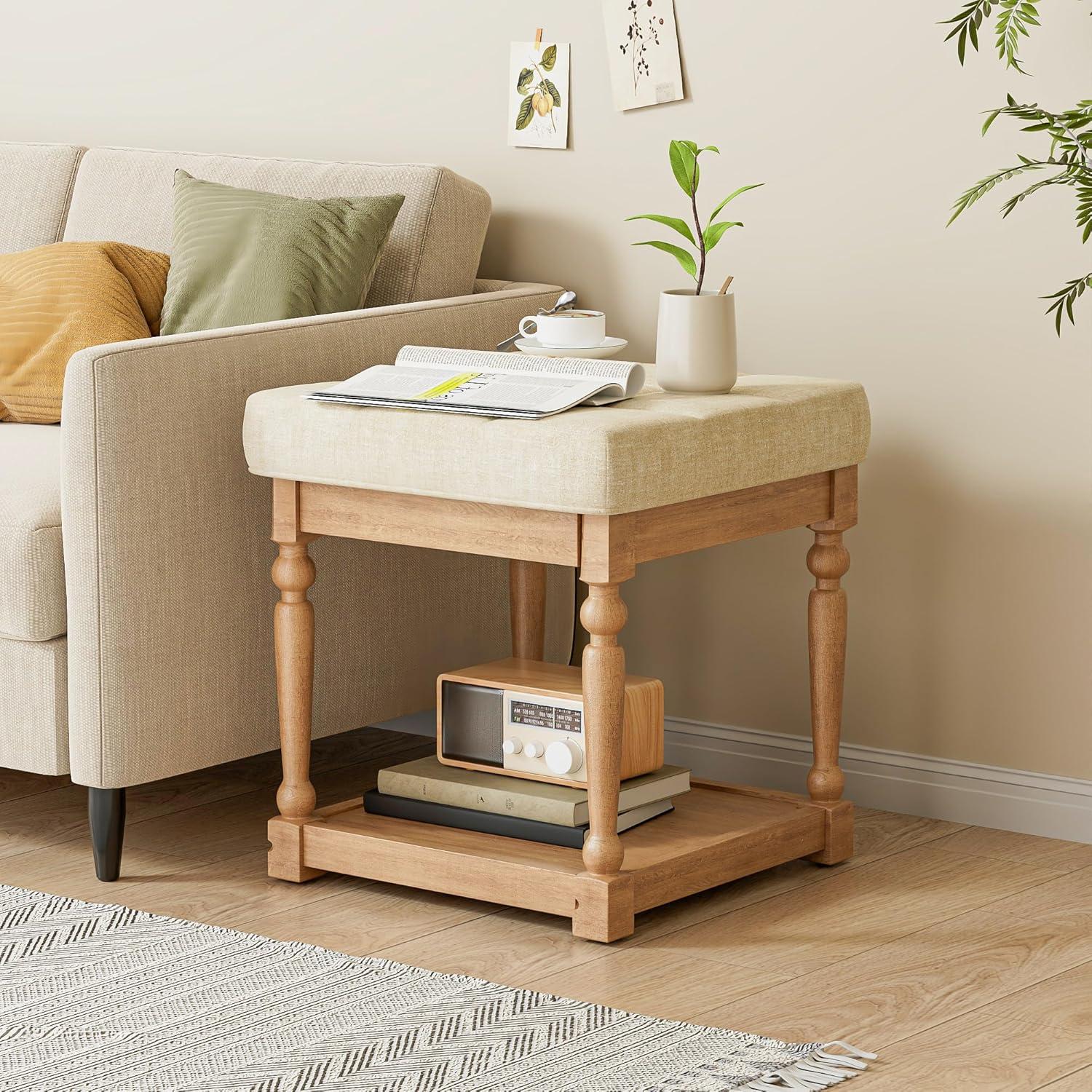
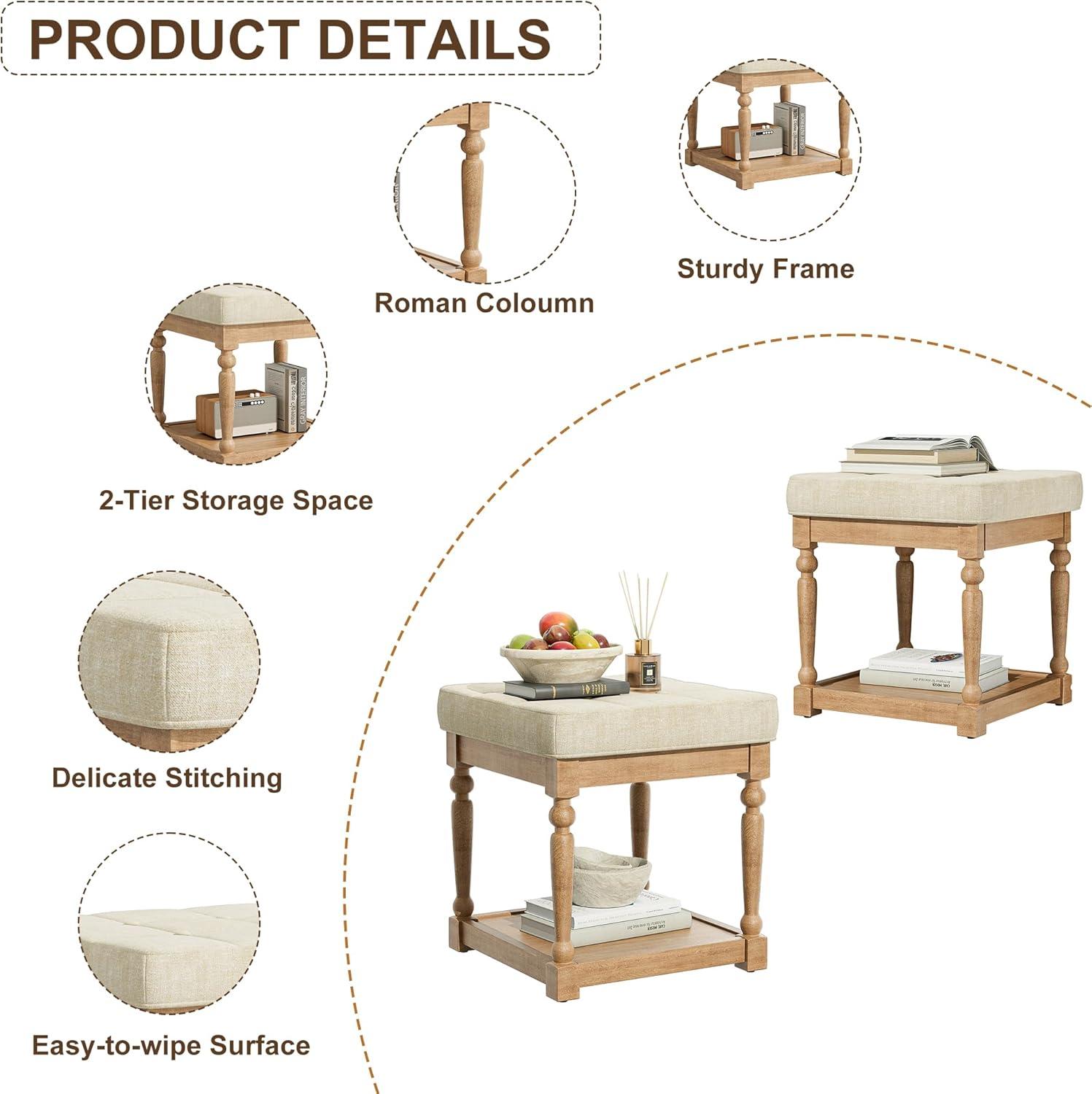
When you look across the room, the small, fluted legs read like miniature columns — their vertical grooves throw narrow shadows that change as you move.In midday sun the grooves look crisp and the legs pick up highlights along the ridges; from a low-slung seat the same legs appear more solid, the fluting softened by the angle. You’ll notice the silhouette more than any single detail: the stepped profile interrupts the horizontal plane of the ottoman and catches the eye when light slants across the floor.
The beige upholstery doesn’t stay one color for long. Under cool morning light it can feel a touch ashier; by late afternoon the same panel warms and the weave shows a gentle sheen where hands or a lap have smoothed it. Pressing a palm or setting your feet down shifts the surface — small creases form along seams, padding gives and then settles again — and you may find yourself running a hand over a corner to flatten an edge out of habit. Lamps and overhead fixtures flatten contrast, so the fabric often reads more uniform in the evening, while natural daylight teases out texture and tiny variation along stitched edges.
| Light | Legs | Upholstery |
|---|---|---|
| Morning (cool daylight) | Grooves appear muted; ridges show soft highlights | Beige leans cooler; weave texture is subtle |
| Afternoon (warm sunlight) | Fluting casts sharper shadows; highlights more pronounced | Tone shifts warmer; seams and nap are more visible |
| Evening (lamplight) | Details soften; finish looks more uniform | Color reads flatter and slightly muted |
Up close, you’ll catch small, lived-in marks: a faint scuff on a leg that shows only at certain angles, a tiny pull in the stitching where you habitually tuck a throw. These are the kinds of things the light reveals in ordinary use, popping in and out as you shift position or reach to smooth the cushion.
What the wood, upholstery and cushion construction reveal up close
When you crouch down and look along the tabletop edge, the brushed wood finish reads as a soft sheen rather than a mirror gloss; the grain shows through in streaks and tiny pores, and the rounded corners catch light differently than the flat surfaces. The Roman-style column legs are quieter up close — the fluting casts thin shadows and you can see the milling marks where the curves were shaped. At the joins, a narrow seam line runs where panels meet; if you run a fingertip there you’ll feel a slight change in texture where finish layers overlap. Moving the piece a few inches, you’ll notice the feet sometimes leave faint contact marks on the floor and the underside reveals the construction staples and fastener points that don’t show from the couch-level view.
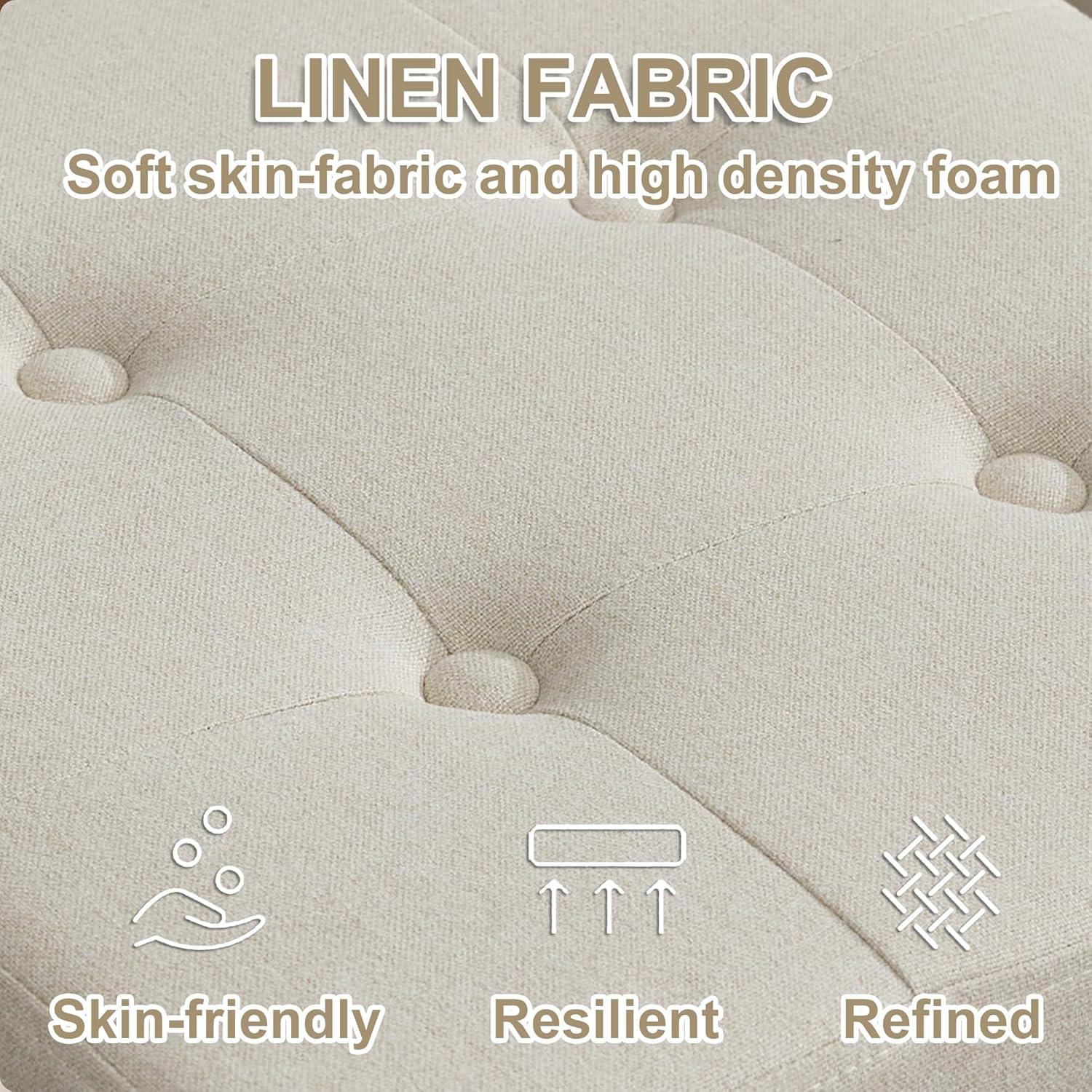
Shift your weight onto the cushion and the upholstery reacts the way linen-blend fabrics do: the weave shows small slubs and a soft nap, and it crumples into shallow creases that smooth out when you smooth them with your palm. The stitched edges align neatly but they can shift a touch when you tug the cover to flatten a corner; you’ll find yourself smoothing seams out without thinking about it. The cushion compresses under a foot or lap and then rebounds over a few seconds — the foam tends to leave a light imprint rather than a deep hollow. Lift the top briefly and the lid’s fit is appreciably snug; it closes with a small audible return and the fabric pulls tight at the corners,revealing the way the cover is wrapped and secured beneath.
| Component | Visible cues up close | How it behaves in use |
|---|---|---|
| Wood surfaces | Brushed grain, rounded edges, seam lines at joins | Shows faint contact marks when moved; seams catch dust in grooves |
| Leg detailing | fluting and light milling texture | Shadows accentuate the curves; scuffs appear on edges over time |
| Upholstery | Linen-like weave, slight nap, visible stitching | Develops shallow creases; you’ll smooth it often |
| Cushion core | Uniform surface with modest give | Compresses under pressure and slowly regains shape |
What sitting on the upholstered ottoman and leaning on the end tables feels like in daily use
When you sit on the upholstered ottoman,the top gives first — a soft compression under your thighs,then a firmer pushback from below.Your weight spreads across the broad surface so pressure points don’t register sharply; still, you notice the edges feel a touch firmer than the centre, and seams sometimes press against your clothing if you settle near them. The cover responds to movement: you’ll find yourself smoothing the fabric or shifting your position once or twice as the cushion slowly rebounds. Touching the top with a palm, it feels warm and slightly springy rather than rigid, and standing up, the ottoman has a short-lived rebound that suggests the padding regains shape over a few breaths.
Leaning on the end tables produces a different, more immediate impression. When you rest an elbow or prop a forearm there, the wooden surface feels solid under hand and the column-style legs give a sense of steadiness. Push against a corner or use the table to brace while standing and there can be a small, perceptible tilt or micro-movement before the piece settles — not a dramatic shift, but enough that you’ll adjust your grip.For some households, that slight give becomes part of the routine: scooting a pillow, nudging an edge, or confirming a handhold once in a while rather than relying on it for sustained support.
| Action | Immediate sensation | after a few minutes |
|---|---|---|
| Short sit on ottoman | Soft give, gentle rebound | Padding settles; you tend to shift position once |
| Extended sit on ottoman | Even pressure distribution | Surface feels warmer; seams may press against clothing |
| Leaning on end table | Solid, steady under palm | Minor micro-movement if weight is applied near edge |
View full specifications and size/color options
Measuring the pieces and imagining how they fit in your seating arrangement
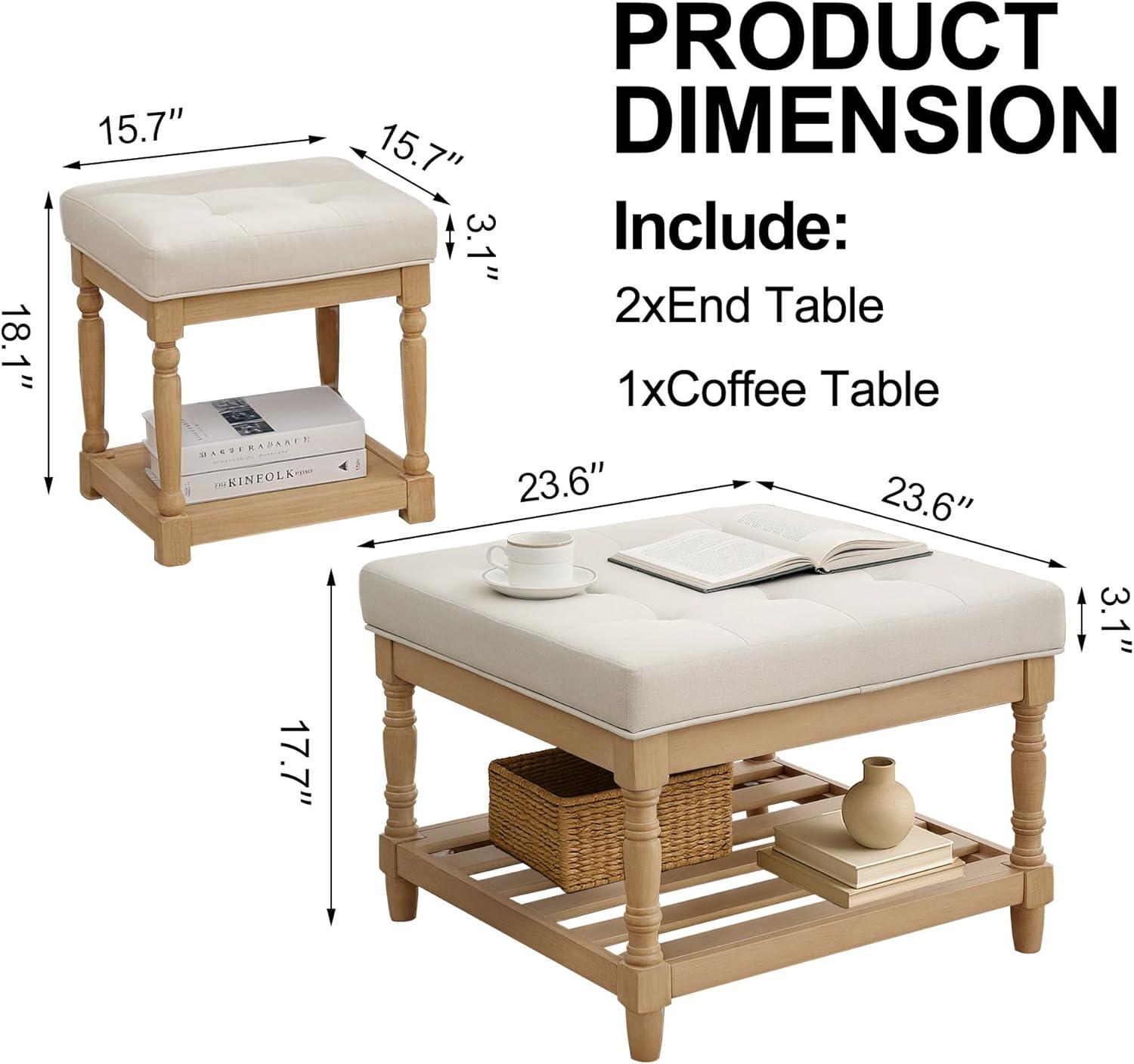
When thinking about how the set will sit among existing seating, observers often start by mapping the pieces on the floor and imagining movement around them rather than treating them as fixed objects. Placed in front of a sofa, the larger ottoman reads as a softened center point: people tend to push cushions forward a little, smooth the linen after resting feet, and shift the top slightly when reaching across. The smaller tables tuck closer to armrests and,in practice,end up nudged after someone leans on an arm or slides a magazine under a leg. Those small, repeated adjustments change the visual spacing more than a single measurement might suggest.
Function in use shows up as patterns.when used as a footrest, occupants commonly inch forward on the couch or swing a leg, which narrows the pathway behind the seating; when serving as a surface for trays or books, the top is often smoothed and the cover unzipped or lifted, requiring a bit of clearance at the rear. Lids and cushions settle over time and seams can separate a little where hands habitually push down; these behaviors make the set feel more integrated or, in some configurations, slightly crowded. In most homes the arrangement becomes a living plan that shifts with use rather than a static placement.
| Use case | Typical in-room behavior |
|---|---|
| Central ottoman (footrest/seat) | Seats are scooted, cushion tops smoothed, occasional lid lifts |
| End tables | Shifted closer to arms, surfaces cleared for cups, nudged by elbows |
| Storage access | Rear clearance is needed; tops opened intermittently, fabric flexes |
These observations tend to reveal trade-offs rather than absolutes: pieces that feel roomy when untouched can feel tighter once people start using them, and small, unconscious habits—tucking feet, smoothing fabric, adjusting seams—change how the set fits into daily circulation.
View full specifications and size options
How the set behaves around your sofa, beside your bed, and in tight spaces during everyday use
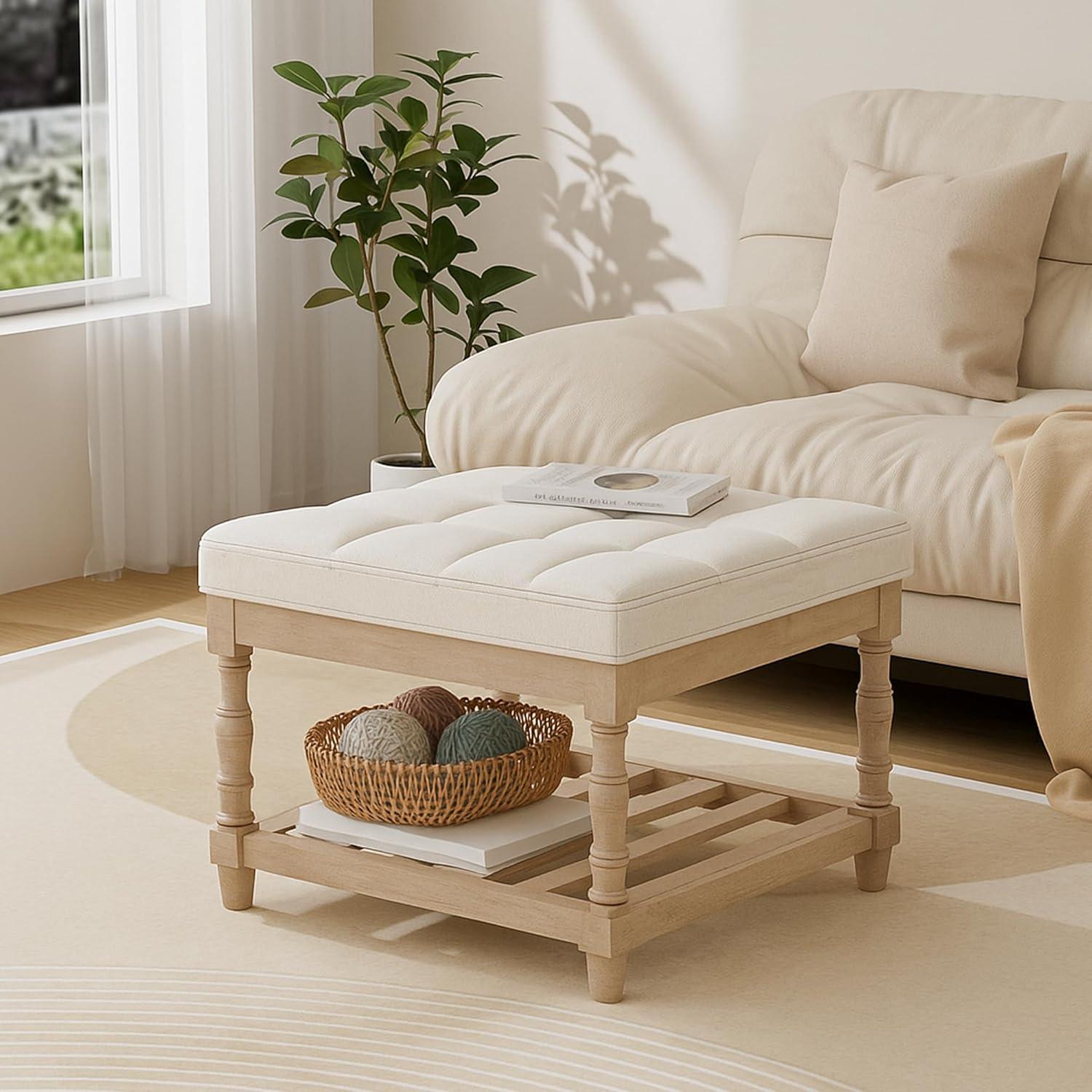
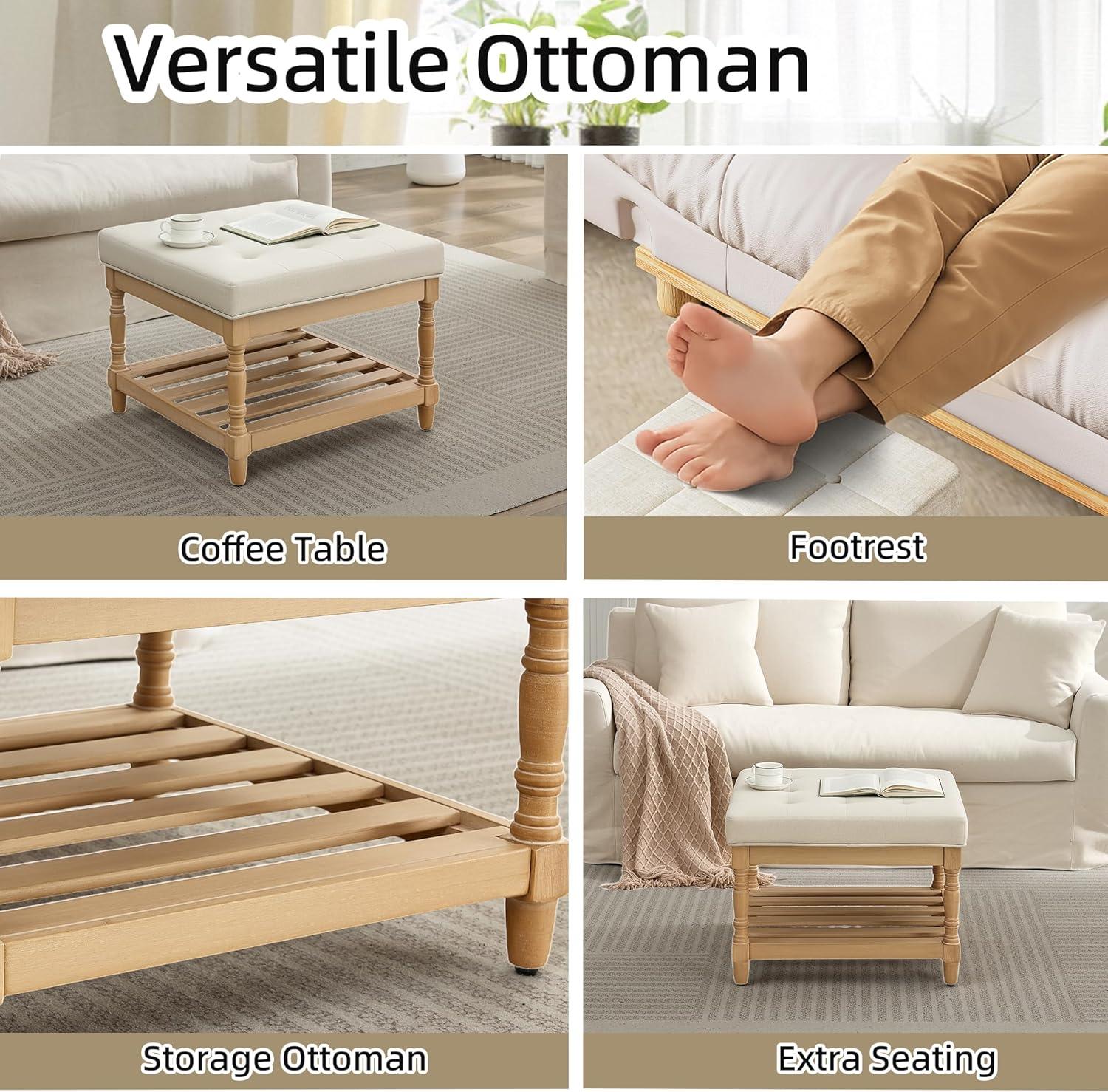
Pull it up to your sofa and it behaves like a soft, steady surface rather than a rigid table — the top gives a little when you rest your feet, and over the course of an evening you’ll find yourself smoothing the fabric and nudging the piece back into place as people shift positions. On low-pile rugs it usually stays put; on hardwood or tiled floors it can glide if you bump it, so repositioning sometimes means lifting one side and swinging it rather than sliding. Small habits emerge: you tuck a throw under the lid, you press the cushion seam flat after someone sits, and the ottoman slowly settles into the spot you use most often.
Beside your bed it reads like a short, padded surface for last-minute tasks — setting down a book, sitting to pull on shoes, or holding a bedside tray — and the top compresses briefly under weight before rebounding over hours. in tighter passages you’ll notice different behavior: turning it in a doorway usually requires lifting to avoid scraping the legs, and nudging it past a narrow gap can catch lint or carpet fibers along the base. With repeated daily movement the fabric can develop soft tracking where hands and knees make contact; these traces tend to smooth out with a swift tuck or a swipe, but they do mark how the piece is used over time.
| Situation | Typical behavior observed |
|---|---|
| Around the sofa | Settles into a preferred spot, slight glide on hard floors, requires smoothing after use |
| Beside the bed | Short-term compression when sat on, holds bedside items, returns to shape slowly |
| Tight spaces | Often needs lifting to pivot, legs can catch carpet or edges, repetitive contact leaves faint marks |
How the set matches your expectations and copes with practical limitations in your home
Expectations about comfort and multifunction use tend to line up with everyday experience in many living rooms. The padded tops compress gradually with repeated sitting,and cushions frequently enough get smoothed back into place during casual use; seams can shift a little when the pieces are moved or used as impromptu seating. The hidden compartment provides usable clearance for throws or smaller items, though lifting a filled lid usually feels like a two-handed task and the lid does not remain propped open on its own. light-colored upholstery shows dust and pet hair more readily, which becomes most noticeable after several days of regular traffic.
Practical limitations become clear when the set is integrated into a lived space. Height-adjustable legs tend to compensate for slightly uneven floors,but occasional readjustment is common after the set is shifted. The pieces slide across low-pile rugs and can scuff harder surfaces if nudged frequently; moving them for cleaning or rearranging often involves adjusting cushions and tucking fabric back into place. Overall use patterns show a balance between convenience and small maintainance habits—smoothing tops, regrouping seams, and lifting lids carefully—rather than any abrupt surprises.
View full specifications and color options
How the Set Settles Into the Room
Living with the UEV Ottoman Coffee Table Set of 3,you notice how it slowly becomes part of the room rather than arriving as a statement. Over time, in daily routines and as the room is used, the tops pick up faint rings and the soft cushion relaxes to match where you sit or rest a foot. It shifts how you use the space—pulled together for conversation, nudged aside to open a path—and in regular household rhythms it takes on a gentle, steady presence. You notice it stays.
As an Amazon Associate I earn from qualifying purchases.
