
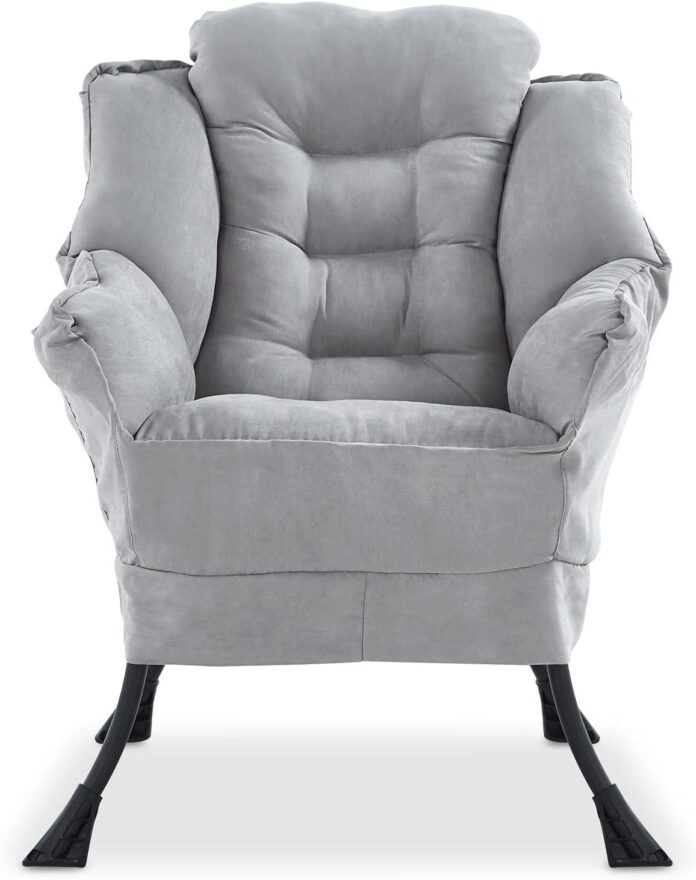
Light from teh window skims across the gray velvet adn the chair reads as a compact, slightly squat presence in the room.This is the yotefe Modern Lazy Chair, and up close the fabric has a soft nap that cools under your hand while the thick cushion gives a slow, buoyant sink. You notice the frame’s quiet steadiness when you shift your weight—there’s a planted feel rather than a springy one—and the low back and wide armrests shape a private little well of seating.A slim side pocket hangs within reach, the kind of practical detail that looks lived-in once you’ve dropped a book there.Overall it settles into the space with the visual weight of a small armchair and the tactile softness of a lounge cushion.
A first look at your Yotefe modern lazy chair
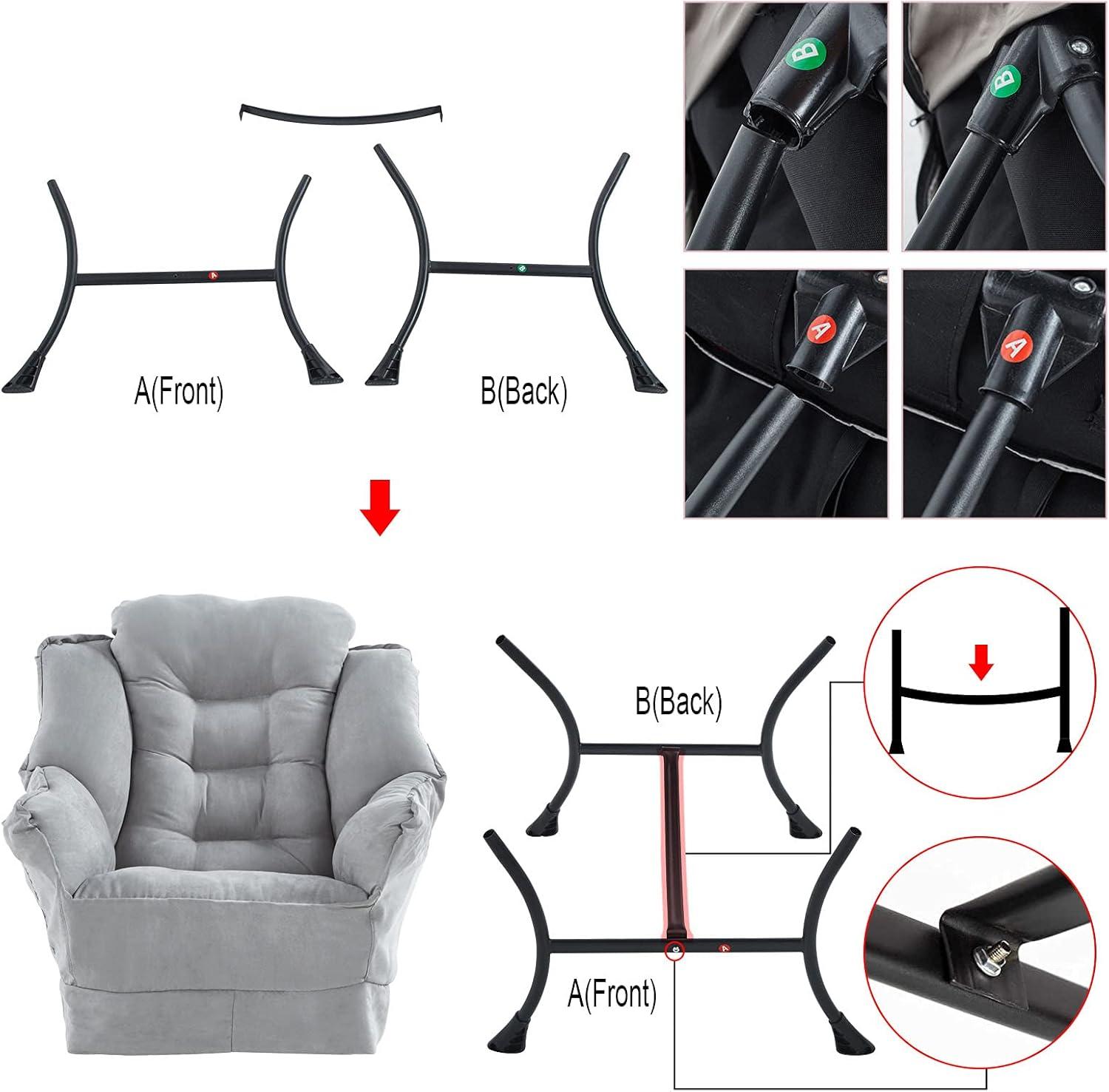
When you first bring the chair into a room it reads as a low, rounded seat — the profile is compact and the back slopes into the arms without a sharp break. The surface catches light differently as you move around it, so the velvet nap will look slightly lighter or darker depending on your angle.Seams and piping sit where you’d expect them to: along the outer arms and the back, and the side pocket curls against the arm when empty. The plastic leg covers are visible at the base and meet the floor with a small, steady contact rather than disappearing into the silhouette.
Settling into the chair reveals how the parts react in use. The seat gives beneath you, the foam compressing and then springing back when you shift; the back fills out around your shoulders and you may find yourself smoothing the fabric or nudging the cushion once or twice before settling. The side pocket holds a magazine or a remote without bulging excessively, and when you move the chair it’s light enough to lift by one person though the frame transmits a faint metallic sound as it shifts. The velvet nap tends to show the paths of your hands and legs, so small smoothing motions are a natural part of making it look neat again.
What meets your eye when you unpack and set it up
You pull the chair from a tight plastic wrap and the first thing you notice is how compressed the cushions arrive — the seat and back look flattened at first, with a few creases running across the surface. There’s a mild factory scent that usually fades after a few hours. The grey fabric has a short nap, so it catches light differently as you tilt the piece; at certain angles the color looks a touch lighter or deeper. Side pockets sit folded against the arm when packed, and a small hardware bag with legs, screws and an Allen wrench is tucked in the seam or the box corner. As you unzip or tear away the packaging you’ll likely smooth the fabric with your palms and shift the seams until the panels line up the way they’ll stay.
| What’s in the box | How it looks on first glance |
|---|---|
| Chair body (wrapped) | Compressed cushions, folded side pocket, visible folding creases |
| legs (in plastic) | Black plastic caps already fitted or separate; threaded posts for screwing in |
| Small hardware bag | Screws, Allen key, basic instructions — frequently enough taped to the frame |
Once you screw the legs in and set the chair upright, it settles more solidly than it appears in the box. The fabric stretches slightly over the foam and the backrest regains some loft — for the first few sits you’ll be nudging the cushion, tucking a loose flap or smoothing an obvious fold. When you briefly sit to test it, the seat compresses and the cover relaxes around the arm seams; the side pocket becomes more pronounced and the plastic leg caps meet the floor without scratching. Small, transient ripples in the fabric tend to even out with use and a few casual adjustments — shifting a cushion, smoothing along a seam — rather than remaining fixed. the assembled silhouette reads as a low, rounded lounge chair, with the grey nap and the tucked pocket being the details that catch your eye first.
the steel frame, grey fabric and thick cushion you can touch
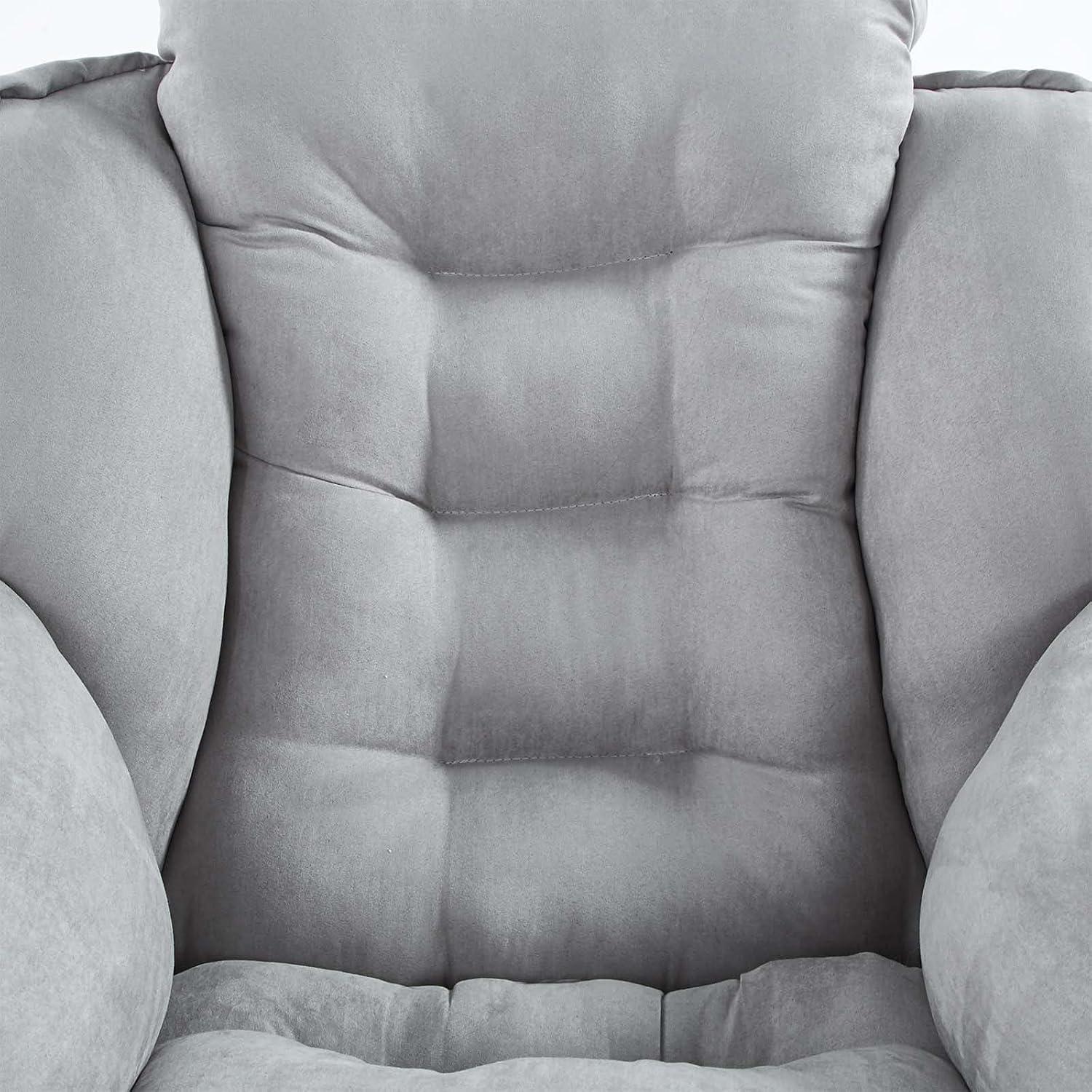
When you first run a hand across the grey cover it gives a muted, almost velvety drag under the palm—enough texture that your fingers pick up the nap’s direction and warmth where your skin lingers. Sitting down, the surface smooths and small creases form where you settle; you’ll find yourself instinctively smoothing those seams or nudging the cushion back into place after you shift.The cushion doesn’t flatten all at once—your weight sinks the middle more than the edges, so you end up sliding or readjusting slightly to find the pocket of support you want.
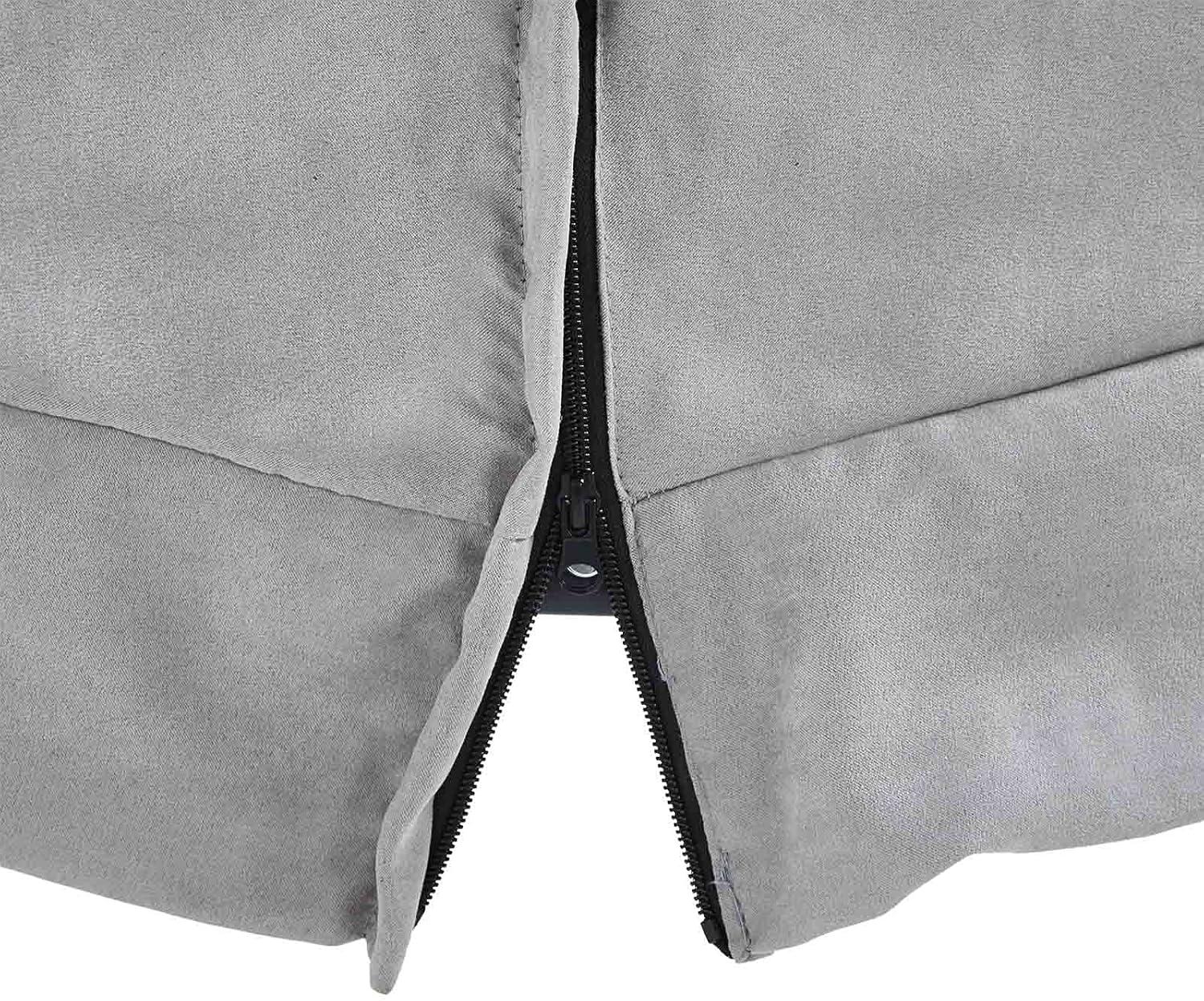
Under that soft outer layer, the chair’s metal skeleton is more felt than seen. When you lean or move the chair there’s a compact resistance that registers through the seat — a steady, unbouncy firmness rather than a hollow give. If you lift or drag the chair to a new spot you notice the frame’s mass in the way it shifts and the slight metallic click of joints as parts settle; when you press the cushion down you can sense the structure holding the shape around you. after longer sittings the cushion tends to warm and compress in familiar places, so you’ll catch yourself repositioning once or twice during use.
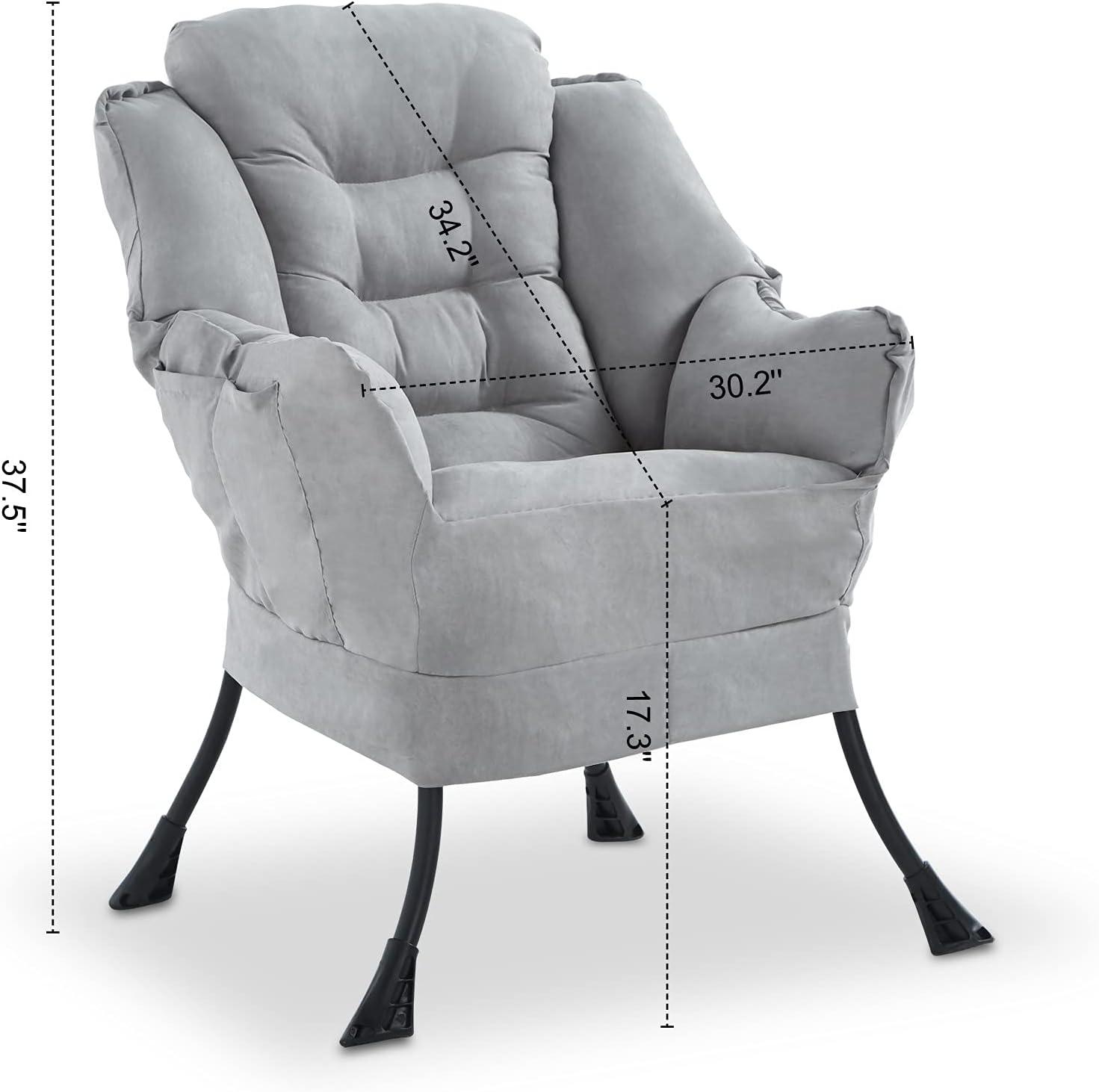
How the seat, back and armrests relate to your size and the key dimensions to note

When someone settles into the chair the seat behaves like a shallow cradle: the foam compresses under weight so the effective depth and the top surface of the cushion shift a few inches compared with its unloaded measurement. That subtle give changes where the thighs meet the front edge and how far the backrest needs to reach; moast people will notice a small forward slide to find a firmer edge, or a brief smoothing of the cover where hands have adjusted the padding. The back rises to support the lower to mid-back in a typical upright position and then, as the recline is used, distributes pressure along the spine rather than holding one firm point. Armrests sit low enough that elbows tend to rest lightly on the cushion tops rather than being pinned; when leaning or turning, the forearms will often glide off the edge and the fabric will wrinkle where pressure transfers.
Key dimensions to note are those that determine how the seat, back and armrests meet the body in everyday use. Below is a simple reference for what to measure and what to watch for while sitting:
| Dimension | What it affects in use | How to check it |
|---|---|---|
| Seat width | Side-to-side room for hips and shoulders; weather arms brush the armrests when shifting | Measure across the usable cushion surface; compare to the widest point of the sitter’s hips/shoulders |
| Seat depth | thigh support and tendency to slide forward as the cushion compresses | Measure from front edge to where the back cushion begins; check where the knees fall when seated |
| Seat height | Foot placement and knee angle; ease of standing up after a long sit | Measure floor to top of seat; sit and note whether feet rest flat or tip the body forward |
| Back height | Location of lumbar vs. upper-back support and where the head sits when reclining | Measure from seat top to top of back; sit upright and lean back to see which spine regions contact the cushion |
| Armrest height & clearance | forearm support, shoulder relaxation, and how the body rotates or drops when reaching | Measure from floor to armrest top and from armrest inner faces; rest the arms to feel if they sit naturally or slump |
Not all of these numbers stay constant while the chair is used—cushion compression, small shifts and smoothing of the cover will alter the feel over minutes or weeks—so it can definitely help to check dimensions both when the chair is empty and while occupied. Patterns such as sliding forward, reaching for an armrest that feels low, or re-centering on the cushion tend to reveal the most relevant mismatches between body and chair.
View full specifications and size options
Everyday interactions you have with the side pockets, recline and assembly
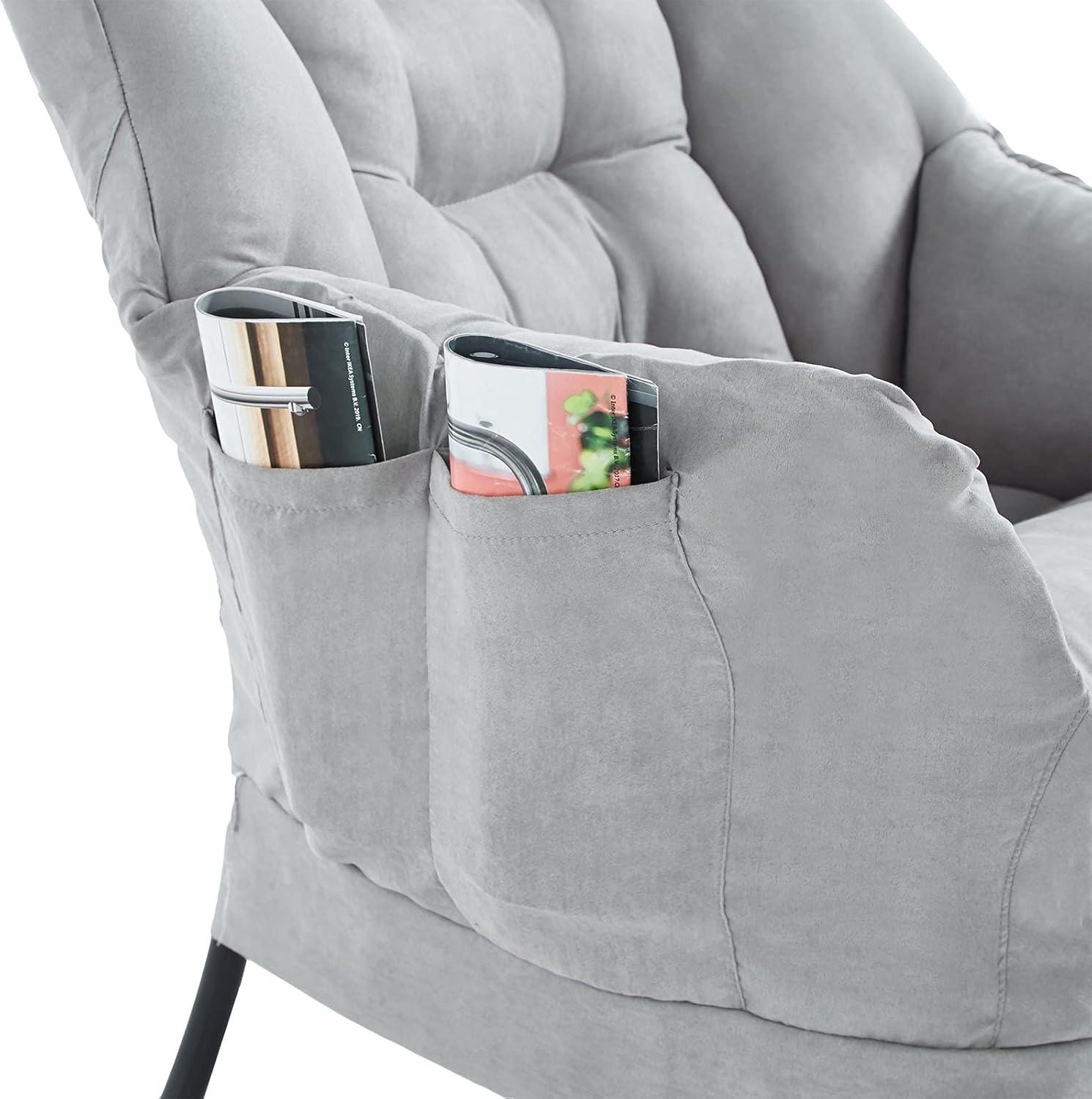
When you reach for the side pockets they sit where your hand naturally falls as you settle in; slipping a phone or remote in is a single, habitual motion. Small things — your phone, a slim paperback, a pair of glasses in a soft case — slide in and out with little fuss.Bulkier items,like a folded magazine or a water bottle,tend to push the pocket away from the frame a bit and can make the pocket bulge; when you lean back the mouth of the pocket can tilt,so a loose item sometimes slides inward toward the seam. You’ll find yourself smoothing the pocket fabric or nudging a seam back into place more than once as items shift during reading or scrolling.
Leaning back feels like a sequence of familiar movements rather than a mechanical flip. You press with your feet or shift your hips and the chair gives you a measured recline; the back and cushions redistribute beneath you, and the whole chair settles deeper. As that happens the side pockets change angle and the things inside move accordingly — a remote may tuck closer to the chair body, a paperback may crease against the pocket edge. Minor creaks or soft thuds can appear the first few times you adjust positions; over days of use those noises become part of the chair’s rhythm and you naturally compensate by changing how you push off the floor or where you put your feet.
Putting the chair together leaves a few interaction points that show up in everyday life. The leg fittings and frame joints you handled during assembly are the same bits you notice when you slide the chair across a hard floor or check it for wobble. After the chair has been used for a short time you may feel the need to nudge a bolt or align a panel — things you do quickly as part of normal upkeep. If a panel shifts a little, it can subtly alter how snug the side pockets sit against the arm, and that in turn changes how items rest when you recline. Carrying or moving the assembled chair tends to be a one-person task, and you will sometimes reposition the leg caps or smooth the upholstery afterwards, the same small rituals that make the chair feel settled in your room.
| Item | How it behaves in the side pocket |
|---|---|
| Phone | Usually upright and easy to grab; can shift inward when you recline |
| TV remote | Slides in easily but may nestle against the seam when the back reclines |
| Magazine (folded) | Fits with a bit of bulge; edges can crease if pressed during reclining |
| Water bottle | Creates a noticeable bulge; tends to push the pocket outward |
| Keys / small loose items | Can move around and settle at the bottom; sometimes require a fast pat to retrieve |
How suitable this chair is for your space, your comfort expectations, and real life limits
Placed in a living nook or a compact bedroom corner, the chair reads as modest in footprint and easy to tuck beside a side table. When settled into, the seat’s foam offers a noticeable spring-back at first touch, and the occupant will frequently enough shift and smooth the velvet as seams and cushioning settle into habitual spots. The built-in side pocket stays within reach while reclined, though the chair’s lighter construction makes it more prone to small slides on smooth floors; on low-pile carpet it tends to sit more planted without much attention.
Over typical daily use, the metal frame maintains posture under movement and gentle swiveling, while the cushions slowly form impressions where weight concentrates—smoothing or a quick repositioning of the sitter usually restores an even surface. The back and arm angles encourage relaxed reading or short rests; extended,upright work sessions can feel different because the support flattens a bit after prolonged compression. Small, repeated adjustments (tucking a knee, leaning) are common behaviors that keep the seating position comfortable without changing room layout.
| Situation | Observed behavior |
|---|---|
| Moving the chair across flooring | Light to carry but can slide on hard floors; stabilizes on carpet |
| daily sitting over weeks | Initial resilience gives way to mild imprinting; routine smoothing returns surface evenness |
View full specifications and available color options on Amazon
Care, cleaning and upkeep observations from regular use
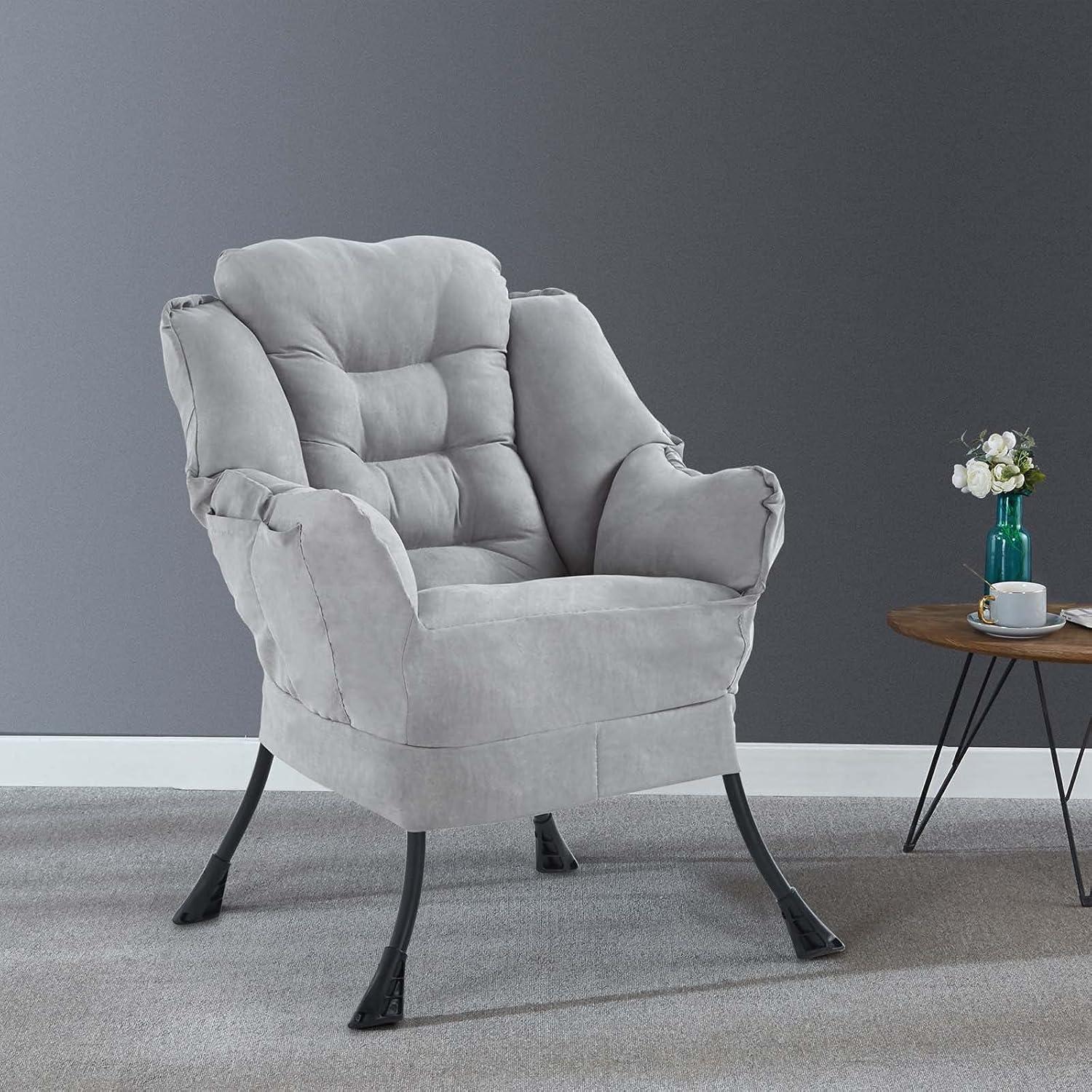
In everyday use you’ll notice the fabric’s nap shows movement: the surface catches light differently after you shift positions, and fingerprints or flattened areas become visible where you frequently rest your arms. When you stand up,there’s often a brief moment of smoothing—either with your hand or by running it over the seat—because seams and the pile don’t always settle back instantly. Small, loose particles such as crumbs or pet hair tend to collect where the seat meets the back and in the seam creases; they don’t disappear on their own and are easy to spot against the grey tone.
The cushions respond to repeated sitting in an obvious way. The center of the seat can feel a touch more compressed after several weeks of daily use,and the backrest shows subtle contouring where you lean most. You’ll find yourself nudging the cushion a little, shifting it, or plumping the edges to restore the original surface profile; these are casual, almost unconscious motions. The side pocket bulges and softens when it routinely holds remotes, magazines or a phone, and that change is more visible than any wear on the main upholstery.
| Observed issue | When it appears |
|---|---|
| Visible nap/pressure marks | Immediately after prolonged sitting or repeated contact |
| Loose lint and pet hair in seams | After daily use in a pet-owning or high-traffic room |
| Seat center softening | Over several weeks of regular use |
| Side pocket sagging | With frequent insertion of objects |
You’ll also notice the base and leg covers pick up scuffs and dust along the floor line; moving the chair to check under it reveals a thin rim of settled debris on the underside in most cases. Small adjustments—sliding the chair slightly, rotating cushions, smoothing seams—become part of typical interactions rather than occasional maintenance tasks, more about keeping the surface looking even than correcting damage.
how It Lives in the Space
Over time the yotefe Modern Lazy chair Single Lazy Sofa,Comfy reclining Armchair-Soft Lounge Chair with Side Pockets settles into a corner,more a habitual pause than a proclamation. In daily routines you notice the way the cushion yields in the same places,how its comfort becomes part of the pattern of sitting,reading,or dozing. The grey surface gathers tiny marks and softens with use, taking on the quiet signs of ordinary days and fitting into the room’s steady motions. It stays.
As an Amazon Associate I earn from qualifying purchases.
: Transform a quiet corner with the Yotefe Modern Lazy Chair — plush velvet, sleek modern design, and cozy comfort for reading or relaxing. Alternate (keyword-focused): Yotefe Modern Lazy Chair: velvet accent chair that softens any quiet corner with plush comfort, modern style, and perfect reading-chair coziness. Alternate (short/CTA): Cozy up a quiet corner with the Yotefe Modern Lazy Chair — soft velvet, modern silhouette, and instant comfort. Shop style and comfort now.)